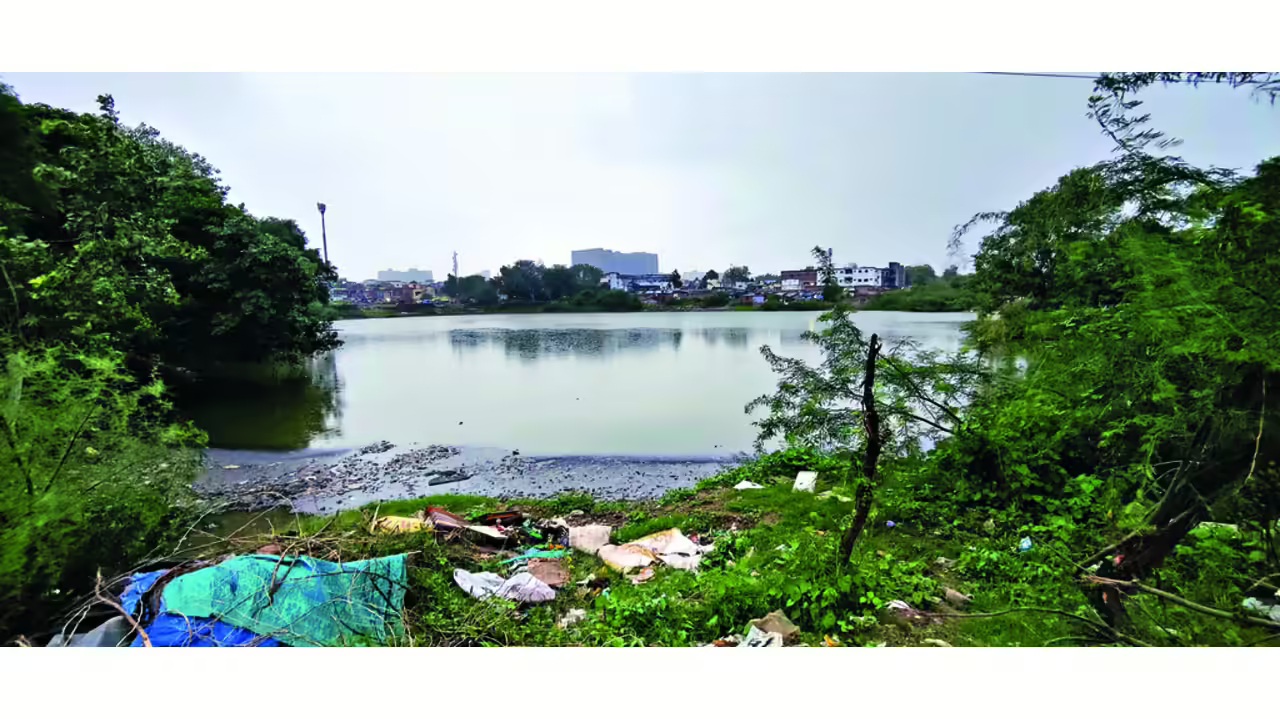
Ahmedabad’s municipal authorities have approved the long-delayed Thaltej Lake Development project, unlocking the first phase of works aimed at restoring one of the city’s largest natural water bodies in its western corridor. The decision signals a shift towards structured urban water management and reflects growing recognition of lakes as both environmental buffers and public infrastructure assets in rapidly expanding Indian cities.
The initial phase covers over 84,000 square metres of land and focuses primarily on boundary demarcation, civil works and site protection measures. Urban planners note that securing lake perimeters is often the first and most critical step in revival projects, as it prevents further encroachments and establishes legal clarity over public land. The lake itself spans roughly 1.38 lakh square metres, placing it among the more substantial urban water bodies in Ahmedabad with potential for ecological restoration and community recreation.For more than a decade, administrative transitions, land record inconsistencies and jurisdictional overlaps slowed progress on the site. With the area now firmly integrated into the city’s municipal framework, authorities appear positioned to move towards phased redevelopment that may include desilting, landscaping and public access improvements in subsequent stages.
Experts suggest that such interventions, if executed with environmental safeguards, can improve groundwater recharge and mitigate localised urban heat island effects. A key component of the Thaltej Lake Development effort involves addressing unauthorised structures built within the lake boundary. Officials indicate that relocation and rehabilitation measures are being considered to minimise social disruption while reclaiming environmentally sensitive land. Urban development specialists emphasise that balancing ecological goals with humane resettlement strategies is essential for equitable city planning, particularly in densely populated neighbourhoods where informal housing often intersects with public infrastructure.
Beyond its immediate civic impact, the project carries broader economic and sustainability implications. Revived lakes frequently enhance surrounding property values, support local commerce through increased footfall, and provide non-motorised public spaces that contribute to healthier urban living. In climate-stressed cities, functional water bodies also serve as natural flood moderators and biodiversity pockets, reinforcing resilience against erratic rainfall patterns. As Ahmedabad continues to expand outward, integrating environmental restoration with infrastructure planning may determine how effectively the city manages growth without sacrificing liveability. The progress on Thaltej’s lake revival indicates a gradual pivot towards people-centred and climate-responsive urban development, though its long-term success will depend on consistent execution, transparent governance and sustained maintenance beyond the construction phase.