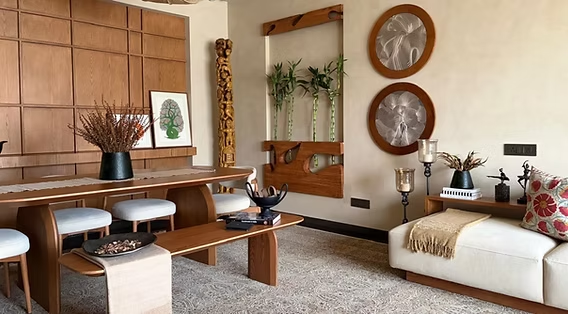
A new experiential design destination in Delhi is challenging conventional retail and reshaping how interiors are conceived and experienced, emphasising sensory engagement over visual spectacle. The 5,000‑sq‑ft HōmAnAn showhouse employs a “five senses” philosophy in crafting spaces that prioritise emotional memory, tactile encounter and spatial rhythm, potentially setting a precedent for people‑centred residential design in India’s urban housing market.
Situated in Greater Kailash II, HōmAnAn presents itself not as a traditional showroom but as a lived‑in home where furniture, décor and home accessories from more than 40 Indian brands are presented within fully imagined interiors. Rather than positioning products as commodities, designers framed them as elements of everyday life experienced through sight, touch, sound, smell and taste — a shift that invites deeper engagement with space rather than passive consumption.Industry observers suggest this immersive approach could influence how urban homebuyers, architects and developers think about interior design in new residences and renovation projects. “Experience‑first” retreats like HōmAnAn signal that consumers increasingly value environments that resonate emotionally and functionally, a trend that aligns with broader shifts in the housing market toward well‑being, comfort and personal connection.
The core design philosophy centres on sensory resonance rather than visual prominence. Surfaces invite interaction through honest materials such as raw wood, stone and woven textiles; lighting is calibrated to soften textures rather than dramatise; and spatial pauses are created so that sound is absorbed rather than amplified. Even elements associated with taste and scent are woven into the experience — from hospitality offerings that foster a sense of belonging, to natural fragrances that evoke memory.This emphasis on multisensory design resonates with contemporary cognitions on emotional architecture and interior environments that shape memory and perception. Research in emotional design suggests that environments crafted around tactile, auditory and olfactory cues can heighten a person’s sense of place, comfort and personal attachment — factors increasingly sought in urban housing design.
For homegrown décor brands, HōmAnAn offers a platform to communicate their value within contextually rich vignettes rather than isolated displays. Designers intentionally resisted homogenising aesthetics, instead allowing each brand’s identity to contribute to a layered narrative built into the spatial grammar of the house. This approach reflects a growing market for curated design that supports both local craftsmanship and contemporary lifestyles.The showhouse also implicitly challenges the notion of interiors as visual commodities, underscoring that spaces are remembered for how they feel and how they hold people rather than what they simply look like. This perspective aligns with sustainable interior design principles that prioritise human experience, material honesty and long‑lasting quality — an important consideration for urban developers seeking to embed well‑being into housing stock.
As residential design increasingly intersects with lifestyle expectations and emotional well‑being, concepts like sensory‑engaged interiors could influence future projects in India’s major cities, especially for segments seeking distinctive, human‑centred homes.