


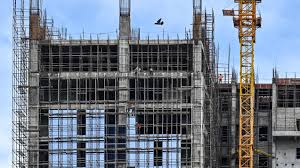
The Greater Bengaluru Authority’s newly operational premium floor area ratio (FAR) framework is beginning to reshape how the city funds vertical growth, with early applications indicating strong developer interest and a significant near-term revenue pipeline for urban infrastructure.
Within weeks of the policy becoming enforceable, the city authority has received a small but high-value set of proposals from developers seeking permission to build beyond base development limits. Officials estimate that these initial applications alone could translate into nearly Rs 200 crore in collections, offering an early signal of the scheme’s fiscal potential for a capital city grappling with infrastructure backlogs and land constraints. The premium FAR framework allows developers to exceed prescribed building density by paying a calibrated fee linked to official land valuations, while also integrating transferable development rights (TDRs) into the same regulatory ecosystem. Urban planners view this dual mechanism as an attempt to rationalise density rather than restrict it, shifting Bengaluru away from informal intensification toward monetised, policy-led vertical growth. Industry experts say the early uptake reflects both pent-up demand and regulatory clarity. The framework gained momentum after judicial scrutiny affirmed that premium FAR and TDRs are complementary tools, reducing legal uncertainty that had previously slowed large-format projects. With clarity restored, developers appear more willing to factor premium payments into project feasibility calculations.
From a city-building perspective, the scheme represents a pivot in how Bengaluru funds growth. Rather than relying solely on land monetisation or general taxation, the city is attempting to capture a portion of the land value uplift created by infrastructure investments and planning permissions. If ring-fenced and deployed transparently, such revenues could support transit upgrades, drainage systems, public spaces, and climate-resilient infrastructure in rapidly densifying corridors. The policy applies across a wide metropolitan geography, including areas governed by multiple planning authorities beyond the city core. This breadth is significant, as much of Bengaluru’s future population growth is expected in peripheral zones where infrastructure provision has historically lagged behind real estate development. However, urban economists caution that the success of premium FAR depends less on headline collections and more on governance discipline. Without clear disclosure mechanisms and infrastructure-linked spending, the policy risks being seen as a revenue extraction tool rather than a city-shaping instrument. Developers have already flagged the need for escrow-based accounting and public reporting to ensure that density-related revenues are reinvested locally.
If implemented with transparency and spatial planning rigour, premium FAR could help Bengaluru move toward a more compact, transit-supportive urban form, reducing sprawl while aligning growth with infrastructure capacity. The early response suggests the market is ready; the larger test now lies in whether the city can convert vertical ambition into liveable, inclusive, and resilient neighbourhoods.
Also Read: Morgan Stanley lease reinforces Bengaluru office demand
Bengaluru Authority premium FAR scheme draws early demand
