


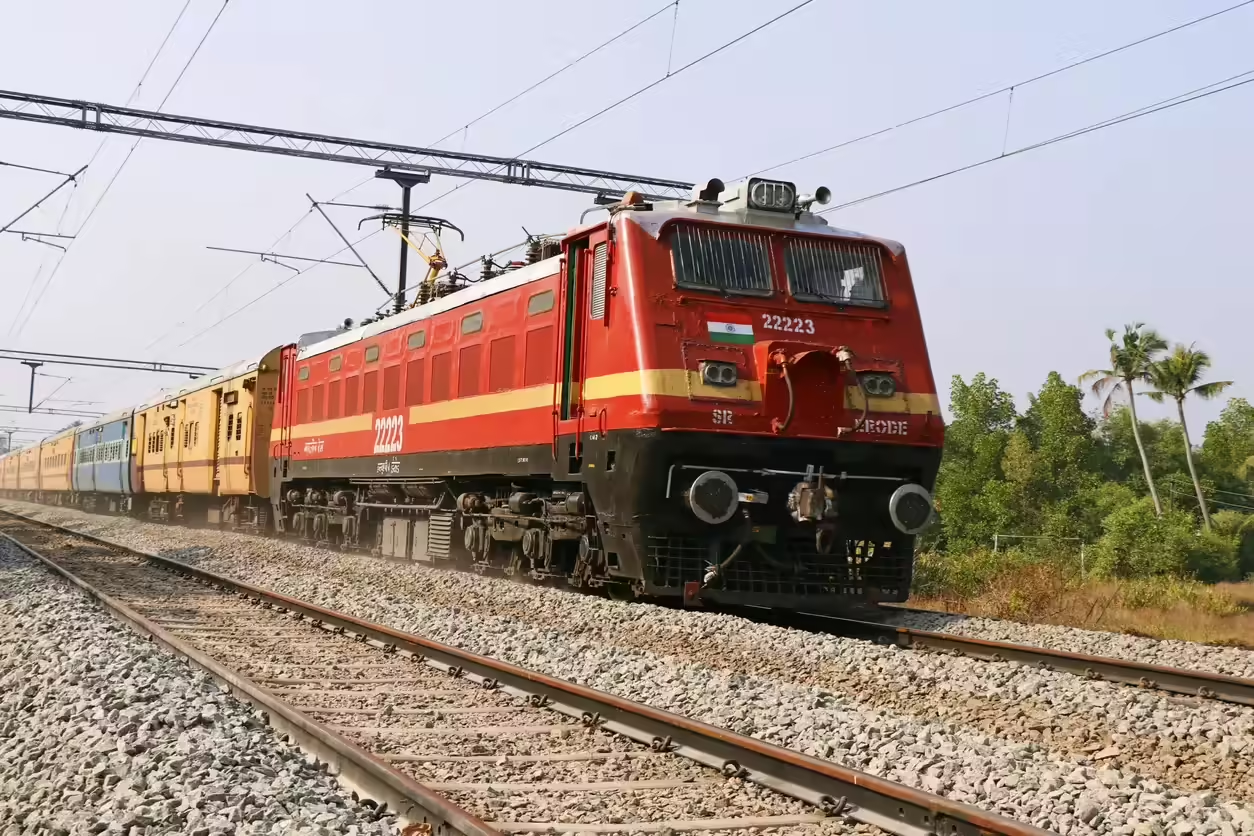
Indian Railways has expanded passenger access across the Northeast by adding over 200 new halts and stoppages on existing routes, a move that signals a strategic shift towards more inclusive regional mobility. Rolled out across multiple Northeastern states, the decision aims to bridge last-mile gaps in a region where terrain, distance and climate vulnerability have long shaped travel and economic opportunity. The wider implication is clear: transport infrastructure is being positioned as a foundation for equitable urbanisation and regional growth. The newly introduced stops span key rail corridors connecting Assam, Tripura, Nagaland, Manipur and Arunachal Pradesh, improving access for smaller towns and semi-urban settlements that previously lay beyond regular rail coverage. According to transport officials, these additions respond to sustained demand from local administrations and commuters seeking more frequent and affordable rail access without the need for large-scale new construction.
For citizens, the impact is immediate. Additional halts reduce travel times to district centres, healthcare facilities and educational hubs, particularly for daily wage workers, students and small traders. Urban planners point out that incremental connectivity improvements often deliver higher social returns than flagship projects, especially in regions where dispersed populations rely heavily on public transport. From an economic standpoint, enhanced rail connectivity can reshape local markets. Improved passenger movement supports labour mobility, strengthens agri-supply chains and encourages tourism flows to secondary destinations. Industry observers note that reliable rail access also increases the attractiveness of towns for small businesses and logistics services, influencing future real estate and warehousing demand around stations.
The expansion aligns with Indian Railways’ broader effort to optimise existing assets while lowering the carbon intensity of inter-city travel. Rail remains one of the most energy-efficient transport modes, and in ecologically sensitive regions like the Northeast, expanding usage without extensive land acquisition reduces environmental disruption. Climate experts argue that such operational upgrades are critical for building low-emission transport networks in regions exposed to flooding and landslides. Infrastructure analysts also see planning implications. More frequent stops can catalyse transit-oriented development at a micro scale, prompting local bodies to invest in safer station access, pedestrian infrastructure and basic amenities. However, they caution that coordination with state governments and urban local bodies will be necessary to prevent unplanned growth around new halts.
Operationally, Indian Railways will need to balance increased stoppages with network efficiency, particularly on long-distance services. Officials indicate that scheduling adjustments and demand monitoring will guide further refinements, ensuring that service reliability is not compromised. Looking ahead, the Northeast rail expansion highlights a policy direction focused on connectivity as social infrastructure, not merely transport capacity. As population centres evolve and climate risks intensify, the effectiveness of such measures will depend on sustained investment in maintenance, multimodal integration and people-centric planning across the region.
Also Read: Delhi NCR Expands Rapid Rail To Bawal
Indian Railways Boosts Northeast Regional Access
