


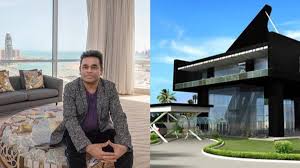
Premium residential markets in South India are witnessing a new phase of consolidation, as a Chennai-headquartered developer announced the rollout of nearly 1,000 high-end homes across Chennai and Coimbatore. The launch highlights how organised developers are increasingly scaling luxury housing beyond isolated projects, responding to sustained demand from affluent end-users in select southern cities.
The homes are being introduced across multiple micro-markets in both cities, reflecting a portfolio-led expansion strategy rather than a single flagship development. Industry analysts view this approach as a response to changing buyer behaviour, where demand for premium housing is increasingly driven by lifestyle stability, long-term ownership and city-linked employment rather than speculative investment. Chennai and Coimbatore have emerged as contrasting but complementary luxury housing markets. While Chennai’s premium segment is supported by corporate leadership, global services employment and long-term city residency, Coimbatore’s demand is fuelled by manufacturing wealth, family enterprises and return migration. Together, the two cities represent a growing southern alternative to the traditionally dominant luxury markets of Mumbai, Delhi NCR and Bengaluru. Urban economists note that the introduction of 1,000 luxury homes at one time signals rising confidence in absorption capacity, but also raises questions about infrastructure readiness and environmental resilience. Large-scale premium housing developments, particularly in peripheral and suburban locations, place additional pressure on water systems, mobility networks and energy demand. As a result, city planners are increasingly emphasising the importance of resource-efficient construction, integrated open spaces and long-term maintenance planning in high-end residential supply.
The developer has also announced a brand partnership with a globally recognised cultural figure, a strategy that reflects a broader trend in Indian real estate where branding is being used to differentiate projects in an increasingly competitive luxury segment. Market experts caution, however, that long-term success in premium housing depends less on symbolic associations and more on execution quality, delivery timelines and post-occupancy management. Luxury housing demand in South India has remained resilient even as mid-income segments face affordability pressure. According to sector observers, premium buyers are less sensitive to interest rate cycles and more focused on design quality, privacy, community planning and asset longevity. This has encouraged developers to invest in larger homes, lower density layouts and amenity-led planning, particularly in cities with stable social infrastructure. From a broader urban development perspective, the expansion underscores the need for balanced growth. While luxury housing contributes to formalisation, tax revenues and construction employment, experts stress that city authorities must ensure parallel investment in public transport, affordable housing and climate adaptation to prevent spatial inequality.
As southern cities continue to evolve as multi-nodal urban regions, the scale and geography of luxury housing supply will increasingly shape how inclusive, resilient and liveable these cities become over the next decade.
Also Read: Chennai Oragadam township adds new mid income housing
AR Rahman association marks South India luxury housing scale-up
