


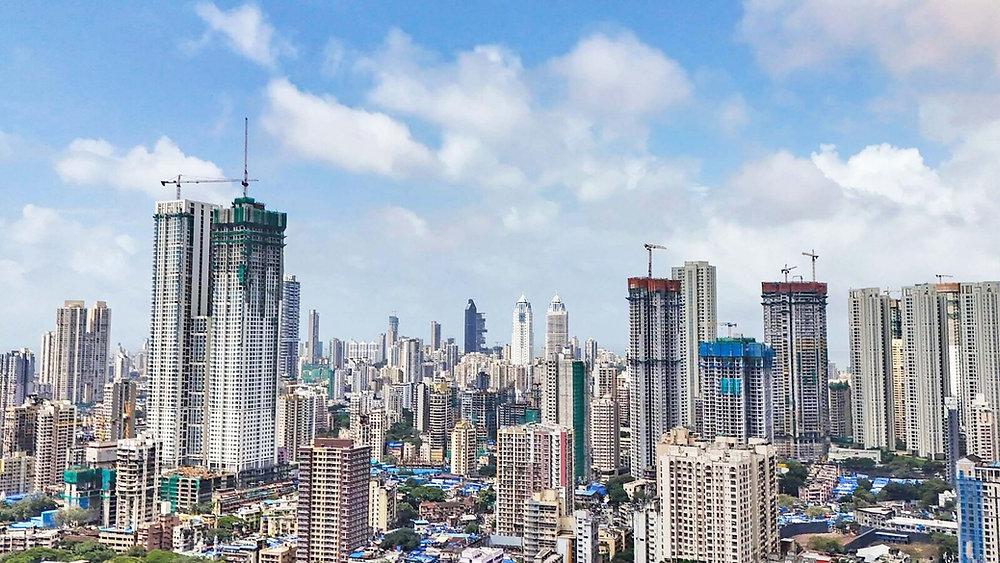
Mumbai’s commercial real estate market has begun the calendar year with clear signs of renewed momentum, as a newly launched office development in the city’s south-central corridor recorded rapid absorption within weeks of its market debut. The swift uptake highlights a broader shift in occupier preferences towards well-located, high-quality business spaces that balance accessibility, efficiency and long-term operational value.
The project, located in Mahim a key connector between South Mumbai and the western suburbs achieved significant early sales, translating into substantial transaction value within a short launch window. For market watchers, the response underlines how centralised commercial districts are regaining prominence after years of decentralisation driven by cost considerations and remote work trends. Urban economists note that Mahim’s appeal lies in its proximity to transport infrastructure, established residential catchments and emerging mixed-use neighbourhoods. As businesses recalibrate workplace strategies, demand is increasingly tilting towards Grade A developments that reduce commute times while offering institutional-quality design, safety standards and energy efficiency. The strong initial traction also reflects a tightening supply pipeline in central Mumbai. Limited availability of large, compliant commercial land parcels has pushed developers to focus on redevelopment-led growth rather than greenfield expansion. In this context, early-stage sales are seen as a signal of occupier confidence rather than speculative activity. Beyond the immediate transaction numbers, the development points to a wider recalibration underway in Mumbai’s office market. Industry experts observe that companies are consolidating footprints into fewer, better-located buildings that can support hybrid work, wellness requirements and lower long-term operating costs.
This trend has implications for urban mobility, as central business districts reduce the need for long daily commutes from peripheral employment hubs. Parallel to the commercial momentum, the developer has also expanded its land holdings in Bandra West, one of Mumbai’s most supply-constrained residential markets. Analysts see this as a strategic move to ensure continuity of project launches amid rising land prices and prolonged approval cycles. In dense coastal cities like Mumbai, land banking in established neighbourhoods is increasingly viewed as a hedge against regulatory and market volatility. From a city-planning perspective, the convergence of commercial and residential investments within transit-accessible zones supports more compact urban growth. Planners argue that such patterns, if aligned with public transport capacity and green building norms, can reduce carbon intensity and improve liveability without adding pressure on peripheral infrastructure. Looking ahead, Mumbai’s commercial real estate outlook appears cautiously optimistic. While global economic uncertainties persist, demand driven by domestic enterprises, professional services and new-age businesses continues to support absorption in well-connected districts. The challenge, experts note, will be ensuring that new developments integrate climate-resilient design, inclusive public interfaces and infrastructure efficiency.
As Mumbai evolves into a denser, more vertical city, early indicators from projects like this suggest that location-led, responsibly planned commercial development will remain central to its economic and urban future.
Also Read: Bengaluru Real Estate Trusts Reshape Investments
Mahim office market records strong early demand
