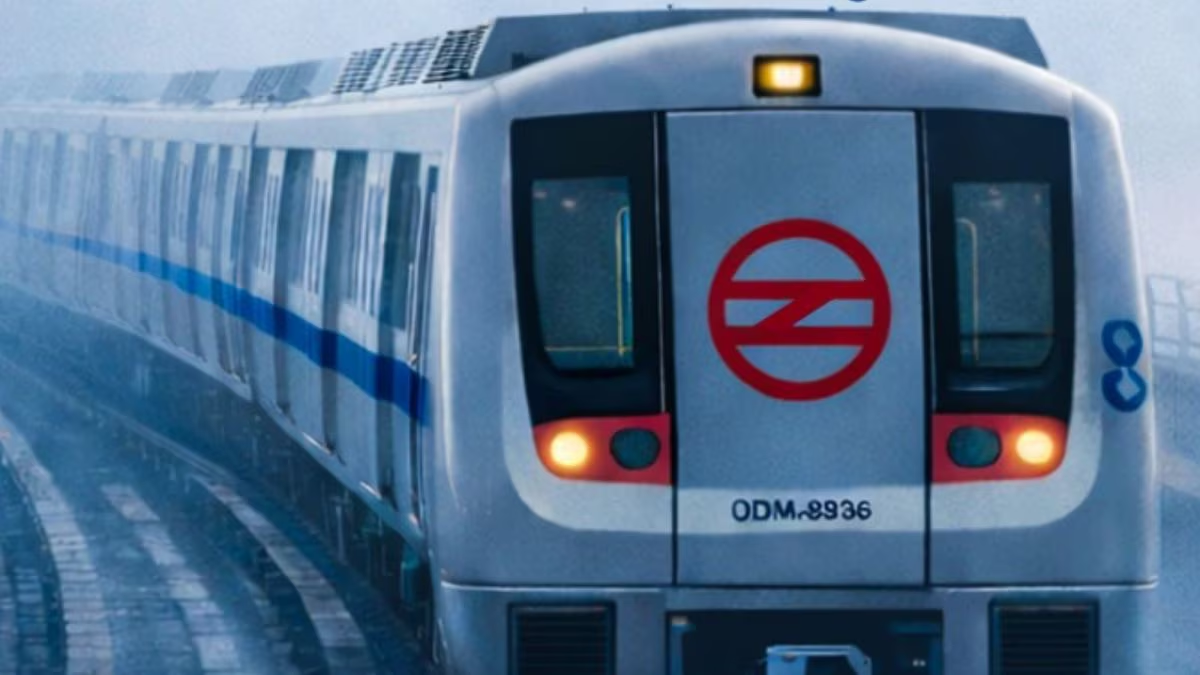
Delhi’s mass transit network is entering a more complex and interconnected phase as the city prepares to add five triple interchange stations under upcoming Metro expansion plans. Once operational, these stations will allow passengers to switch between three corridors at a single location, significantly reshaping how commuters navigate the capital and reducing dependency on long, indirect travel routes.
At present, only one station in the Delhi Metro system offers a three-line interchange. With ongoing and planned network expansions, transport planners are now redesigning key nodes to support higher passenger volumes and multi-directional movement. Officials involved in network planning indicate that the move reflects a shift from linear corridor growth to a grid-based urban mobility model.
The expansion will coincide with later stages of Phase IV construction and a subsequent Phase V sub-phase, during which interchange density across the network will rise sharply. From the current 29 interchange stations, the total is expected to cross 40 once new corridors are commissioned, creating a more resilient and flexible transit system.
Urban mobility experts note that triple interchange stations play a strategic role in megacities by reducing travel time penalties during transfers and distributing passenger loads more evenly across corridors. For Delhi, this becomes particularly relevant as daily ridership continues to rebound and grow, driven by population expansion, suburbanisation, and rising fuel costs. Several of the planned triple interchange locations sit within dense employment zones or established residential catchments. These nodes are also expected to support transit-oriented development, encouraging compact mixed-use growth around stations rather than car-dependent sprawl. Real estate analysts suggest such hubs often attract office, retail, and rental housing investments due to improved accessibility.
From an environmental perspective, improved interchange efficiency supports the broader goal of lowering transport emissions. Seamless transfers reduce the friction that often pushes commuters towards private vehicles for cross-city journeys. Electrified mass transit remains one of the most effective tools for reducing urban air pollution and energy consumption per passenger kilometre.
However, planners caution that interchange-heavy stations require careful design.
Passenger circulation, vertical movement, safety systems, and wayfinding must be robust to avoid congestion bottlenecks. Lessons from existing interchange hubs are being incorporated into newer station layouts, with wider concourses, better signage, and improved universal accessibility. The rollout of multiple triple interchange stations also signals a maturing phase for the Delhi Metro, where network efficiency now matters as much as network length. As construction progresses, attention will increasingly turn to integration with buses, pedestrian infrastructure, and last-mile connectivity to ensure these high-capacity nodes function as true urban mobility anchors.
Delhi Metro Plans Five Triple Interchange Hubs