Ahmedabad Infrastructure Adapts To Layered Transit Networks
Ahmedabad’s dense central rail corridor has crossed a critical engineering milestone with the completion of a long-span steel bridge for the high-speed rail corridor linking western India’s two largest economic hubs. The structure, delivered on the Kalupur–Shahpur stretch, marks another step in integrating the Mumbai Ahmedabad bullet train bridge works into one of the city’s most infrastructure-constrained zones.
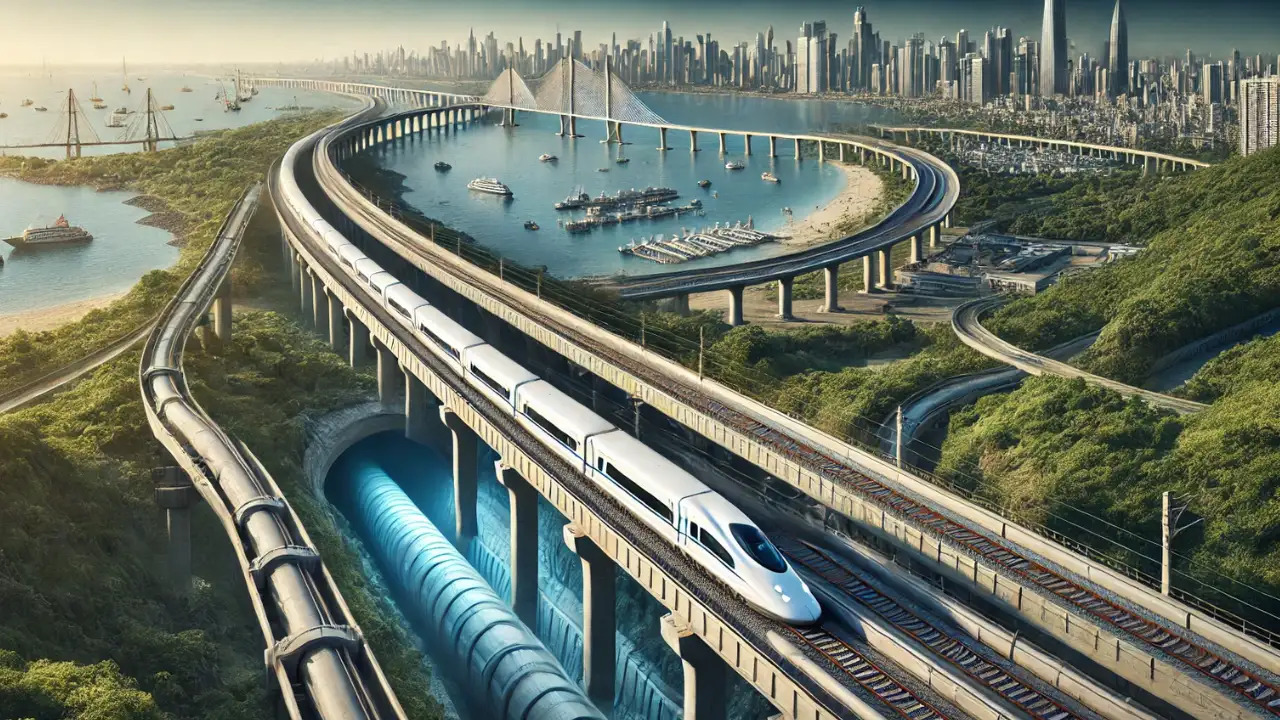
The newly completed bridge spans 100 metres and forms part of the elevated alignment cutting through the historic core of Ahmedabad. Unlike most sections of the corridor, which rely on shorter concrete viaduct spans, this segment demanded a bespoke solution due to its proximity to existing and under-construction urban transit systems. Urban planners involved in the project note that the alignment crosses above an underground metro tunnel, leaving little tolerance for conventional foundation placement. To avoid transferring structural loads onto the metro tunnel below, engineers adopted a steel truss configuration with foundations pushed further apart than usual. The result is a single, uninterrupted span capable of carrying high-speed rail loads without compromising the safety of parallel transport infrastructure. Officials overseeing the corridor say this approach reflects a broader shift toward adaptive design as Indian cities layer new mobility systems over ageing networks.
The bridge weighs over a thousand metric tonnes and rises well above surrounding rail lines, running parallel to one of the city’s busiest suburban corridors. Assembly was carried out on temporary elevated supports, after which the structure was carefully lowered into position, an operation that required tight coordination to minimise disruption in a crowded rail zone. This bridge is the thirteenth steel structure completed in Gujarat as part of the high-speed rail programme, with several more planned in similarly complex urban environments. Industry experts see these works as a test case for how future megacities can retrofit climate-efficient mass transit without large-scale demolition or displacement. Steel superstructures, while carbon-intensive to produce, allow longer spans and fewer foundations, reducing land take and interference with underground utilities.
Beyond engineering, the project carries wider implications for urban mobility and economic productivity. The Mumbai Ahmedabad bullet train bridge network is expected to shorten intercity travel times significantly while freeing capacity on conventional rail lines used by daily commuters and freight. For cities like Ahmedabad, this creates opportunities to reimagine station precincts as mixed-use, transit-oriented districts rather than purely transport nodes. As construction progresses, planners caution that the next challenge lies not in span length but in integrating stations, last-mile connectivity, and energy-efficient operations. How these elements come together will determine whether high-speed rail becomes a catalyst for more inclusive and resilient urban growth or merely another layer of infrastructure in already crowded cities.