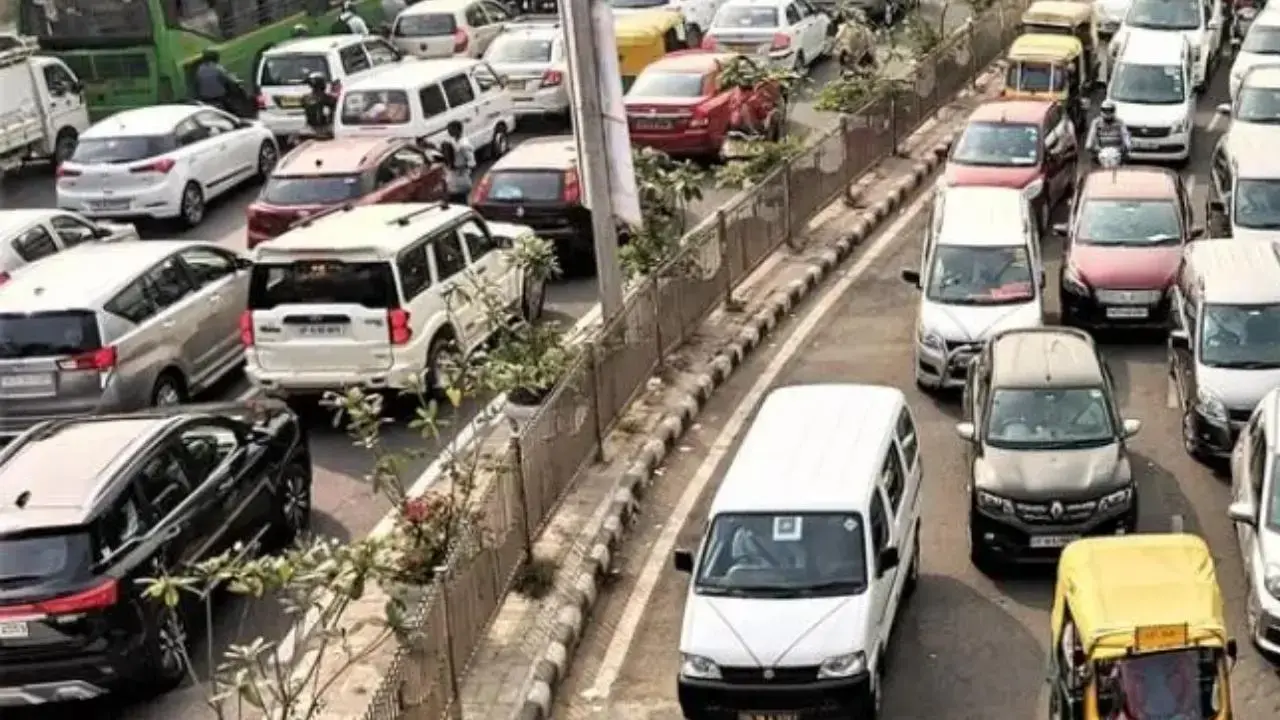
Mumbai’s traffic authorities have rolled out a set of targeted, temporary restrictions across parts of the western suburbs, aiming to ease congestion, improve road safety and reclaim limited street space in densely built residential areas. The measures include declaring a key stretch in Malad East as a no-parking zone and restricting the movement of heavy vehicles on several narrow roads in Borivali East, reflecting a more granular, area-specific approach to traffic management.
In Malad East, the road segment between Jain Mandir Road and Jijamata Vidyamandir, falling under the Kurar police jurisdiction, has been designated as a no-parking zone on both sides for a period of three months. Traffic officials assessed that the carriageway’s limited width, combined with unchecked roadside parking, had been causing persistent bottlenecks, slowing emergency access and increasing risks for pedestrians and local residents. Officials involved in the decision say the intervention follows repeated complaints from the neighbourhood, particularly about night-time issues linked to illegally parked vehicles. By prohibiting parking along the entire stretch, authorities aim to ensure uninterrupted traffic flow while discouraging misuse of public roads as informal parking lots. Enforcement action under the Motor Vehicles Act will apply during the restriction period, signalling a stricter stance on compliance.
A similar logic underpins the parallel restrictions introduced in Borivali East, where the entry of heavy vehicles and private water tankers has been temporarily prohibited on a network of narrow internal roads. These include access routes near residential clusters and local markets that have seen frequent congestion and, in some cases, serious accidents. Traffic planners note that such roads were never designed to handle large commercial vehicles, yet have increasingly been used as shortcuts or informal loading points. The Borivali restrictions, effective daily during daytime hours for an initial trial period of three months, are intended to reduce conflict between local traffic, pedestrians and oversized vehicles. However, the order maintains uninterrupted access for essential services, including food supply vehicles, fuel tankers, ambulances, fire services and civic utility fleets. This balance, officials say, is critical to ensuring that traffic regulation does not disrupt daily life or essential economic activity.
Urban mobility experts view these neighbourhood-level interventions as part of a broader shift in Mumbai’s traffic strategy. Rather than relying solely on large infrastructure projects, authorities are increasingly focusing on operational measures—such as parking control and vehicle access management—to optimise existing road networks. Such steps can deliver quick gains in travel efficiency, safety and emissions reduction, particularly in older suburbs with limited scope for road widening. As Mumbai continues to densify and vehicle ownership rises, the effectiveness of these measures will depend on consistent enforcement, availability of alternative parking options and cooperation from local users. If successful, the Malad and Borivali experiments could inform similar micro-level traffic management solutions across other congested pockets of the city.
Mumbai Enforces New No Parking Zones In Suburbs