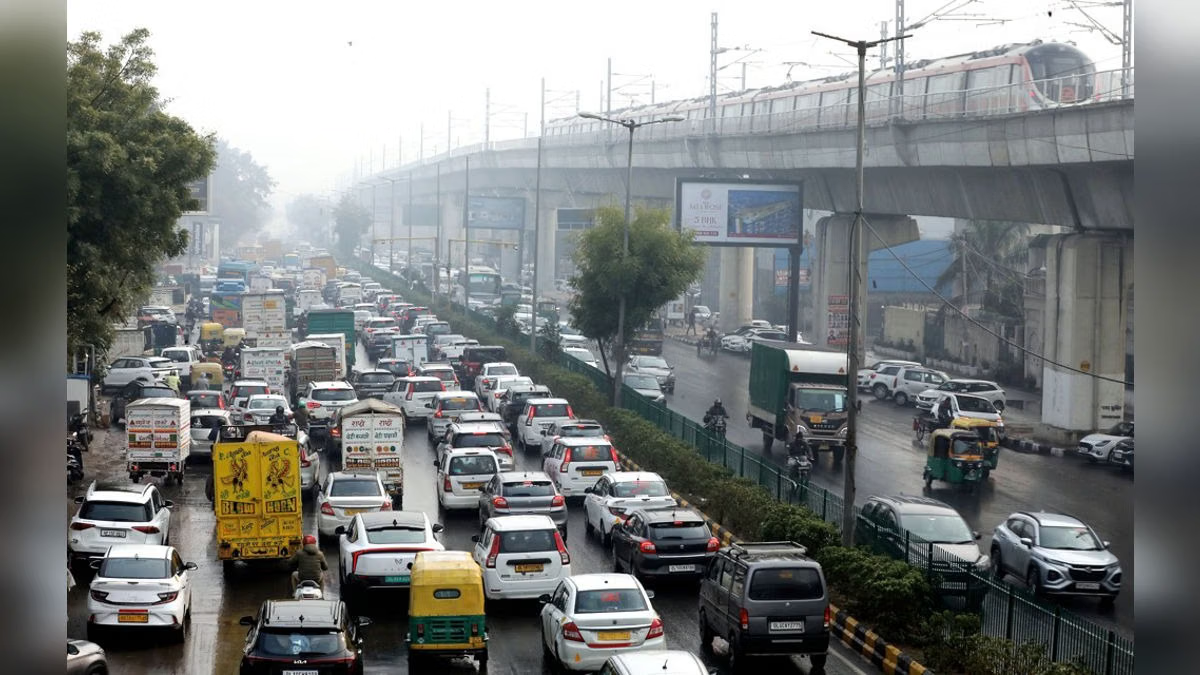
Central Delhi is set to undergo temporary traffic regulation on Thursday morning as authorities prepare the Rajghat precinct for a nationally significant commemorative gathering. Movement controls will be introduced across several arterial roads and junctions to accommodate security protocols and ceremonial logistics, affecting daily commuters, public transport users, and commercial traffic in one of the capital’s most connected urban zones.
The measures will be implemented around Mahatma Gandhi Smriti Sthal, where an official Martyrs’ Day observance is scheduled. City traffic managers confirmed that vehicular movement will be moderated between mid-morning and noon, with diversions activated dynamically based on convoy movement and on-ground security assessments. While the arrangements are time-bound, their impact is expected to extend beyond the immediate vicinity due to the centrality of the affected corridors. Key junctions linking Old Delhi, the central business district, and eastern parts of the city are likely to see regulated traffic flow. These include intersections and road stretches that serve as daily conduits for office commuters, institutional traffic, and freight movement. Urban mobility experts note that even short-duration restrictions in this zone can cascade into longer travel times across the wider road network, particularly during weekday peak hours.
Public transport routes passing through the area may be rerouted temporarily, placing additional pressure on parallel corridors such as ring road connectors and flyovers. While traffic personnel will be deployed extensively, transport planners point out that the dependence on road-based diversion remains a structural challenge for Delhi, where ceremonial, administrative, and economic functions overlap within a compact geography.From an urban sustainability perspective, planned traffic curbs present both a challenge and an opportunity. Stop-and-go congestion during diversions can elevate emissions locally, affecting air quality in dense residential and institutional areas. At the same time, officials have encouraged the use of public transport during the restriction window, aligning with broader goals of reducing private vehicle dependence and promoting low-carbon mobility. Real estate and urban infrastructure analysts observe that recurring event-led restrictions underline the need for better integration of heritage zones with modern transport planning.
Memorial precincts such as Rajghat attract both civic functions and daily pedestrian movement, calling for long-term solutions like improved last-mile connectivity, pedestrian-priority buffers, and enhanced traffic forecasting systems.Commuters have been advised to plan travel in advance, avoid non-essential trips through the central zone during the regulated hours, and adhere to designated parking norms to prevent bottlenecks.Public safety agencies have also urged vigilance in public spaces, reflecting heightened security arrangements typical of high-profile civic occasions. As Delhi continues to host national events within its historic core, urban planners argue that balancing security, mobility, and environmental performance will be critical. Future improvements will depend on how effectively the city can combine real-time traffic management with long-term investments in resilient, people-first transport infrastructure.
Delhi Mobility Adjusted Around Rajghat Precinct