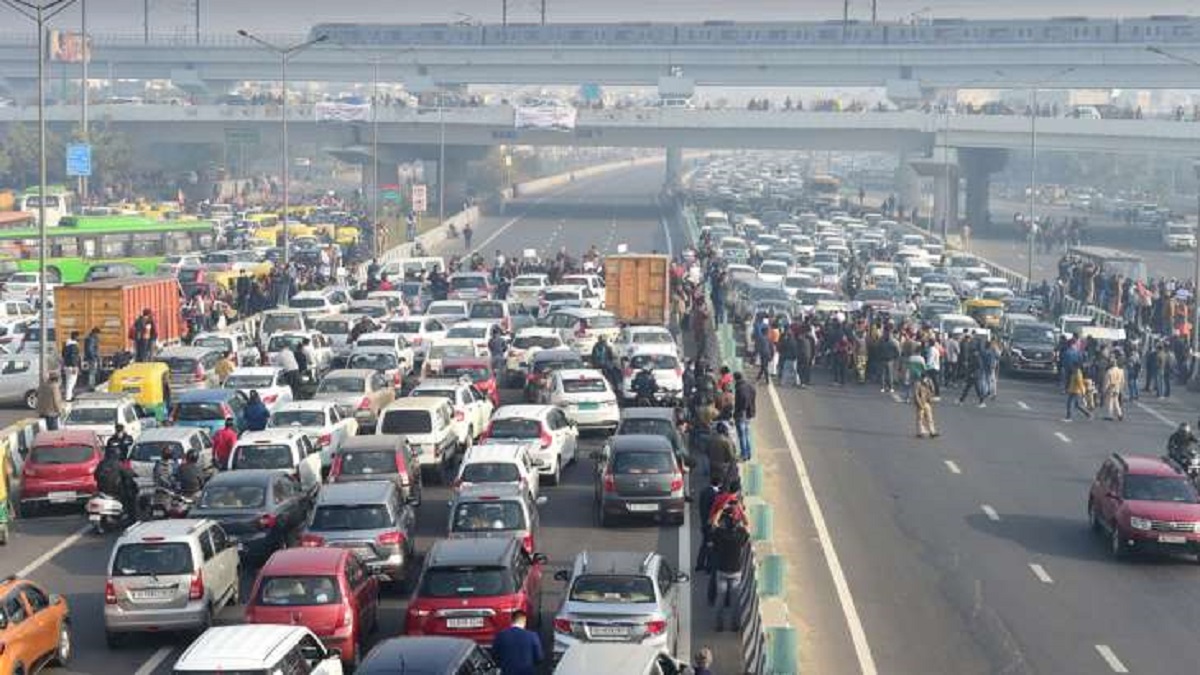
Central Delhi witnessed planned traffic restrictions on Wednesday morning as authorities rolled out a high-security civic protocol around the Rajghat precinct, temporarily reshaping mobility across one of the capital’s most critical urban corridors. The measures, implemented to facilitate a nationally significant commemorative event, disrupted peak-hour movement across administrative, commercial, and institutional zones, highlighting the fragile balance between ceremonial governance and everyday urban functioning.
Road regulations were enforced across multiple arterial junctions linking Old Delhi, the central business district, and east Delhi. Traffic movement was selectively halted or redirected based on real-time security assessments, particularly during the arrival and departure windows of senior public office holders. Transport officials confirmed that vehicular flow was moderated between mid-morning and noon, affecting office commuters, logistics services, and public transport operations.
The Delhi traffic diversions carried wider implications beyond inconvenience. Central Delhi remains a dense convergence point for government offices, legal institutions, wholesale markets, and healthcare facilities. Even short-duration traffic curbs in this zone ripple across supply chains, workforce productivity, and emergency response times. Urban planners note that recurring event-led restrictions expose structural vulnerabilities in the city’s traffic management systems, especially in areas where ceremonial routes overlap with daily economic arteries. Public transport services were partially rerouted, placing additional pressure on feeder roads and peripheral corridors such as ring-road connectors and flyovers. While traffic personnel were deployed extensively to manage on-ground movement, residents reported extended travel times and congestion spillovers in adjoining neighbourhoods. Experts argue that such scenarios reinforce the case for decentralised ceremonial planning and better integration of pedestrian-first zones around heritage and memorial districts.
From a sustainability perspective, stop-start traffic patterns contribute to higher vehicular emissions during peak hours, countering Delhi’s broader clean-air and climate-resilience goals. Transport economists point out that predictable civic events offer an opportunity to pilot low-emission mobility strategies, such as temporary car-free buffers, improved public transport frequency, and staggered office timings in high-impact zones. City administrators maintain that security considerations remain paramount during nationally significant observances.
However, urban governance specialists suggest that transparent, data-driven traffic advisories and earlier stakeholder coordination could reduce disruption, particularly for women commuters, informal workers, and essential service providers who bear a disproportionate burden during mobility shutdowns.
As Delhi continues to host high-profile civic and political events, the challenge lies in evolving traffic management frameworks that respect security imperatives while safeguarding economic continuity and urban liveability. The effectiveness of future interventions will depend on how well the city integrates technology, sustainability planning, and inclusive mobility into its event management playbook.
Delhi Commuters Face Central Zone Road Controls