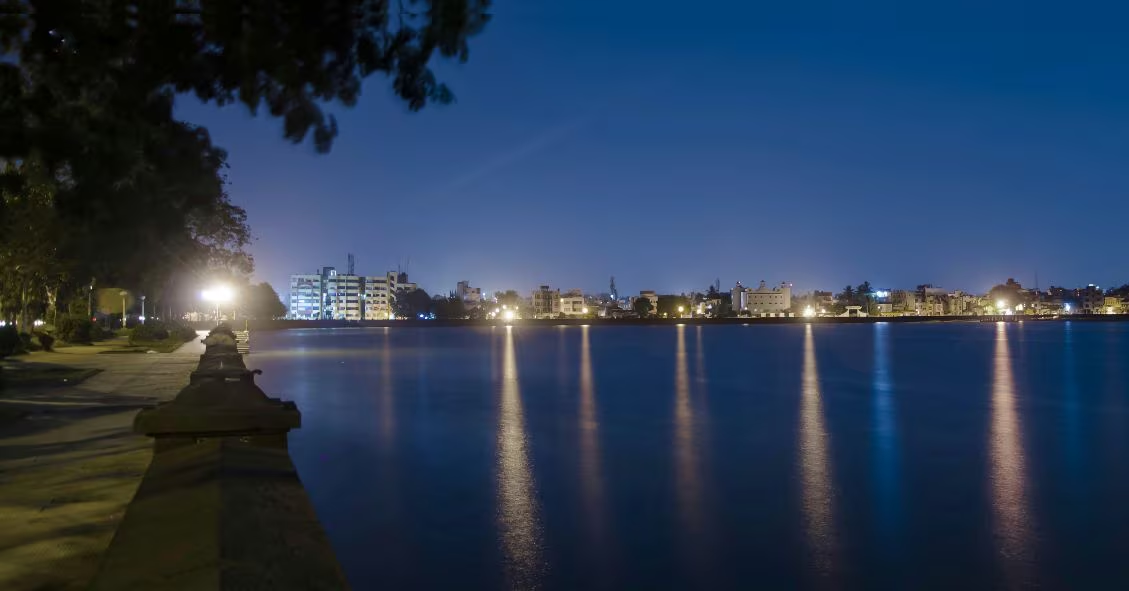
Indore Warm Night Temperatures Signal Early Summer Shift
A notable rise in minimum temperatures across south central Maharashtra has effectively curtailed the region’s usual winter chill, altering nighttime comfort levels in cities such as Kolhapur, Sangli, Satara and Solapur. The shift — observed over recent days — has implications for agriculture, public health, and urban climate resilience planning as local seasonal norms deviate earlier than expected.
Data from the India Meteorological Department (IMD) indicates that minimum temperatures jumped by an average of 3°C to 5°C in the affected districts, with Kolhapur’s lows rising to nearly 20°C and Sangli recording around 20°C, compared with cooler readings characteristic of this time of year. Maximum daytime temperatures also edged upward, signalling a broader thermal adjustment in the region’s atmosphere.
Climatologists attribute this rapid warming of night temperatures to a low‑pressure system over the Bay of Bengal, which has fostered partly cloudy skies and atmospheric moisture that trap heat closer to the surface after sunset. This phenomenon reduces nocturnal heat loss and elevates minimum readings — a pattern seen elsewhere in Maharashtra in recent weeks as global and regional circulation patterns shift.For urban residents, the warmer nights mean less reliance on traditional winter gear and heating methods. Markets and residential precincts in Kolhapur and surrounding towns display fewer winter accessories, as the local populace adapts to a perceived end of cold spells. Although superficially a comfort benefit, such deviations signal a broader climatic trend of temperature variability that may complicate seasonal planning for cities.
However, this weather transition is not universally beneficial. The IMD has forecast isolated rainfall in parts of Kolhapur and Satara, raising concerns among farmers about potential damage to crops nearing harvest, particularly mangoes, which are sensitive to unseasonal moisture. Other horticultural staples like cashew, grapes and wheat could also face yield risks if the weather remains unsettled.Agricultural economists note that such early weather shifts — especially minimum temperature increases combined with sporadic rains — can disrupt crop maturation cycles and pest management practices, often leading to financial stress for smallholders reliant on predictable climatic windows. Given south central Maharashtra’s agrarian backbone, these dynamics merit close monitoring by both local governments and climate adaptation planners.
Urban public health officials also caution that warmer overnight temperatures may affect respiratory health patterns, as residents adjust to fluctuating thermal conditions. While the immediate winter chill has receded, the absence of a steady cold season could impact disease vectors and immune responses, particularly among vulnerable populations such as older adults and children.
This early transition in minimum temperatures underscores the need for integrated urban‑rural climate resilience strategies. As cities like Kolhapur expand and agricultural zones evolve, planners and policymakers must consider adaptive frameworks that accommodate temperature variability, shifting precipitation patterns and their socioeconomic effects — rather than relying on historical seasonal expectations.