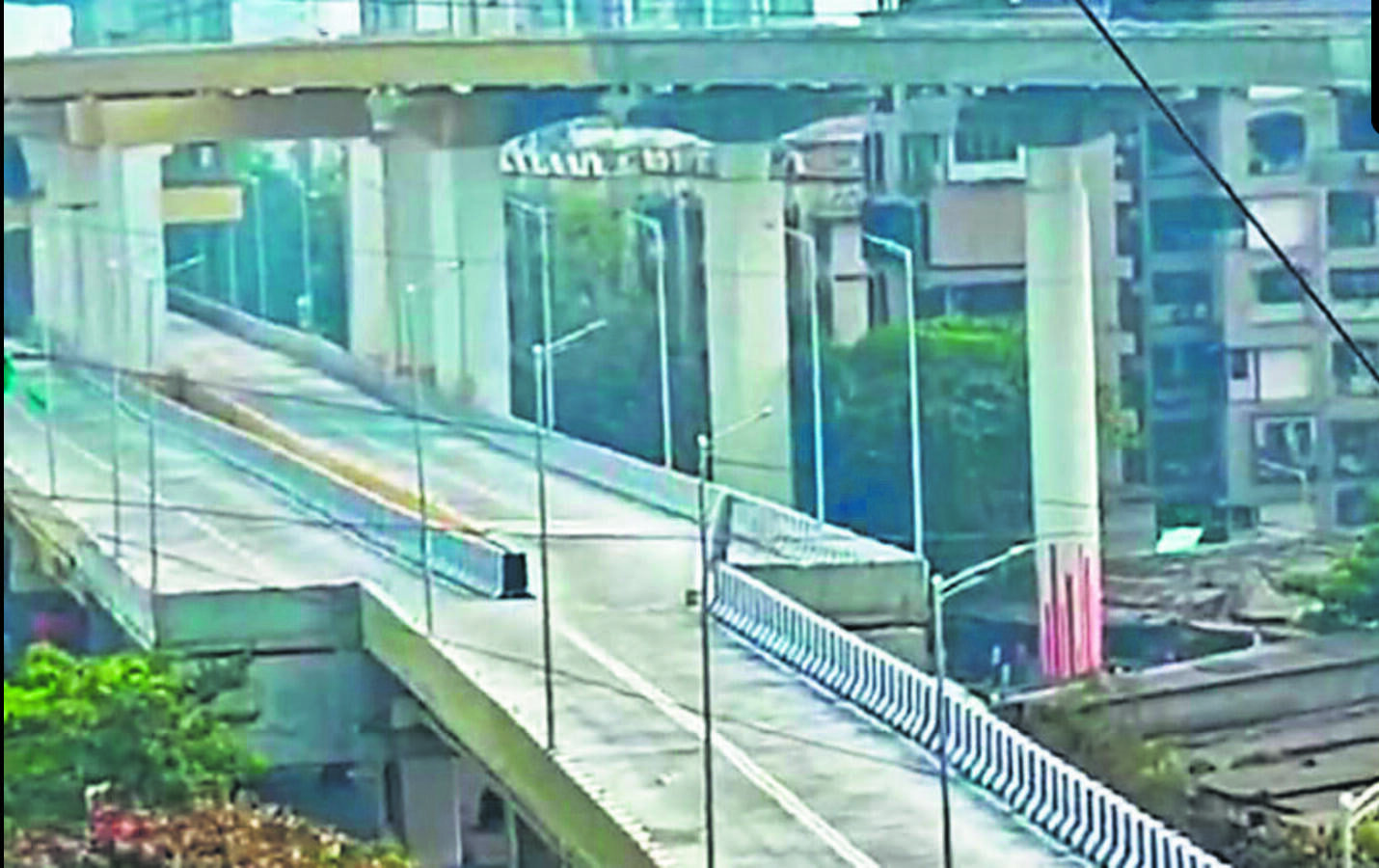
Mumbai Metropolitan Region Development Authority (MMRDA) has moved to revise the design of a controversial flyover in the Mira‑Bhayandar corridor after intense public criticism over its lane configuration — spotlighting urban infrastructure planning tensions in one of India’s fastest‑growing metropolitan peripheries. The double‑decker structure, part of the Metro Line 9 initiative, had drawn scrutiny for a segment where a four‑lane road narrows sharply to two lanes, raising commuter and safety concerns ahead of its planned February opening.
Constructed at Golden Nest Junction — a strategic intersection where multiple arterial roads converge — the flyover is built to elevate both metro tracks and traffic lanes. However, aerial footage shared widely on social media ignited debate after vehicles transitioning from four lanes appeared to be funneled into a two‑lane stretch. Critics argued this could create bottlenecks and heighten accident risk, stimulating wider questions about planning transparency and road safety in large‑scale transport projects.Responding to the backlash, MMRDA officials acknowledged that while a suite of safety features such as crash barriers, signage and surface markers has been installed, further modifications will be undertaken where the ramp joins the main carriageway. The authority said it will replace sections of the median wall with reflective kerb stones and delineators designed to improve visibility and driver guidance, addressing public and activist calls to pre‑empt potential hazards.
Urban planners note that such design challenges are not uncommon in constrained right‑of‑way environments, especially where burgeoning suburbs like Mira Road and Bhayandar must balance rapid mobility expansion with land availability and evolving travel patterns. In this case, technical explanations offered by MMRDA indicate that the lane reduction reflects existing space limitations and a phased approach to future extension, rather than a mis‑engineered construct. Provision for additional lanes toward Bhayandar West remains part of the broader plan but requires further approvals and coordination with local civic bodies.Nevertheless, residents and commentators have pressed for more inclusive planning processes, urging authorities to foreground road user safety and visibility during engineering adaptations. Critics contend that the abrupt geometric transition — if left insufficiently mitigated — could undermine traffic flow efficiency, particularly at peak hours when commuter volumes surge.
From an economic and urban mobility perspective, the episode underscores the complexity of integrating new metro‑centric road infrastructure into dense, mixed‑use suburbs without disrupting everyday travel. Future assessments, planners say, should embed predictive traffic modelling, local stakeholder engagement, and incremental safety audits ahead of public openings. As MMRDA implements its revisions, the broader discourse on suburban transport design and risk management in the Mumbai Metropolitan Region is likely to sharpen, pointing to early lessons for other megacity fringe developments.