


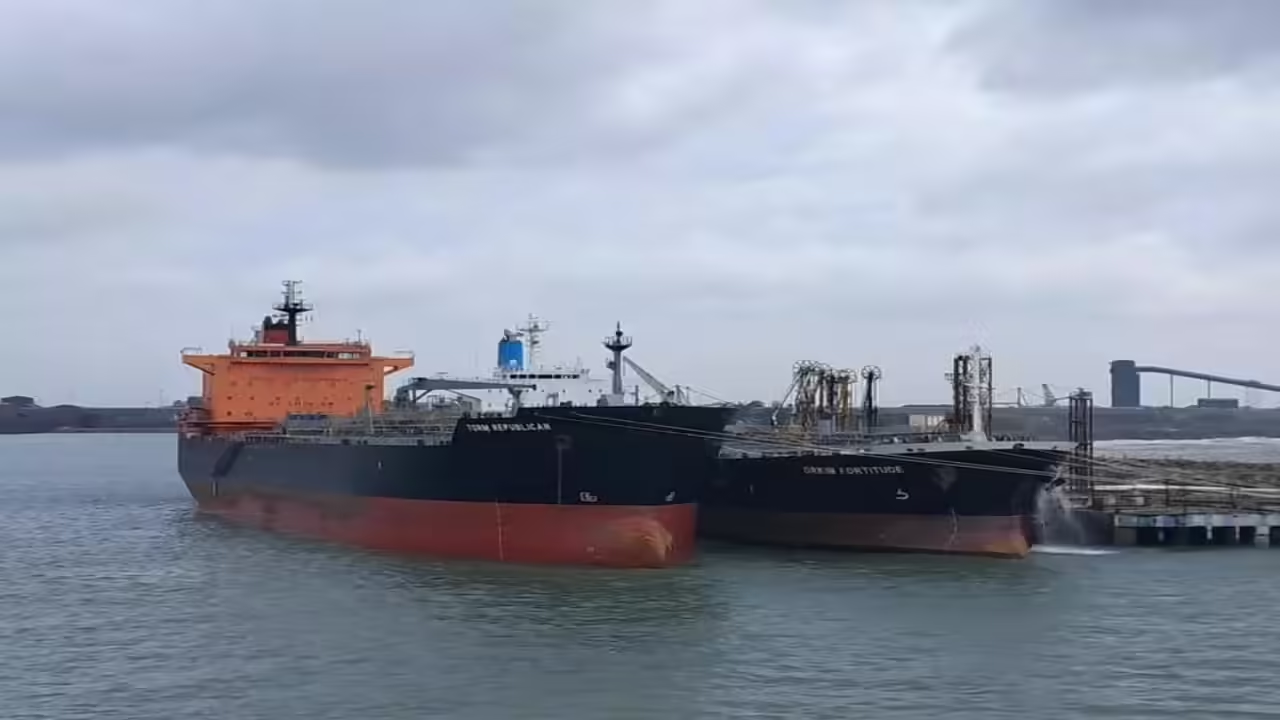
Paradip, Odisha — In a strategic pivot towards low-carbon port operations, Paradip Port Authority (PPA) has commissioned a shore-to-ship power supply system at one of its main berths, enabling docked vessels to draw electricity directly from shore rather than running onboard engines. This technical milestone, only the second of its kind among India’s major ports, signals a shift in how maritime gateways contribute to urban air quality and climate resilience in coastal regions. The new shore power infrastructure was activated at the CB-1 berth during a demonstration where a commercial vessel successfully connected to the electrical grid to fulfil its onboard energy needs while alongside. According to port officials, the system will allow visiting ships equipped to receive shore power to reduce auxiliary engine use, cutting local emissions of nitrogen oxides, sulphur oxides, particulates and carbon dioxide — pollutants known to exacerbate respiratory risks in nearby communities.
For port cities like Paradip, where industrial and transport emissions already strain local air quality, the adoption of shore power expands the sustainability agenda beyond logistics efficiency to tangible public health benefits. Urban planners and environmental experts note that ports are among the highest intensity polluters in urban and peri-urban landscapes due to continuous diesel engine operation during berthing periods. Providing clean electricity at berth directly addresses this challenge, aligning port functions with broader city decarbonisation and clean mobility targets. The shore power system forms part of a broader transition at Paradip Port towards cleaner energy and infrastructure. Classified as a designated green hydrogen hub under the national green energy mission, the port is also planning infrastructure for green hydrogen handling, mechanised cargo berths, and renewable power integration — elements that together shape a future-ready maritime economy.
Senior officials describe the shore power rollout as not just an operational upgrade but an economic enabler. With global shipping increasingly regulated under decarbonisation mandates — including energy efficiency measures and emission caps — ports offering cold-ironing infrastructure can attract greener vessels and shipping lines seeking cost-effective compliance pathways. Industry analysts foresee that ports with such capabilities may command competitive advantages in attracting trade routes and logistics partners aiming to reduce carbon footprints. However, integration challenges remain. Vessel retrofits to accept shore power and grid capacity upgrades are prerequisites for widespread adoption. Urban energy planners stress the importance of sourcing the shore power from renewable or low-carbon generation to fully realise emission reductions; depending on the grid mix, benefits could vary.
As India’s east coast expands its role in the national and international supply chain, initiatives like shore-to-ship power at Paradip exemplify how infrastructure can be decarbonised while enabling robust economic growth. For cities and port regions grappling with pollution and climate impacts, such innovations underscore the importance of integrated planning across energy, transport and urban health objectives.
Also Read: Pune Riverfront Opens Public Access Phase
Paradip Port Bolsters Sustainability With Shore To Ship Power
