


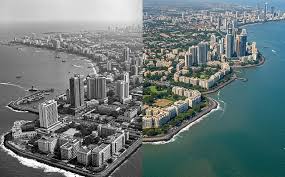
Mumbai’s next phase of urban growth is increasingly being shaped not by new land acquisition, but by the reinvention of its industrial past. Across the city, legacy factories, mills and manufacturing campuses are steadily being repurposed into commercial districts, office hubs and high-value real estate, reflecting a structural shift in how India’s financial capital uses its most scarce resource land.
Once the backbone of Mumbai’s economy, large industrial estates that powered textiles, food processing and light engineering are now being unlocked as production activities relocate to peripheral regions. Rising land values, coupled with infrastructure expansion in satellite cities, have made it economically rational for legacy manufacturers to monetise inner-city holdings and transition toward asset-light operations. One of the latest examples of this trend involves a long-established food manufacturing campus in the western suburbs, where redevelopment plans are underway to convert an ageing production site into a large commercial complex. Urban planners tracking the proposal note that such transformations are emblematic of Mumbai’s evolution from a manufacturing-driven economy to a services-led metropolis. Central Mumbai’s historic mill belt offers the clearest illustration of this transition. Neighbourhoods once defined by textile chimneys and worker housing have, over the past three decades, been recast into dense mixed-use precincts. Regulatory changes in the 1990s enabled the redevelopment of mill lands, unlocking some of the city’s largest contiguous parcels for real estate development. Today, these areas host corporate offices, luxury residences, retail destinations and hospitality assets that anchor Mumbai’s modern skyline.
The redevelopment wave has since moved outward. In suburbs such as Andheri, Kurla, Goregaon and Mulund, former factories, warehouses and engineering units have been converted into IT parks, co-working campuses and residential projects. This pattern mirrors global urban trends, where older industrial cities repurpose centrally located land to support new economic activity while pushing logistics and manufacturing to better-connected outskirts. From a city-planning perspective, such redevelopment carries both opportunity and risk. On one hand, it allows Mumbai to densify around existing transport networks, reducing sprawl and supporting lower-carbon commuting patterns. On the other, critics argue that unchecked monetisation of industrial land can exacerbate affordability challenges and strain civic infrastructure if not aligned with inclusive housing and public amenity provision. Looking ahead, urban policy experts expect the next frontier of redevelopment to involve large institutional landholdings. Railway land, port estates along the eastern waterfront, and salt pan parcels in suburban areas are all seen as potential catalysts for large-scale urban transformation over the next decade. How these assets are integrated into the city fabric will play a crucial role in shaping Mumbai’s climate resilience, mobility patterns and social equity.
As industries migrate outward and Mumbai continues to consolidate its role as a financial and services hub, the city’s growth story is increasingly being written on reclaimed ground where production floors once stood, and where the future of urban living is now being constructed.
Also Read: Surat Real Estate Group Faces Multi City Tax Probe
Old Factories Reshape Mumbai Real Estate Landscape
