


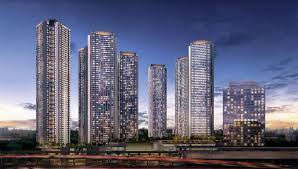
A Mumbai-headquartered real estate developer focused on premium and ultra-luxury housing has reported steady sales momentum during the December quarter, reinforcing confidence in the city’s high-value residential segment even as broader market conditions remain uneven.
During the third quarter, the developer recorded year-on-year growth in pre-sales, supported by continued traction across its luxury portfolio in Mumbai and the wider Mumbai Metropolitan Region (MMR). While customer collections during the period were comparatively muted, analysts tracking the sector attributed this to project-specific regulatory timelines rather than a slowdown in underlying demand. Industry experts point out that luxury housing markets often display uneven quarterly cash flows, particularly when large-ticket projects await final regulatory clearances. In this case, collections are expected to normalise as approvals for a marquee South Mumbai coastal project are secured, enabling faster conversion of bookings into cash inflows. The company’s performance highlights a broader trend within Mumbai’s real estate ecosystem: sustained demand for well-located, low-density, high-specification housing despite rising prices and tighter liquidity conditions. Unlike mid-income housing, which is more sensitive to interest rates, the luxury segment continues to benefit from end-user wealth, investor interest, and limited supply in established urban neighbourhoods. Urban planners note that premium developments in land-constrained cities like Mumbai often emerge through redevelopment or strategic land aggregation rather than greenfield expansion. The developer’s multi-location land acquisition strategy across key MMR micro-markets reflects this reality, allowing it to build a diversified pipeline without over-reliance on any single corridor.
Market observers also flagged the company’s expanding project pipeline, which includes both domestic developments and an international joint venture, as an indicator of long-term growth ambition. Such diversification, while adding complexity, can help developers hedge against cyclical slowdowns in individual markets. From a city-building perspective, the focus on high-value residential projects raises important questions around inclusivity and spatial equity. However, economists argue that premium housing plays an indirect role in urban regeneration by unlocking redevelopment potential, upgrading infrastructure, and cross-subsidising improvements in surrounding precincts particularly in older parts of the city. Financial analysts tracking Mumbai’s real estate sector suggest that strong cash-flow generation over the medium term could enable the developer to accelerate new project additions. This, in turn, may influence market sentiment, especially in a phase where investors are closely monitoring balance-sheet discipline, execution capability, and regulatory compliance.
As Mumbai continues to evolve as a global financial and lifestyle hub, the performance of developers operating in the luxury and ultra-luxury segments offers insights into the city’s economic resilience. The coming quarters will be closely watched to see whether regulatory clearances, project launches, and collections align with the optimistic growth outlook currently embedded in market expectations.
Also Read: Boutique Law Firm Enters Mumbai Property Ecosystem
Mumbai Luxury Projects Drive Realty Market Interest
