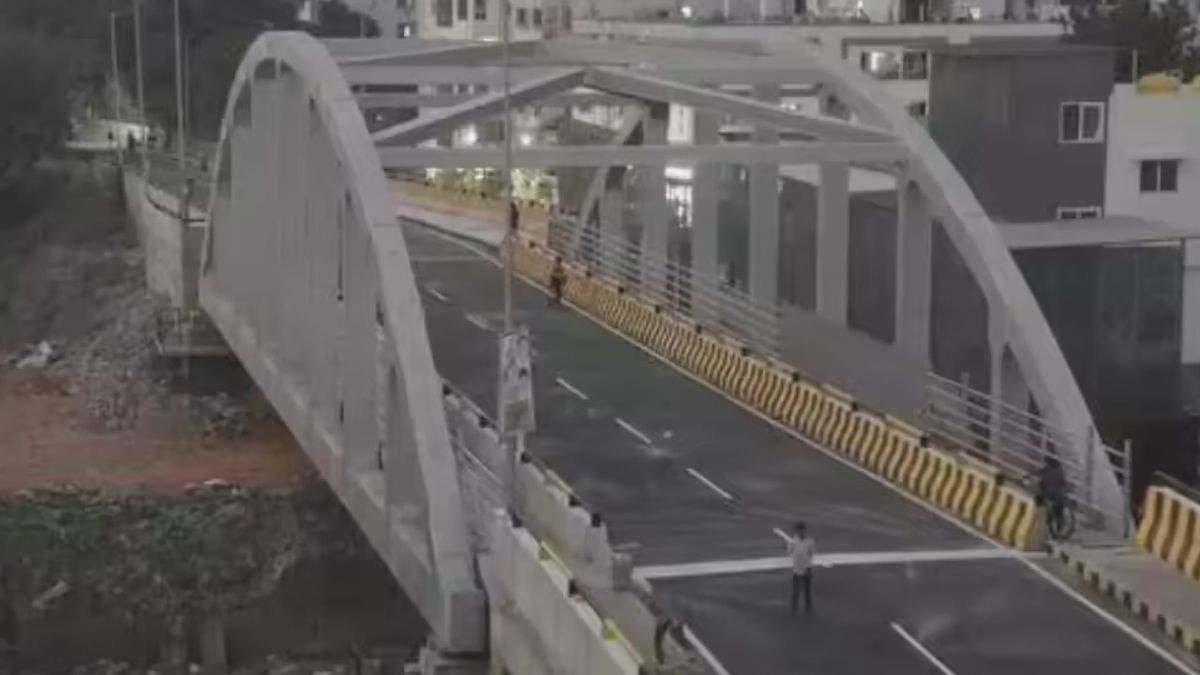
After nearly two years of disruption, a critical railway overbridge linking Goripalya and Hosahalli in west Bengaluru has been completed, restoring a key east–west urban connection that thousands of residents rely on daily. The reopening marks an important moment for neighbourhood-level mobility in a city where ageing infrastructure and delayed upgrades often amplify congestion and economic loss. The bridge, located on a busy suburban corridor, was rebuilt after structural assessments found the earlier span had exceeded its safe operational life. Railway authorities initiated a full replacement rather than incremental repairs, citing long-term safety and durability concerns. Urban planners note that such decisions, while disruptive in the short term, are essential for preventing catastrophic failures in dense city environments.
Originally tendered in 2023 with an estimated cost of ₹6 crore and an 18-month timeline, the project encountered unexpected underground utility conflicts soon after demolition began. Construction teams discovered undocumented high-voltage electricity lines running beneath the bridge alignment, forcing a prolonged coordination process with multiple agencies. The relocation and reconfiguration of these services delayed core construction by several months and ultimately doubled the project cost to nearly ₹12 crore, according to officials familiar with the work. The prolonged closure significantly altered daily life in surrounding localities. Residents faced longer travel times, diverted traffic strained residential streets, and public transport schedules became unreliable. For students, informal workers, and small businesses, the impact translated into lost time and income an often overlooked cost in urban infrastructure projects.
From a governance perspective, the project highlights persistent gaps in utility mapping and inter-agency coordination across Indian cities. Infrastructure experts argue that comprehensive digital records of underground assets could substantially reduce delays, cost overruns, and carbon emissions caused by prolonged construction activity. The rebuilt structure includes upgraded approach roads, reinforced concrete sections, pedestrian-friendly kerbs, and energy-efficient street lighting. While modest in scale, these elements align with broader goals of safer, more inclusive urban streets particularly in mixed-use neighbourhoods where pedestrians, cyclists, and public transport users share limited space.
For Bengaluru’s rapidly expanding western districts, the Goripalya–Hosahalli crossing plays a vital role in distributing traffic away from arterial roads. Its reopening is expected to ease peak-hour congestion and improve access to employment hubs, schools, and healthcare facilities, reinforcing the link between local infrastructure and economic resilience. As the city continues to invest in transport upgrades, urban policy specialists stress the importance of planning that prioritises lifecycle safety, climate resilience, and minimal disruption. The completion of the Bengaluru railway bridge offers relief today, but also underscores the need for more integrated, data-driven infrastructure delivery in the future.