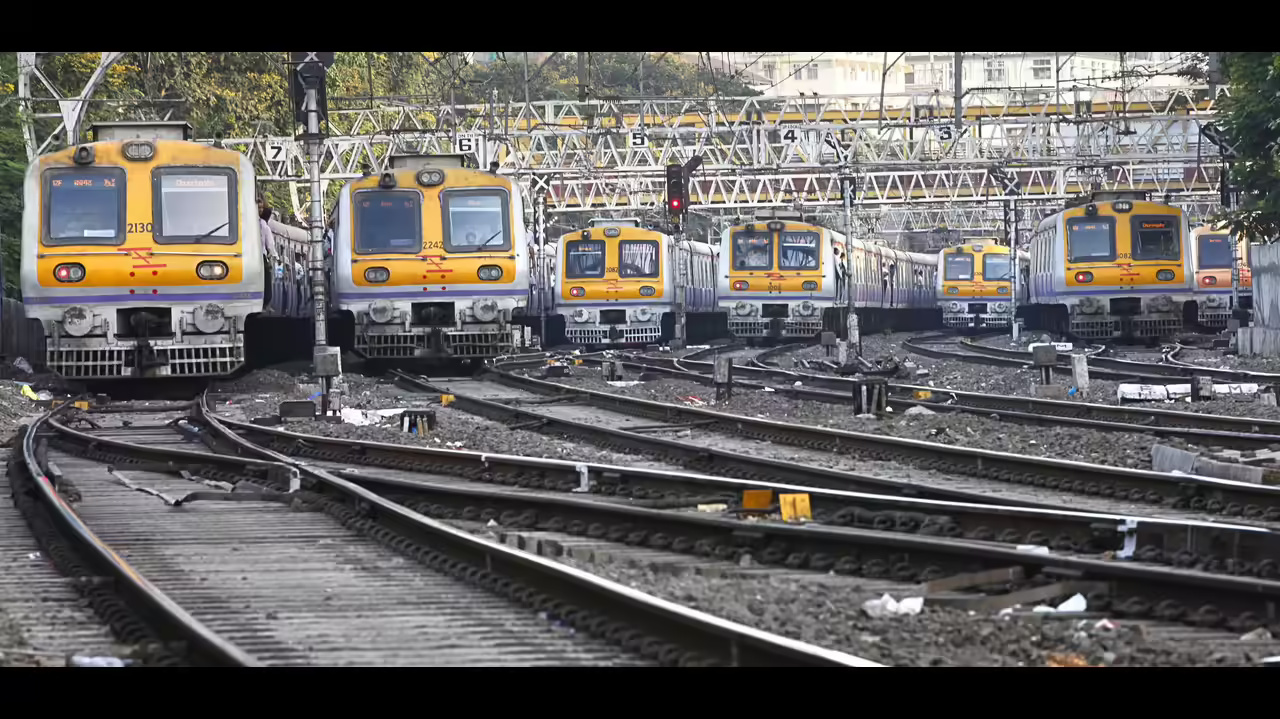
Daily commuters on Mumbai’s suburban railway network are intensifying pressure on railway authorities over persistent delays, cancellations, and poor service reliability on key corridors, particularly the Central and Harbour lines. The issue has emerged as a major urban mobility concern in a city where local trains remain the backbone of low-carbon, high-capacity public transport for millions of workers and students every day.
Commuter groups have flagged repeated disruptions on services towards Kasara and Karjat, with afternoon schedules emerging as a consistent pain point. According to passenger representatives, irregular train movement during off-peak hours often leads to sudden overcrowding when services are cancelled or delayed, creating safety risks and productivity losses for daily travellers. The absence of timely and accurate passenger information during disruptions has further compounded commuter frustration. During recent interactions with senior railway operations officials, commuter associations stressed that punctuality must be measured by on-ground performance rather than policy assurances. They argued that reliability is not merely a convenience issue but a fundamental requirement for economic participation in a city where long-distance commuting is unavoidable for many households priced out of central areas. Urban transport experts note that such delays disproportionately affect lower- and middle-income commuters who rely most heavily on suburban rail for affordable mobility.
Premium AC local services have also come under criticism. Passengers have raised concerns that higher fares have not translated into improved reliability, with delays frequently exceeding 30 minutes. The prioritisation of long-distance mail and express trains over suburban services during peak operational stress has been cited as a key structural issue affecting schedule adherence across the network. Railway officials have acknowledged capacity and infrastructure constraints, pointing to ongoing projects such as platform extensions and the phased introduction of 15-coach trains aimed at easing congestion. Authorities maintain that these upgrades are essential to long-term network resilience but concede that implementation will take time due to technical and operational complexities. Transport planners, however, caution that prolonged construction without interim service stabilisation can erode public confidence in mass transit systems.
From a sustainability perspective, reliable suburban rail services are central to Mumbai’s climate resilience strategy, helping reduce dependence on private vehicles and limiting urban emissions. Frequent disruptions risk pushing commuters towards road-based alternatives, worsening congestion and air quality. Experts emphasise that accountability mechanisms, transparent performance metrics, and real-time communication systems are as critical as physical infrastructure investments. Looking ahead, commuters and urban mobility specialists agree that restoring punctuality will require coordinated operational reforms alongside capacity expansion. Immediate improvements in timetable discipline, service prioritisation, and passenger communication could help stabilise trust while longer-term projects progress. As Mumbai continues to grow outward, the performance of its suburban rail network will remain a defining factor in ensuring inclusive, efficient, and sustainable urban mobility.
Mumbai Suburban Rail Punctuality Under Growing Scrutiny