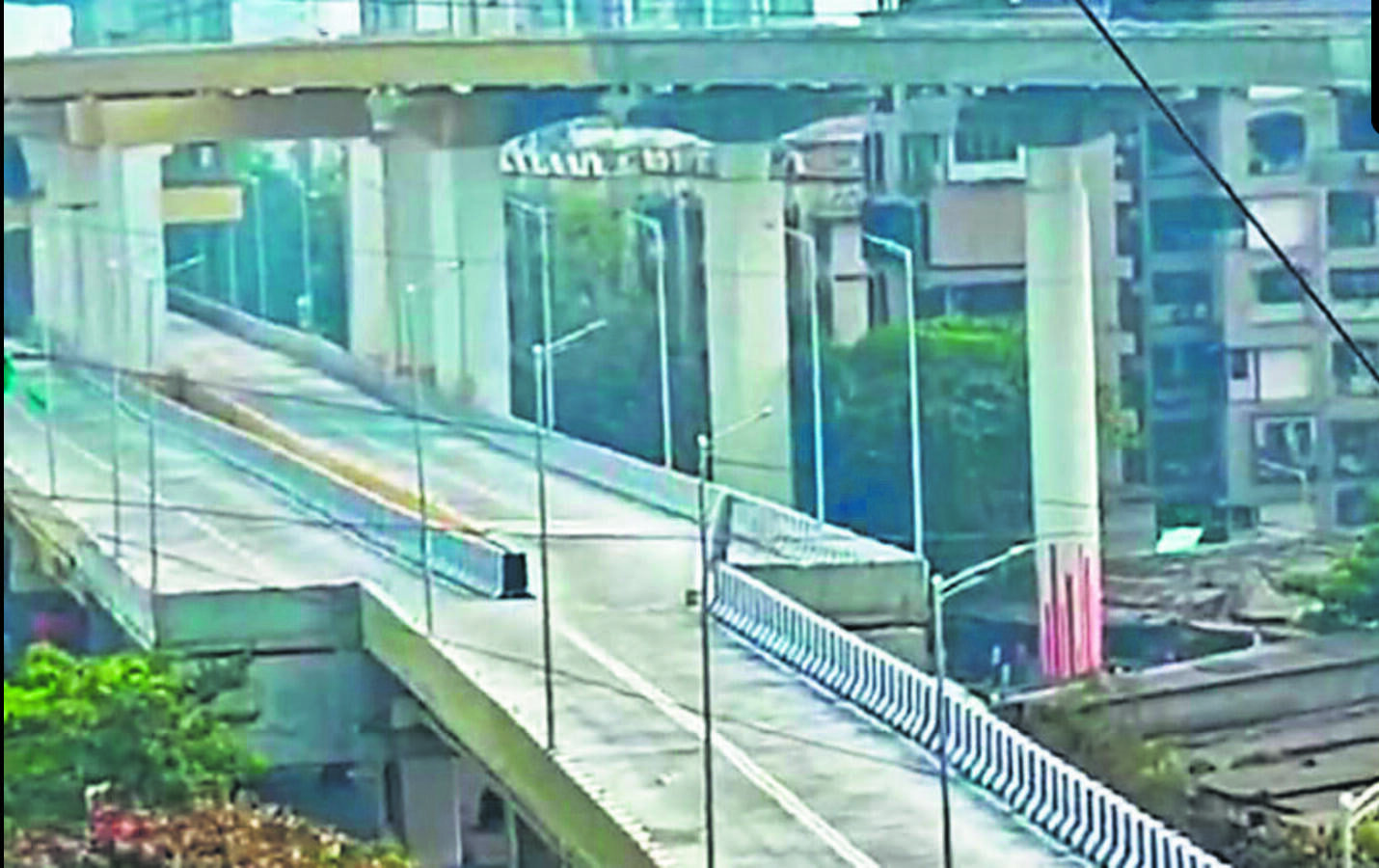
The Mumbai Metropolitan Region Development Authority has decided to rework sections of a newly built double-decker flyover in Mira-Bhayandar following mounting public scrutiny over its design and road safety implications. The decision comes weeks before the structure is scheduled to open to traffic and highlights growing citizen engagement around urban infrastructure quality in rapidly expanding suburban corridors.
The flyover, located at a key junction in Mira-Bhayandar, forms part of the Mumbai Metro Line 9 corridor connecting the northern suburbs to emerging residential and commercial zones. While conceived as a congestion-relief measure combining metro infrastructure and road traffic on separate decks, the structure has drawn criticism for a section where multiple traffic lanes narrow sharply, raising concerns about collision risks and driver confusion. Urban mobility experts note that such design transitions, if not handled carefully, can undermine the safety benefits of grade-separated infrastructure. In dense suburban areas like Mira-Bhayandar, where traffic includes private vehicles, buses, freight carriers and two-wheelers, abrupt lane reductions can create bottlenecks and accident-prone conditions, particularly during peak hours.
Officials associated with the project have acknowledged the feedback and confirmed that modifications will be undertaken before the flyover becomes fully operational. The changes are expected to focus on improving visibility, lane guidance and physical separation at critical points where ramps merge with the main carriageway. These interventions are aimed at reducing sudden driver decision-making and improving overall traffic flow. The flyover is one of several double-decker structures being built along the metro corridor, with rail infrastructure on the upper level and road traffic below. While similar designs have been implemented elsewhere in the Mumbai Metropolitan Region, transport planners point out that each junction presents unique challenges due to local traffic patterns, land constraints and pedestrian movement.
The episode has also renewed discussion around how large infrastructure agencies respond to public feedback. Citizen groups and urban activists argue that early-stage design reviews and on-ground simulations could help identify safety risks before construction reaches advanced stages. Infrastructure economists add that while design revisions may lead to short-term delays or additional costs, they often prevent higher social and economic losses linked to accidents and congestion. Beyond the flyover itself, the authority is continuing work on the larger metro corridor, with plans to open an initial stretch in phases. For daily commuters, the success of these projects will depend not only on speed and connectivity but also on how safely and intuitively new infrastructure integrates into existing neighbourhoods.
As Mumbai’s suburbs continue to urbanise at scale, the Mira-Bhayandar flyover redesign serves as a reminder that infrastructure delivery is not just about completion timelines. Attention to safety, adaptability and public trust will increasingly define how effectively cities build transport systems that are resilient, inclusive and fit for long-term urban growth.
MMRDA To Revise Mira Bhayandar Flyover Design