Ramgarh Coal Action Highlights Safety And Governance Gaps
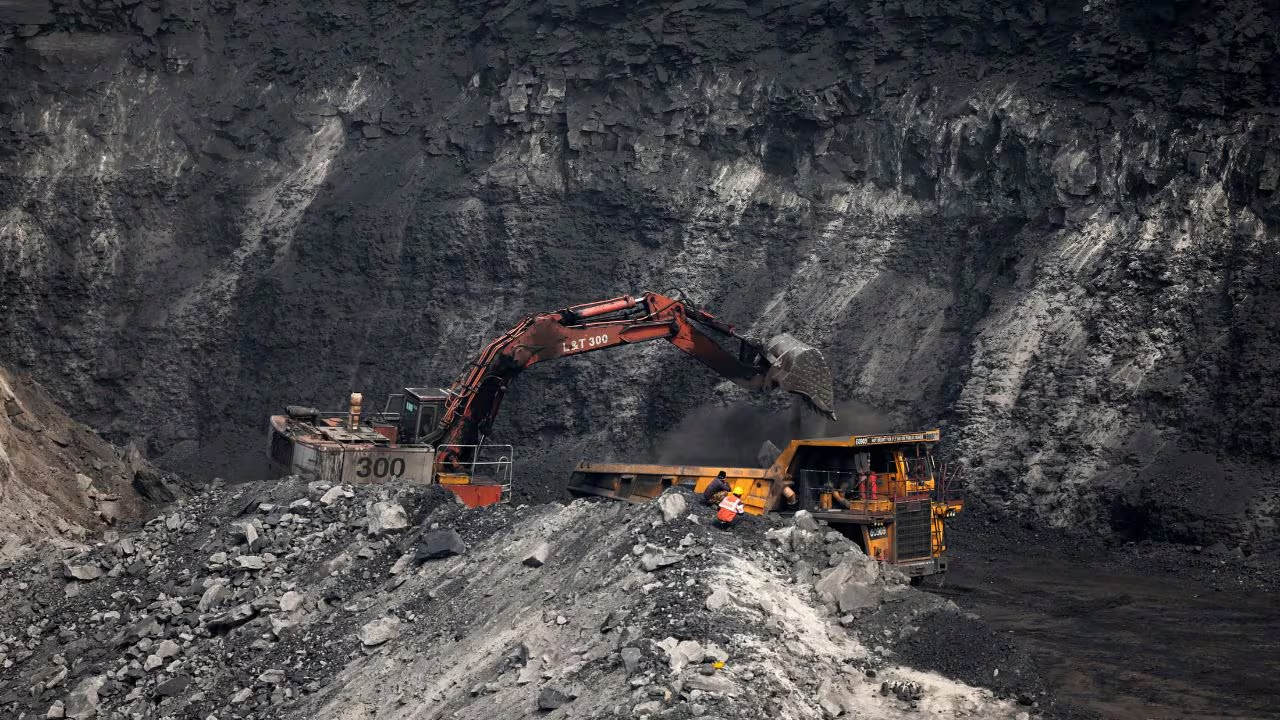
India’s state-owned mining major NMDC has formally initiated commercial coal extraction at the Tokisud North Coal Mine in Hazaribagh district of Jharkhand, marking a strategic pivot from its traditional focus on iron ore towards broader mineral supply chains. The move is expected to strengthen domestic coal availability, support power generators and energy-intensive industries, and contribute to regional economic activity.
The commencement of operations at Tokisud North represents a significant diversification milestone for NMDC, long recognised as the country’s largest iron ore producer with decades of mechanised mining experience. By drawing on its infrastructure development capability and operational expertise, the company is entering the coal sector amid national efforts to improve resource security and reduce reliance on imports. Industry analysts point out that increasing domestic coal production remains central to India’s energy strategy, particularly as urban and industrial expansions drive sustained demand for reliable power. Coal continues to undergird a substantial share of electricity generation and industrial heating processes across the country. In this context, NMDC’s coal mining debut could help stabilise supply chains that have been vulnerable to import price volatility and logistical bottlenecks.
The Tokisud North block — allocated to NMDC under government licensing — forms part of a longer-term plan to build out mining capacity in Jharkhand’s mineral belt. Independent project data shows the mine’s estimated recoverable reserves are substantial, with a lifecycle extending over two decades, highlighting its potential as a sustained source of coal for domestic markets. Officials involved in the project stress that operations will adhere to contemporary standards of safety, environmental management and community engagement. Given the environmental sensitivity around coal extraction, this emphasis is critical: compliant mining practices help mitigate impacts on local agriculture, water resources and air quality — issues that increasingly concern urban planners as cities expand outwards into previously rural jurisdictions.
Beyond energy supply, the project is expected to contribute to inclusive regional development. Economists and development specialists suggest that such mining activities — when paired with robust infrastructure investment — can generate employment, improve local road networks, and stimulate ancillary industries in nearby towns and villages. However, they also underline the need for comprehensive reskilling and education programmes to ensure local communities benefit equitably from new jobs and economic opportunities. From a broader perspective, NMDC’s diversification aligns with India’s mineral strategy as articulated in national resource security policy frameworks. Planners argue that balanced asset portfolios — encompassing iron ore, coal, and other strategic minerals — can enhance economic resilience and support infrastructure growth without over-concentrating risk in a single commodity class.
Looking ahead, the success of NMDC’s coal operations could influence other state mining firms contemplating diversification. Integrating coal production with renewables, logistical upgrades and more efficient mining technologies will be essential to harmonise economic growth with sustainability goals — a priority as India pursues resilient, low-carbon urban and industrial development.