


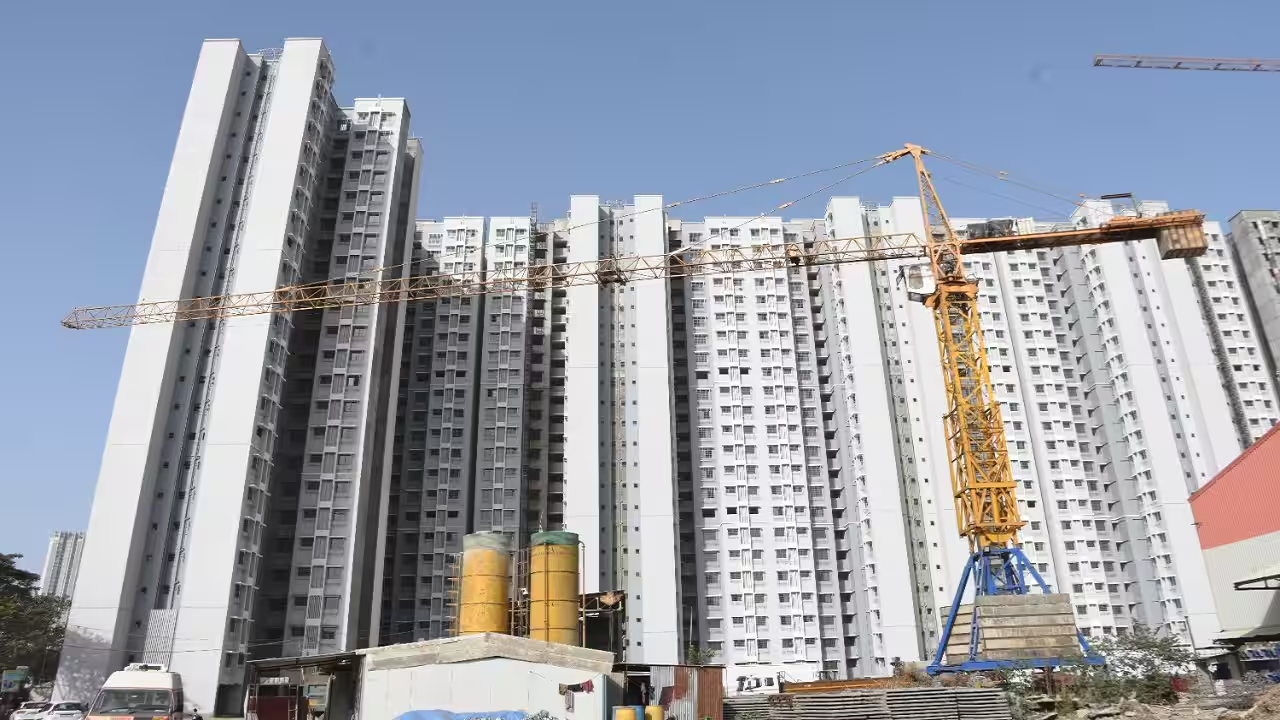
Mumbai’s affordable housing landscape is set for a significant inflection point, with the state housing authority preparing to open applications for nearly 3,000 homes across multiple redevelopment precincts in the city during 2026. The proposed allocation, expected to be announced once local election restrictions are lifted, could mark one of the most consequential public housing interventions in recent years for a city grappling with deepening affordability stress.
Senior officials familiar with the planning process indicate that the upcoming Mumbai housing lottery will draw inventory from several large-scale redevelopment projects currently under construction or advanced planning. These include former cessed housing colonies and state-owned layouts undergoing phased renewal, many of them located in established urban neighbourhoods rather than distant peripheral zones. Urban planners say this approach reflects a gradual shift in Mumbai’s housing policy from pushing affordable homes to the metropolitan fringes towards reintegrating lower- and middle-income households within the city’s core. By anchoring new homes in areas with existing transport, schools, healthcare and employment access, the programme has the potential to reduce long daily commutes and the associated economic and environmental costs. The Mumbai housing lottery is expected to be launched in early 2026, subject to regulatory clearances and election-related restrictions. Applications will be accepted through the authority’s digital portal, continuing a broader move towards transparent, technology-driven allotment systems designed to reduce discretionary allocation and improve public trust. In parallel, officials confirm that a separate housing draw covering approximately 4,000 homes is being planned under the Konkan regional board, offering options beyond the city for households priced out of Mumbai’s formal market. Together, the two lotteries underscore the scale of unmet demand for regulated, affordable housing across the Mumbai Metropolitan Region.
Housing economists note that while the number of homes on offer will not bridge the overall affordability gap, the timing is significant. Private residential prices across Mumbai have continued to firm up, even as wage growth for many urban workers remains uneven. In this context, state-led housing supply plays a stabilising role, particularly for first-time buyers and families dependent on predictable monthly outgoings. From a sustainability perspective, redevelopment-led housing carries both opportunity and risk. Compact, transit-connected projects can support lower carbon living patterns, but experts caution that long-term success will depend on construction quality, energy efficiency and the integration of open spaces, drainage and civic services issues that have plagued earlier mass housing efforts. For Mumbai, where land scarcity and speculative pricing dominate the real estate narrative, the upcoming MHADA lottery represents more than a housing draw.
It is a test of whether public institutions can still shape inclusive urban growth in a market largely driven by private capital. As the city waits for the formal announcement, attention will increasingly turn to execution from timelines and transparency to the lived quality of the homes eventually handed over.
Also Read: Navi Mumbai Draws Major Long-Term Tech Lease
Mumbai Prepares New MHADA Housing Allocation
