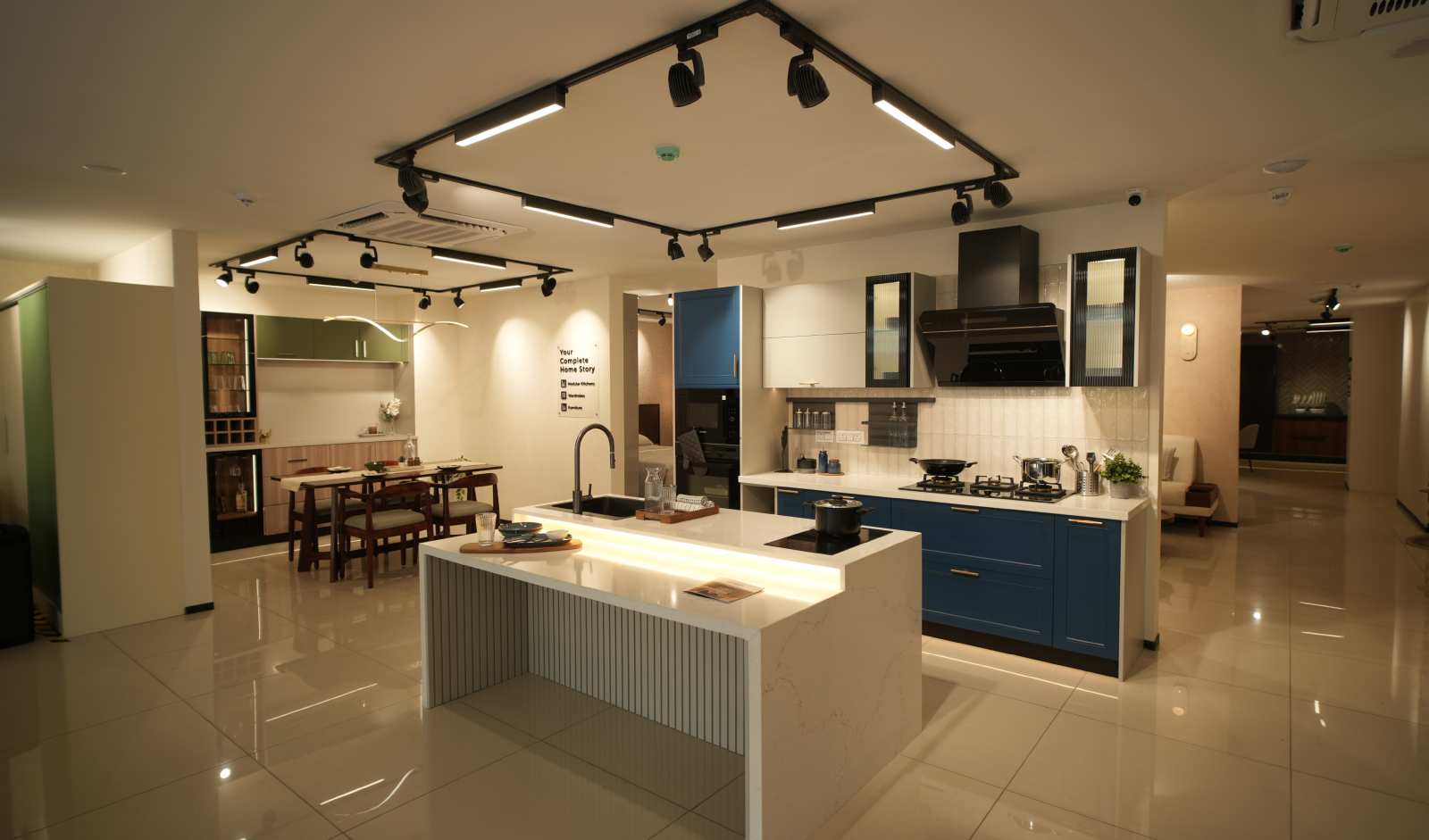
Bangalore has added a new node to its rapidly evolving home design economy with the opening of a large-format interiors experience hub in HSR Layout, signalling a shift in how urban households evaluate and invest in residential interiors. The facility, spanning 6,200 sq ft across two levels, reflects changing consumer expectations in a city where housing demand, lifestyle aspirations and sustainability considerations increasingly intersect.
Unlike conventional showrooms, the Bangalore interiors experience hub is built around a full-scale apartment layout that mirrors the size and constraints of typical urban homes. Industry observers say this approach responds to a long-standing gap in India’s interiors market, where buyers often struggle to visualise finished spaces from catalogues or sample panels. By replicating a complete two-bedroom home with integrated living, work and storage zones, the hub allows visitors to assess design decisions in real-world proportions. Urban planners note that Bangalore’s housing stock is dominated by compact apartments, making efficient space planning and material durability critical. Experience-led formats such as this one are emerging as decision-support tools rather than sales floors, helping households understand long-term maintenance, safety features and adaptability of interiors over time. The emphasis on child-safe finishes and modular construction aligns with broader conversations on healthier indoor environments and lifecycle-conscious building practices.
The Design Experience Zone within the hub allows side-by-side material comparison under varied lighting conditions, reflecting a more transparent and informed buying process. Analysts tracking the interiors sector say this responds to a maturing customer base that prioritises clarity on performance, cost and environmental impact over purely aesthetic appeal. As residential projects in Bangalore increasingly target mid- to upper-income segments, demand for accountable design processes has risen sharply. From a business perspective, the move underscores Bangalore’s role as a strategic testbed for scalable interiors solutions. With its mix of young professionals, dual-income households and long-term residents, the city offers insights into how design preferences evolve alongside work-from-home trends and changing family structures. Sector experts suggest that experiential hubs can reduce redesign cycles and material wastage, indirectly supporting more resource-efficient interiors execution.
The launch also reflects a broader recalibration within India’s real estate value chain, where post-handover services such as interiors are becoming integral to housing outcomes. As cities push for denser, more sustainable living, interiors that optimise space, energy use and durability will play a growing role in defining housing quality. Looking ahead, urban development specialists believe that experiential formats may become standard in major metros, particularly as buyers demand greater accountability and predictability in home customisation. For Bangalore, such investments indicate a move toward more informed, people-first housing choices an essential component of resilient urban growth.