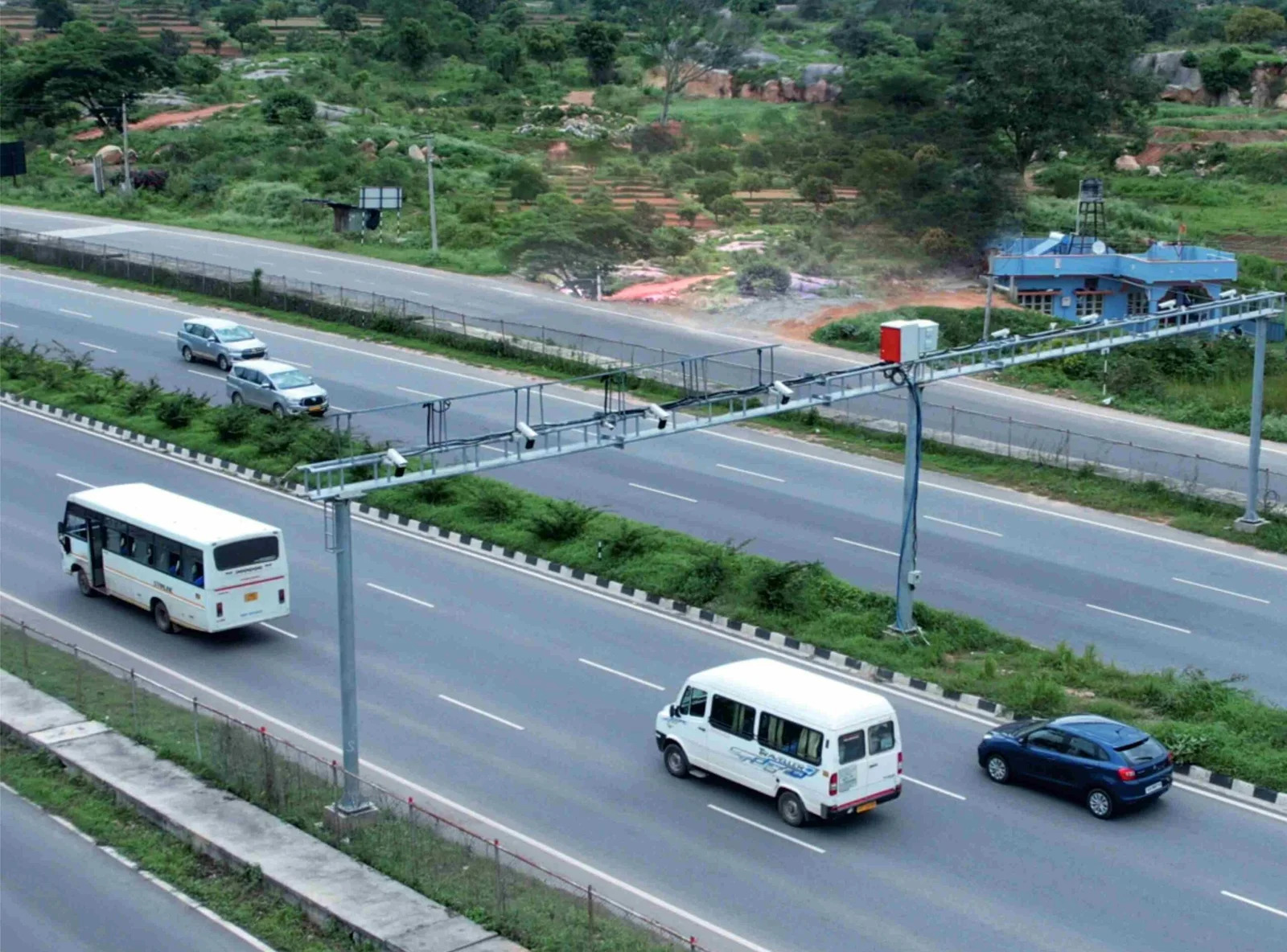
India’s push towards frictionless highway travel is set to take a significant step forward, with a pilot of Multi-Lane Free Flow (MLFF) tolling planned on the Bengaluru–Mysuru access-controlled highway. The 117-km corridor, one of southern India’s busiest intercity routes, has been identified to test a next-generation tolling model designed to reduce congestion, fuel wastage and emissions while improving travel efficiency for daily commuters and long-haul users. The proposed MLFF tolling system replaces conventional toll plazas with overhead gantries fitted with high-speed RFID FASTag readers, automated number plate recognition cameras and satellite-enabled vehicle tracking technology.
Unlike existing toll booths that require vehicles to slow down or stop, MLFF allows toll charges to be deducted automatically while vehicles move at cruising speeds, making toll collection nearly invisible to users. Officials familiar with the project said a competitive tendering process is underway to appoint a private firm that will install, operate and maintain the system along the highway. While gantries will be installed ahead of existing toll plazas, physical booths will remain operational during the initial phase. This parallel setup is intended to test system reliability, backend settlement mechanisms and compliance before any decision is taken on dismantling traditional toll infrastructure. Urban mobility experts say the Bengaluru–Mysuru stretch is a logical testing ground. The corridor carries thousands of vehicles daily and regularly witnesses severe congestion during weekends and holiday periods.
Long queues at toll points not only extend travel times but also contribute to higher fuel consumption and local air pollution, particularly affecting nearby settlements. The MLFF tolling pilot follows the launch of India’s first barrier-free toll system on a national highway corridor in western India last year. Transport planners involved in that rollout reported near-total accuracy in toll deductions, along with measurable improvements in traffic flow. If similar results are achieved in Karnataka, MLFF tolling could become a cornerstone of India’s highway modernisation programme. From an urban development perspective, smoother intercity travel has implications beyond convenience. Reduced idling and stop-start traffic can lower vehicular emissions, supporting climate goals while improving logistics efficiency between Bengaluru’s economic hub and Mysuru’s growing real estate and tourism markets.
Faster, predictable travel times also enhance the viability of satellite towns and peripheral development along the corridor. However, experts caution that enforcement, grievance redressal and data security will be critical to public acceptance. Accurate vehicle identification, transparent deductions and swift resolution of disputes will determine whether MLFF tolling is perceived as a public service upgrade or a compliance burden. As India expands high-speed road infrastructure, the Bengaluru–Mysuru pilot will be closely watched by policymakers, urban planners and investors alike. Its performance could shape how future highways balance technology, sustainability and everyday usability for millions of road users.