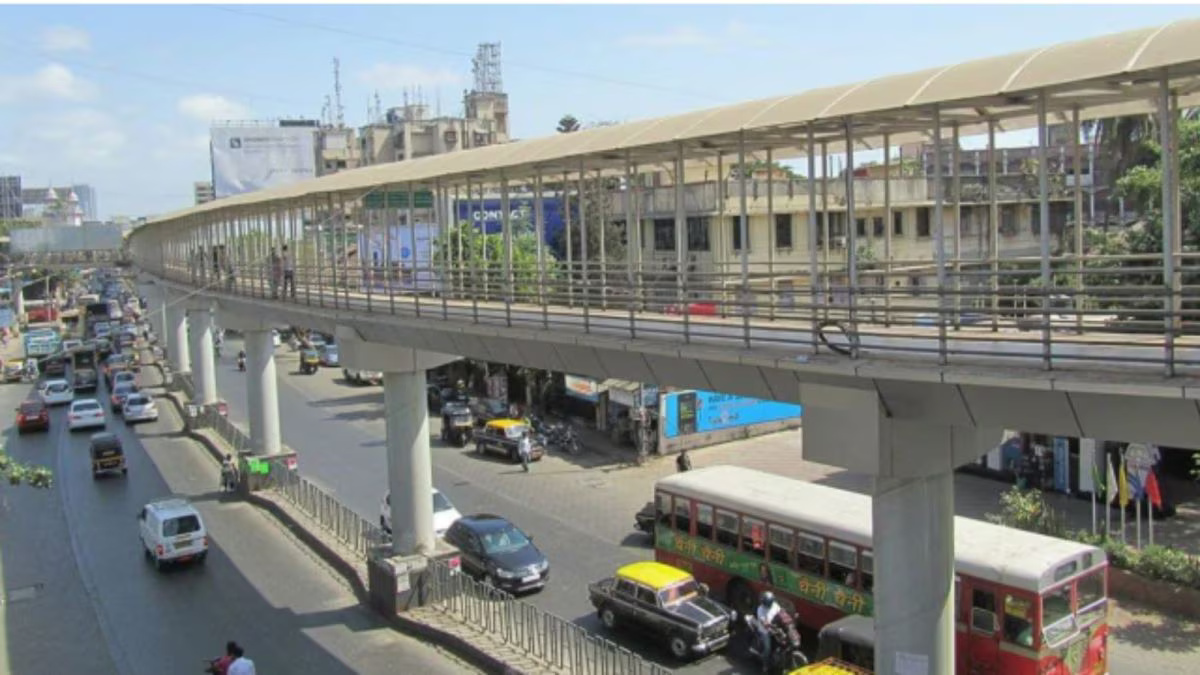
Mumbai has unveiled a new 680-metre skywalk in Bandra (East), providing direct pedestrian connectivity between key civic and commercial hubs including Bandra Court, Bandra–Kurla Complex (BKC), MHADA, and the District Collector’s Office. Opened on Republic Day, the elevated corridor is expected to significantly improve pedestrian safety, reduce commuting time, and alleviate congestion on surrounding roads.
The skywalk project, inaugurated by the state’s Minister for Information Technology and Cultural Affairs and Guardian Minister of Mumbai Suburban District, forms a crucial link over the Western Express Highway (WEH) and connects to the pedestrian bridge at Bandra Railway Station (East). “The design ensures safe passage across one of Mumbai’s busiest highways while streamlining pedestrian flows in the densely trafficked Bandra East precinct,” noted a senior municipal official overseeing the project. Urban planners highlight the corridor’s potential to address persistent mobility challenges in the area. Bandra East experiences heavy pedestrian traffic due to the concentration of administrative offices, courts, housing boards, and commercial workplaces. Previous crossings involved navigating congested roads such as Anant Kanekar Road, raising safety concerns and extending commute durations. The new infrastructure is anticipated to reduce pedestrian reliance on surface roads and minimise conflict with vehicular traffic.
The elevated passage features an average width of 5.4 metres, four staircases, and two automated escalators to facilitate movement from multiple access points. To enhance security, 14 CCTV cameras have been installed along the stretch, reflecting a growing trend in integrating surveillance and safety in urban pedestrian infrastructure. Construction required complex logistical planning, including night-time work windows over the WEH and coordination with utilities along Anant Kanekar Road. From an economic and social perspective, experts suggest that such infrastructure investments yield multiple benefits. By enabling safer, faster, and more efficient pedestrian mobility, the skywalk improves access to commercial areas in BKC, streamlines foot traffic to public offices, and encourages walking as a viable commuting option. Planners note that well-connected pedestrian corridors can reduce vehicle dependency, lower emissions, and contribute to more sustainable urban mobility patterns.
Officials emphasise that the Bandra East skywalk is part of broader efforts to modernise pedestrian networks across Mumbai, integrating accessibility, safety, and convenience. The project aligns with city-wide objectives to foster inclusive, people-first infrastructure while mitigating congestion in densely populated commercial and administrative zones. Looking ahead, the success of this skywalk could guide future pedestrian-oriented projects in other high-density precincts, offering a model for safer, climate-conscious, and time-efficient urban mobility solutions in Mumbai.
Mumbai Launches 680 Metre Bandra East Skywalk