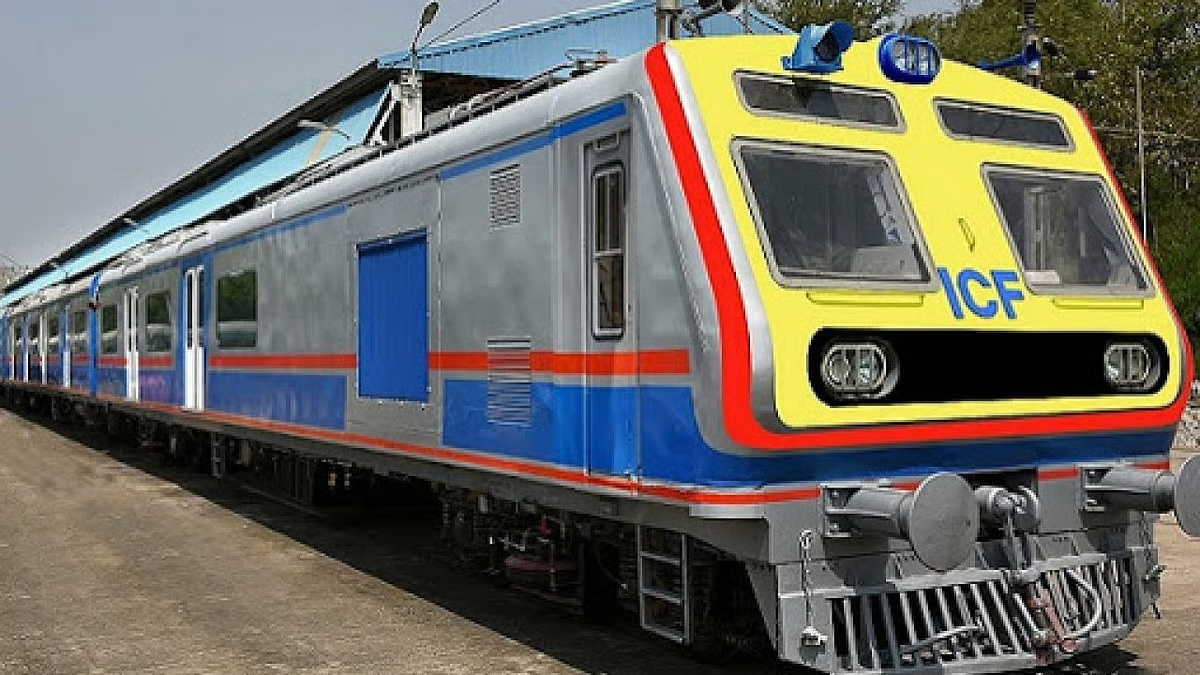
Mumbai’s suburban rail network has taken another step towards improving daily commuting conditions with the addition of 26 new air-conditioned local train services across the Central and Western corridors. The expansion, rolled out from late January, reflects a broader shift towards passenger comfort, operational efficiency, and climate-resilient public transport in one of the world’s most densely used rail systems.
The new services have been distributed across high-demand routes to address chronic overcrowding and rising commuter expectations. On the Central Railway network, additional AC services have been introduced on both the Main Line and the Harbour Line, which connects the island city with key nodes in Navi Mumbai. The Harbour Line, in particular, has long faced capacity pressures during peak hours, despite serving emerging residential and employment clusters. Railway planners indicate that the revised timetable spreads AC services across early morning, mid-day, and evening periods rather than limiting them to peak office hours. This approach is intended to support diverse travel patterns, including shift workers, students, and senior citizens, while ensuring that premium services do not disproportionately benefit a narrow commuter segment.
With the latest induction, the Central Railway suburban system now operates close to 100 AC local services, while maintaining the overall daily service count. Officials involved in operations note that the strategy prioritises optimisation of existing rolling stock rather than increasing total train numbers, helping balance energy use, maintenance demands, and network stability. On the Western Railway corridor, 12 existing non-AC rakes have been converted into air-conditioned trains, strengthening connectivity between the southern business districts and the fast-growing northern suburbs. These routes serve some of the most crowded stations in the metropolitan region, where platform congestion and heat stress significantly affect commuter experience.
Urban transport experts view the expansion as a gradual but meaningful transition towards people-first mobility. While AC locals consume more power than conventional trains, officials point out that newer rakes are more energy-efficient and form part of a broader push to modernise suburban rail without shifting passengers towards private vehicles. In a city grappling with traffic congestion and air pollution, retaining commuters within the rail system remains a key sustainability goal. The move also has indirect economic implications. Improved travel comfort can enhance workforce productivity, reduce commute-related stress, and support the decentralisation of offices and housing towards peripheral suburbs. For real estate markets along suburban rail corridors, reliable and comfortable connectivity continues to be a decisive factor in residential and commercial demand.
However, commuter groups stress that air-conditioned services must complement, not replace, capacity enhancements in non-AC trains that carry the bulk of Mumbai’s daily ridership. Equitable access, fare affordability, and last-mile connectivity remain critical to ensuring that transport upgrades benefit the widest possible population. As Mumbai prepares for rising temperatures and climate volatility, incremental improvements in public transport comfort signal a shift towards more resilient urban infrastructure. The long-term success of the AC local programme will depend on balanced deployment, operational reliability, and integration with broader mobility planning across the metropolitan region.
Mumbai Suburban Rail Adds AC Services To Ease Rush