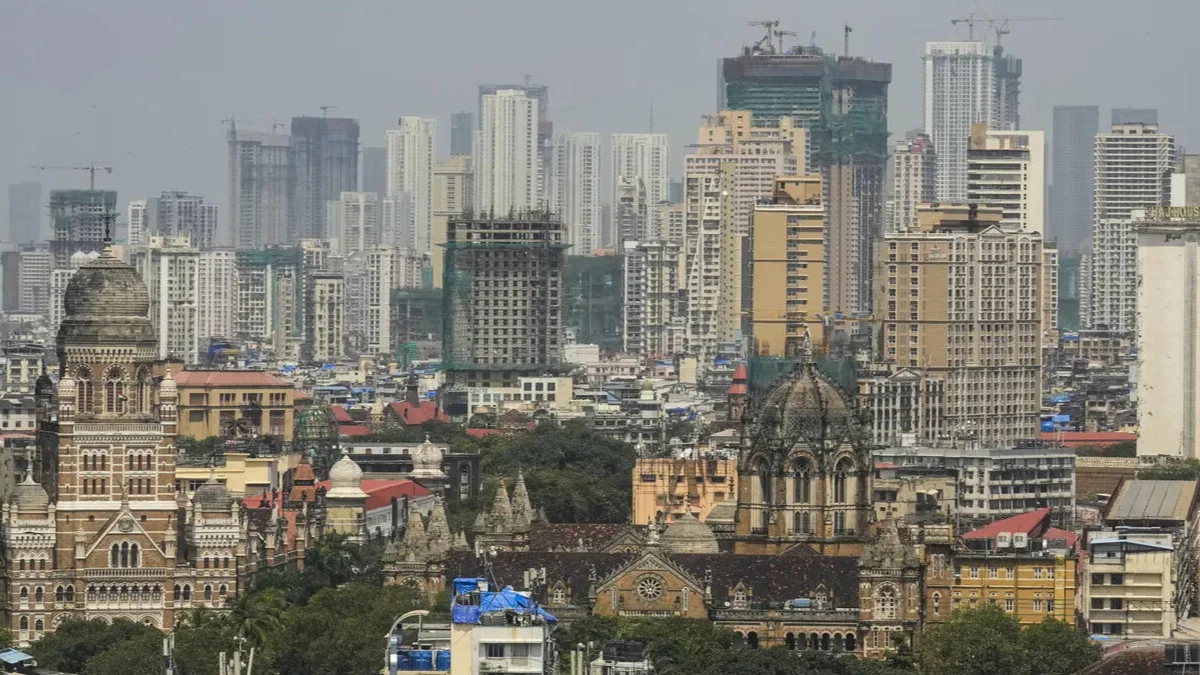
The Mumbai Metropolitan Region (MMR) emerged as India’s most active land market in 2025, driving a sustained real estate acquisition wave that underscores renewed developer confidence in urban growth corridors. According to industry data, at least 126 major land deals covering approximately 3,772 acres were closed across India last year, with residential projects accounting for the lion’s share of activity and the MMR leading both in deal count and total acreage transacted.
In terms of volume, MMR recorded 32 land deals spanning more than 500 acres, representing roughly 13 per cent of total land area transacted nationwide — more than any other region tracked. Bengaluru followed closely with 27 transactions across more than 454 acres, while Pune contributed 18 deals over about 308 acres. Real estate analysts interpret these patterns as a barometer of evolving development priorities. “Developers are chasing scale and strategic land parcels that can underpin integrated townships, housing clusters, and mixed‑use projects with long‑term revenue potential,” said a senior industry observer. The data shows that a significant portion of the acreage — nearly 1,877 acres across 96 deals — was earmarked for residential projects, from plotted developments and luxury villas to large‑format township schemes.
Mixed‑use and commercial developments also featured prominently. Eight deals collectively accounted for around 1,045 acres earmarked for mixed‑use schemes that blend housing, retail, office, and leisure components. Industrial and logistics parks accounted for over 597 acres, reflecting continued investor appetite for land that supports economic diversification beyond pure residential use. For the MMR, sustained land acquisition momentum reflects both infrastructural pull and market maturity. Improvements in transport connectivity — including metro network expansions and arterial highway upgrades — are expanding the practical catchment of urban clusters, making peripheral land more investible. Developers point to enhanced regulatory clarity on land titles and incremental planning reforms as additional incentives to transact at scale.
Bengaluru’s strong showing reinforces the city’s emergence as a national real estate powerhouse. Robust demand for housing supported by IT‑led employment growth continues to drive land monetisation, with peripheral submarkets absorbing much of the developer appetite. Pune’s performance also highlights its transformation into a diversified urban centre where residential and commercial land acquisitions are expanding — fuelled by corporate relocation trends, lifestyle migration, and ongoing infrastructure upgrades.Despite the uptick in acreage and consolidated developer interest, sector specialists note that rising land prices in core urban belts could temper future acquisitions unless matched by coherent zoning reform and ancillary infrastructure delivery. “Strategic planning must ensure that land supply aligns with demand drivers like transit‑oriented development and affordable housing allocations,” said a city planning expert.
As India’s real estate sector presses forward in 2026, balancing growth with equitable, climate‑resilient development is likely to shape how land deals translate into built outcomes — from housing access and economic opportunity to sustainable urban expansion.