


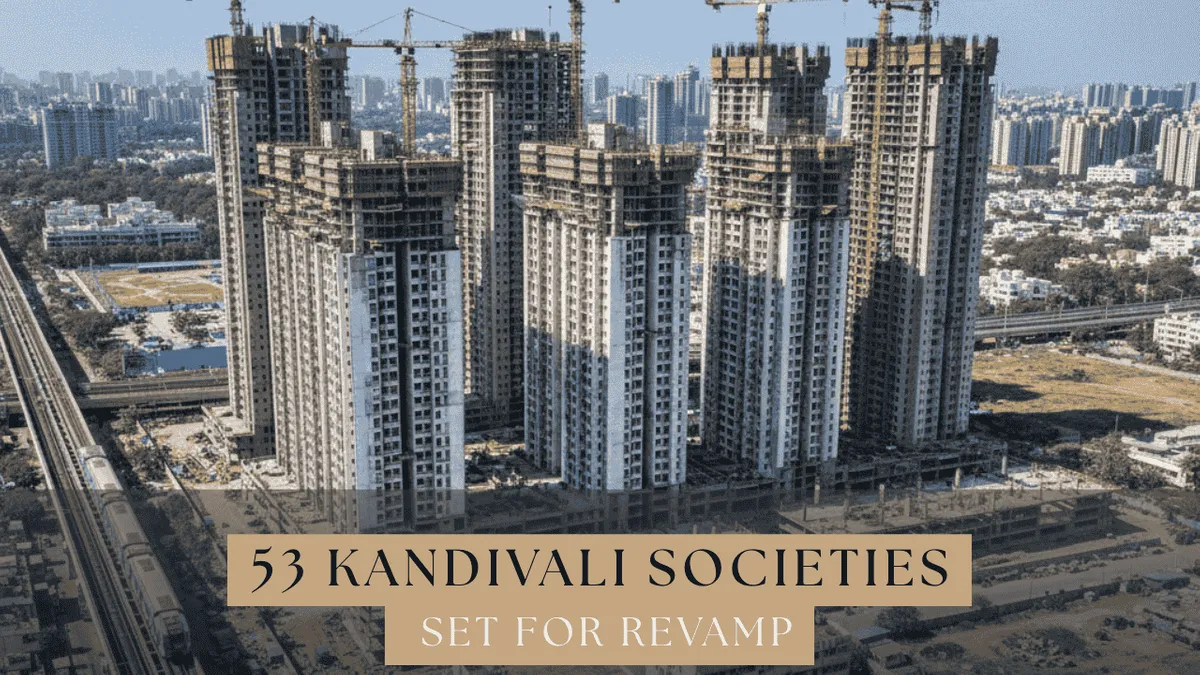
A large-scale housing transformation is gathering momentum in Mumbai’s western suburb of Kandivali, where residents of a sprawling MHADA-built colony have initiated steps towards one of the city’s most ambitious cluster redevelopment exercises. Spread across nearly 12 acres, the ageing residential precinct accommodates thousands of lower- and middle-income families in compact apartments built more than two decades ago. The proposal signals a decisive shift in how Mumbai’s legacy public housing layouts may be reimagined for safety, density, and liveability.
Urban planners say the Kandivali initiative reflects mounting structural stress across post-millennial housing stock constructed under earlier cost-driven standards. Narrow internal roads, limited fire access, poor drainage and deteriorating building integrity have made the area increasingly vulnerable to climate risks and service disruptions. Redevelopment, if executed responsibly, offers an opportunity to address these systemic flaws while upgrading civic infrastructure. Under the proposed plan, multiple adjoining housing societies would be amalgamated into a single planning unit, allowing land to be used more efficiently. This approach enables wider access roads, improved open spaces, better stormwater management and scope for energy-efficient construction outcomes difficult to achieve through isolated building-by-building redevelopment. According to individuals involved in the planning process, a majority of housing societies within the colony have already expressed support for the project, clearing the minimum threshold required under prevailing redevelopment regulations. Formal tendering is expected to begin later this quarter following the appointment of a professional project management consultant. The redevelopment framework proposes significantly larger replacement homes for existing residents, moving from sub-250 sq ft units to modern apartments of over 600 sq ft.
Temporary rental accommodation, relocation assistance and a corpus fund are among the key non-negotiables outlined by residents. Such terms reflect growing awareness among homeowners about financial security during long gestation redevelopment cycles. From a market perspective, developers would be permitted to construct an equivalent number of additional saleable apartments, using surplus development rights to finance rehabilitation costs. Industry analysts note that MHADA layouts offer rare scale advantages in land-scarce Mumbai, but success hinges on financial discipline, transparent contracts and strict regulatory oversight. Experts caution that cluster redevelopment must go beyond real estate arithmetic. Without integrated transport planning, water resilience measures and energy-conscious design, large rebuilds risk replicating old urban failures in newer forms. Kandivali’s location within Mumbai’s western corridor also places pressure on transit systems already operating at capacity.
As Mumbai confronts the dual challenge of ageing housing stock and climate uncertainty, the Kandivali cluster redevelopment will be closely watched. Its progress could shape policy thinking on how public housing estates across the metropolitan region are renewed not just for density, but for dignity, safety and long-term urban resilience.
Also Read: Pune Mumbai Climate Variability Challenges Planning
Mumbai Kandivali Cluster Redevelopment Nears Takeoff
