Bengaluru Metro Strengthens Bommasandra Corridor Link
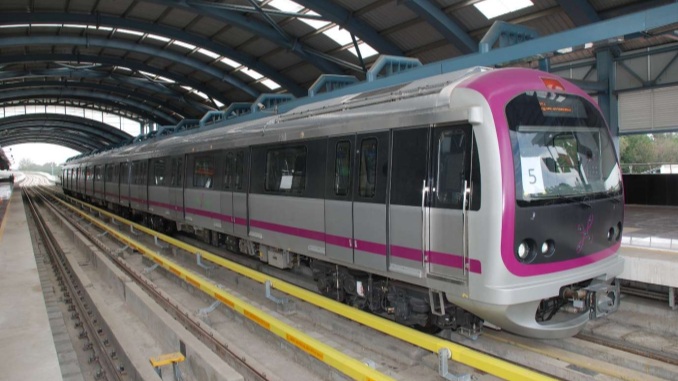
Bengaluru’s long-awaited Yellow Line has crossed another operational milestone with the delivery of a new metro trainset at the system’s southern depot, reinforcing confidence around the corridor’s readiness timeline. The arrival adds to the growing fleet being prepared for the line that will eventually connect the city’s central business districts with one of its most employment-intensive industrial zones. The six-coach trainset reached the Hebbagodi facility in mid-January and will now undergo assembly, calibration, and a structured testing programme before being cleared for passenger operations. Transport officials involved in the project indicated that the testing phase will include static checks, signalling compatibility, and extensive night-time trial runs to validate safety, energy efficiency, and system integration.
Spanning just over 19 kilometres and linking R.V. Road with Bommasandra, the Yellow Line is expected to play a critical role in easing congestion along Hosur Road, a corridor that supports thousands of daily commuters travelling to manufacturing units, technology parks, and logistics hubs. Urban planners see the line as a corrective investment that aligns transport infrastructure with job clusters, reducing dependence on private vehicles and lowering per-capita transport emissions. The rolling stock programme itself reflects a notable shift in India’s metro supply ecosystem. After earlier delays linked to global manufacturing constraints, production responsibilities were restructured to enable domestic assembly at scale. Industry experts note that local manufacturing not only stabilises delivery schedules but also reduces lifecycle emissions associated with imports while strengthening India’s urban transport supply chain.
According to officials familiar with the procurement framework, the Bengaluru Metro’s expansion plan includes multiple trainsets being introduced in phases across corridors, allowing testing and commissioning to proceed in parallel rather than sequentially. This approach is designed to shorten the gap between infrastructure completion and public use, a persistent challenge in large Indian metro projects. Beyond mobility, the Yellow Line is expected to influence real estate and land-use patterns in southern Bengaluru. Improved mass transit access typically increases demand for rental housing near stations, supports mixed-use redevelopment, and enhances workforce participation by shortening commute times, particularly for shift-based industrial employees.
Sustainability analysts also point out that metro connectivity to industrial corridors delivers outsized climate benefits. By shifting daily trips from diesel buses and two-wheelers to electric rail, the corridor could meaningfully reduce local air pollution while supporting Bengaluru’s broader climate resilience goals. As additional trainsets arrive and testing progresses, attention will turn to operational readiness, station accessibility, and last-mile integration. For residents and workers along the Bommasandra stretch, the next phase will determine how quickly this infrastructure translates into everyday mobility gains and whether Bengaluru can continue aligning growth with people-first urban systems.