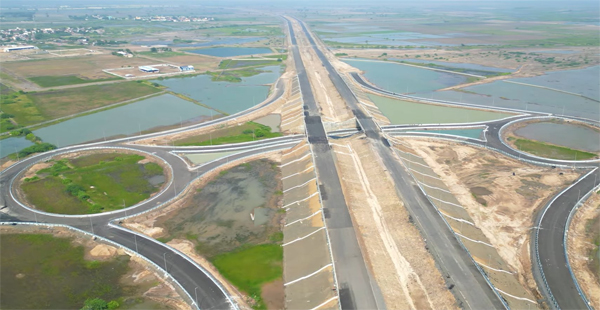
Ahmedabad’s eastern periphery is emerging as a focal point for India’s next phase of urban-industrial expansion, with Dholera increasingly positioned as the anchor of a broader growth corridor stretching through Lothal and into the metropolitan region. Recent investor activity and infrastructure planning signals point to a deliberate shift in how capital, connectivity, and employment-led development are being aligned across this belt with implications for housing markets, labour mobility, and long-term urban resilience.
At the centre of this realignment is Dholera Smart City, envisioned as a planned industrial and residential hub linked to Ahmedabad through expressways, rail corridors, and a proposed international airport. Urban planners tracking the region note that investor interest is no longer speculative or land-driven, but increasingly tied to infrastructure readiness, industrial depth, and the ability to support skilled workforces at scale. This marks a departure from earlier peri-urban growth cycles that often outpaced civic capacity. The Dholera growth corridor is also being shaped by Ahmedabad’s expanding national and global profile. Large-format sporting infrastructure, rising international visibility, and the city’s role as a gateway to western India are feeding demand beyond the traditional central business districts. Industry experts suggest that this demand is cascading eastwards, encouraging developers and institutional investors to consider locations where long-term urban services rather than short-term returns can be structured from the outset.
A critical variable in this equation is aviation-led connectivity. The upcoming airport near Dholera is expected to serve not only freight and industrial logistics but also business travel, tourism, and extended stays linked to international events and corporate activity. Hospitality consultants say this has accelerated planning for hotels, serviced apartments, and mixed-use developments designed to meet global standards, particularly around transit-oriented zones. Beyond tourism, the corridor’s economic rationale rests heavily on employment generation. Semiconductor manufacturing, advanced engineering units, and ancillary industries planned for the region are projected to attract a predominantly white-collar workforce. This has implications for housing typologies, social infrastructure, and urban inclusivity including the need for rental housing, walkable neighbourhoods, and climate-responsive design in a region vulnerable to heat and water stress.
Urban economists caution that the success of the Dholera growth corridor will depend on coordination between state agencies, local governments, and private developers. Infrastructure delivery, public transport integration, and environmental safeguards will determine whether the region evolves as a balanced urban ecosystem or repeats patterns of fragmented sprawl seen elsewhere. For Ahmedabad, the eastward shift represents both opportunity and responsibility. If planned carefully, the corridor could relieve pressure on the city core while creating new centres of employment and affordable housing. The coming decade will test whether this expansion can align capital flows with people-first planning, low-carbon infrastructure, and equitable access setting a precedent for how India’s next-generation cities take shape.