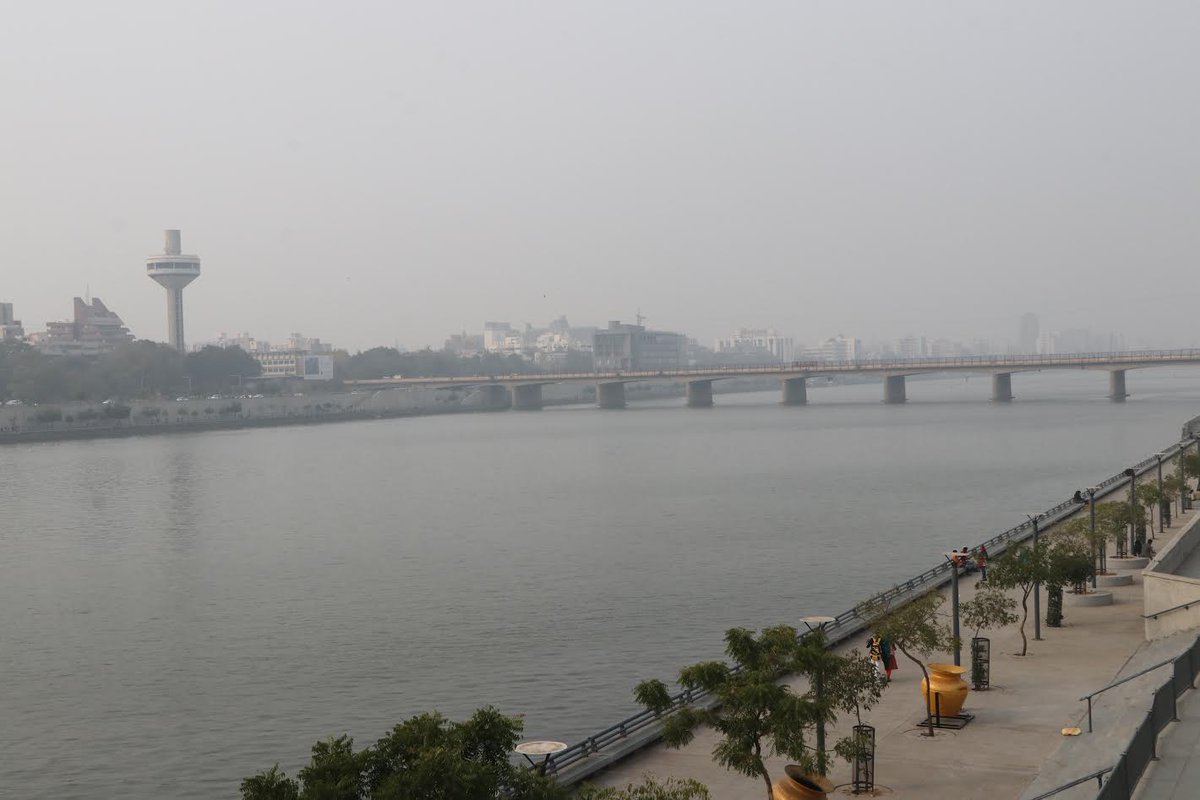
Ahmedabad Records Warmer Nights Amid Gujarat Swings
Gujarat’s major cities are witnessing a widening divergence in winter night temperatures, underscoring the growing complexity of urban climate behaviour across western India. While interior and coastal pockets reported seasonally cooler conditions, large urban centres such as Ahmedabad, Vadodara and Surat experienced significantly warmer-than-usual nights, highlighting the influence of urban form, land use and atmospheric circulation on local weather outcomes. Meteorological data released on Tuesday morning showed minimum temperatures across the state oscillating on either side of seasonal norms, with several urban districts recording elevated night-time warmth.
In Ahmedabad, minimum temperatures remained well above the historical average for late January, a trend echoed in Vadodara and Surat. These warmer nights contrast sharply with conditions in parts of Kutch, Saurashtra and coastal western Gujarat, where temperatures dipped modestly below normal levels. Weather officials attribute the uneven pattern to a persistent upper-air trough stretching across north-western India, which has altered wind flow and reduced nocturnal cooling in certain regions. However, urban planners and climate researchers note that atmospheric systems alone do not fully explain the variation. Dense built-up environments, reduced green cover, high vehicular emissions and extensive paved surfaces are increasingly shaping how cities retain heat after sunset. The implications extend beyond daily comfort. Elevated night-time temperatures can strain household energy consumption, particularly in lower-income neighbourhoods where cooling options are limited.
Warmer nights also reduce thermal recovery for vulnerable populations, including the elderly, outdoor workers and those living in informal housing. From a real estate and infrastructure perspective, sustained deviations in night-time temperatures are prompting renewed scrutiny of building design standards, ventilation norms and material choices. In contrast, cooler conditions recorded in smaller towns and less urbanised districts reaffirm the moderating role of open land, vegetation and lower construction density. Urban climate specialists argue that these contrasts offer valuable lessons for fast-growing cities struggling to balance expansion with liveability. Humidity levels across much of the state remained moderate to high, while the absence of rainfall continued to support dry surface conditions.
Although no immediate weather hazards have been flagged, experts caution that fluctuating winter patterns are becoming more frequent, complicating seasonal planning for water management, agriculture and urban services. As Gujarat accelerates investments in housing, transport corridors and industrial clusters, planners say climate-responsive urban design must move from policy documents to on-ground execution. Measures such as urban greening, reflective building materials, climate-sensitive zoning and improved night-time ventilation could help cities adapt to increasingly uneven thermal behaviour. With winter patterns becoming less predictable, the challenge for Gujarat’s cities is not just responding to today’s temperature readings, but preparing urban systems for a future where climatic variability becomes the norm rather than the exception.