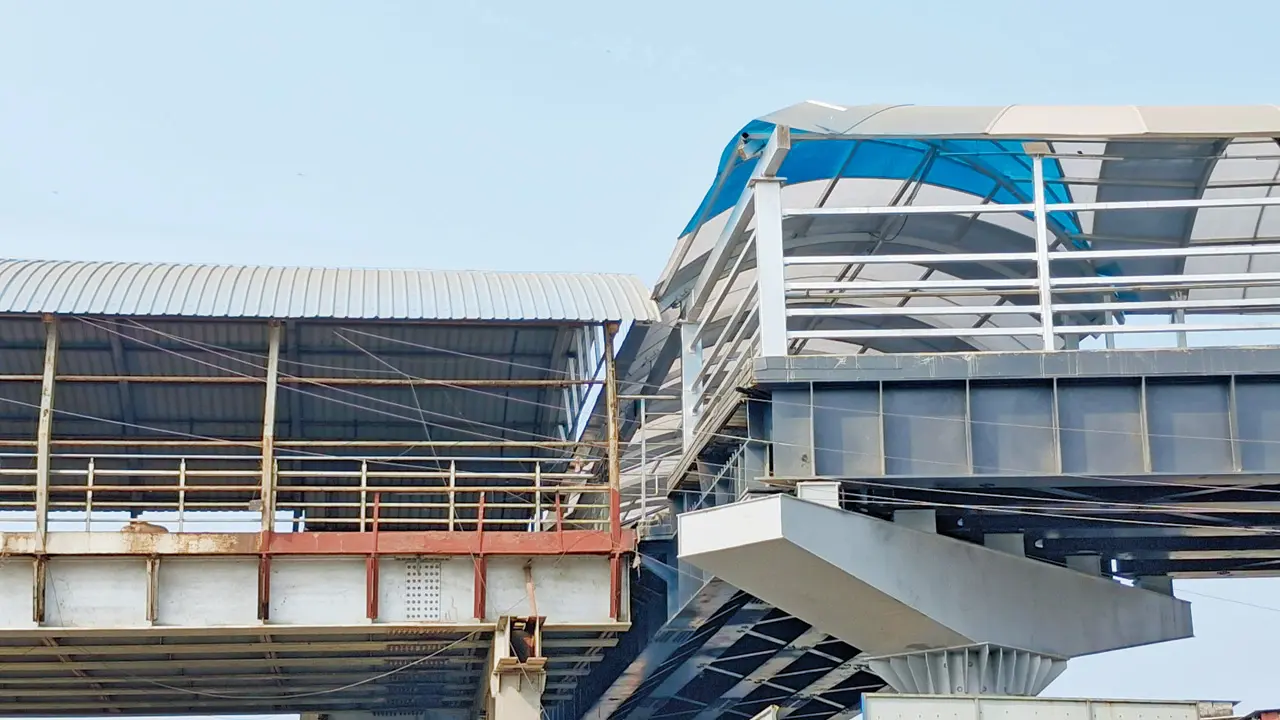
Mumbai’s eastern suburb of Bandra has received a critical pedestrian infrastructure upgrade with the opening of a new elevated skywalk, aimed at easing daily movement across one of the city’s most congested transit and commercial zones. The new facility strengthens non-motorised connectivity between the railway station precinct, the Bandra-Kurla Complex business district and key administrative offices, addressing long-standing safety and access challenges for thousands of daily commuters.
Bandra East functions as a high-density employment and civic hub, drawing office workers, legal professionals, government staff and transit users throughout the day. Despite this, pedestrian infrastructure in the area has historically lagged behind vehicular growth, forcing people to navigate heavy traffic on arterial roads. Urban mobility planners note that the new skywalk directly responds to this imbalance by prioritising safe, grade-separated walking access in a car-dominated corridor. Developed by the city’s municipal authority, the Bandra East skywalk provides a continuous elevated route linking the railway station foot overbridge to surrounding commercial and institutional destinations. Officials associated with the project say the structure allows pedestrians to bypass conflict points with fast-moving traffic along the Western Express Highway and adjacent arterial roads, reducing both travel time and accident risk.
The project has also been positioned as part of a broader effort to encourage walking as a viable first- and last-mile option in Mumbai’s transit network. Transport experts highlight that well-designed pedestrian infrastructure plays a key role in reducing short-distance motorised trips, contributing to lower emissions and more inclusive urban mobility. The inclusion of escalators and multiple access stairways is expected to improve usability for elderly commuters, women, and those carrying luggage or work equipment. From a technical standpoint, the skywalk spans several hundred metres and has been built to accommodate high pedestrian volumes during peak hours. Security systems, including CCTV coverage, have been installed to enhance safety, particularly during early morning and late evening travel. Authorities confirmed that the structure has received all required safety and structural clearances prior to opening.
Constructing the skywalk posed logistical challenges due to dense traffic flows and continuous pedestrian movement at ground level. Project teams were required to work within restricted time windows while ensuring minimal disruption to surrounding roads and businesses. Infrastructure analysts view the project’s timely completion as a demonstration of improved coordination between civic agencies, rail authorities and traffic management teams. As Mumbai continues to densify around transit corridors and employment districts, pedestrian-first infrastructure such as the Bandra East skywalk is increasingly seen as essential urban capital rather than supplementary investment. Urban planners suggest that similar interventions, combined with shaded walkways, better wayfinding and universal design standards, will be critical to building climate-resilient, people-centric city districts.
The success of the Bandra East skywalk now places attention on maintenance, crowd management and integration with future public transport upgrades, ensuring the asset continues to deliver long-term safety and mobility benefits for the city.
Mumbai Bandra East Skywalk Improves Pedestrian Connectivity