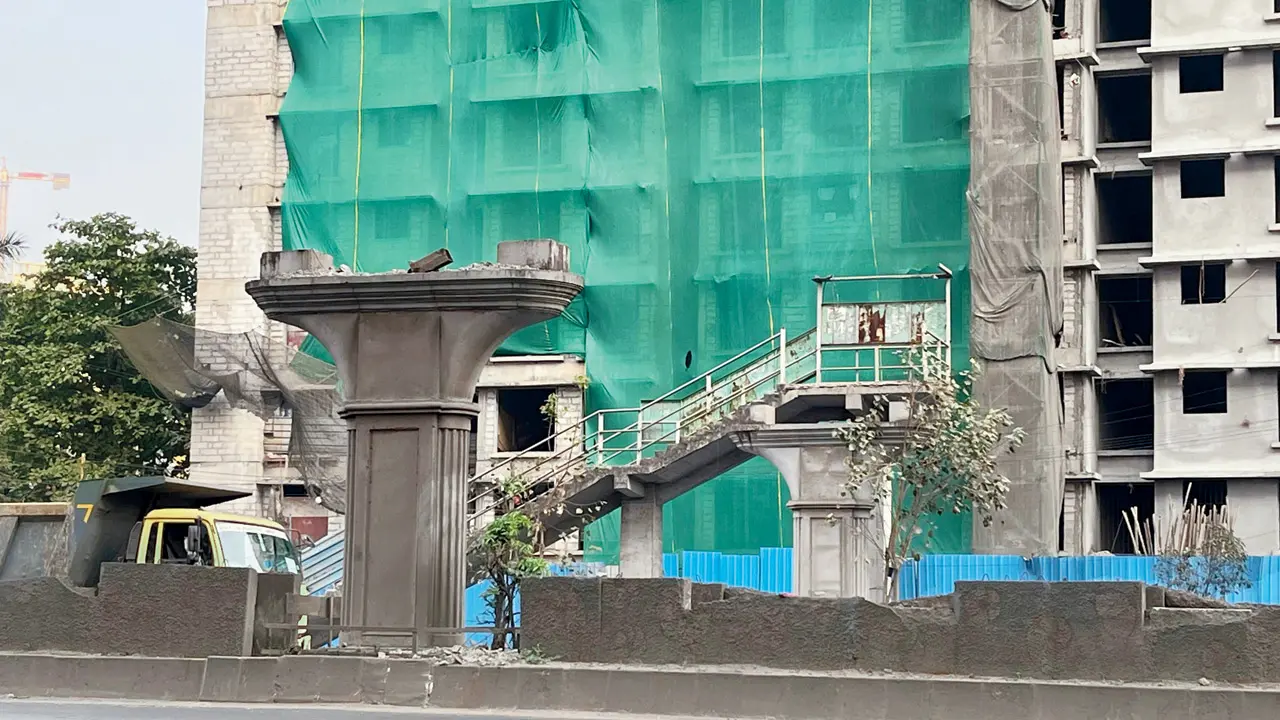
Mumbai’s eastern suburbs are grappling with a renewed pedestrian safety challenge after the civic body dismantled the Vikhroli foot overbridge, following structural assessments that flagged the decades-old structure as unsafe. The demolition, carried out near one of the city’s busiest arterial roads, has eliminated an immediate collapse risk but has also left thousands of daily pedestrians without a safe crossing, highlighting persistent gaps in last-mile urban infrastructure planning.
The foot overbridge, located along a high-traffic corridor linking residential clusters with workplaces, rail access and bus stops, had been closed for several months after routine inspections revealed serious structural weaknesses. Civic engineers concluded that repair was no longer viable, prompting a decision to fully remove the structure to prevent potential accidents. Municipal officials say the demolition was necessary to avert a larger safety hazard, particularly for motorists using the adjoining highway and pedestrians who had continued to gather near the closed bridge. Urban safety experts note that ageing pedestrian infrastructure across Mumbai faces similar risks, often due to deferred maintenance, rising traffic loads and changing urban usage patterns.
While the removal has reduced the risk of structural failure, it has also exposed a familiar civic dilemma. With no temporary or alternative pedestrian crossing provided, commuters are now navigating fast-moving traffic at road level. Urban planners warn that such conditions disproportionately affect senior citizens, women, children and people with disabilities, for whom safe, grade-separated crossings are essential to everyday mobility. Residents have also raised concerns about residual hazards at the site, including partially dismantled staircases and construction debris near the carriageway. Transport researchers argue that incomplete demolition zones can become new safety risks if not swiftly secured and clearly demarcated.
According to civic sources, plans for a replacement foot overbridge are underway, with the tendering process initiated. Temporary safety interventions, such as traffic calming measures or monitored crossings, are under consideration until a permanent structure is built. However, timelines for completion remain uncertain, reinforcing public scepticism shaped by past delays in pedestrian infrastructure projects. From a broader urban policy perspective, the episode underscores the need for proactive infrastructure lifecycle management. Experts point out that pedestrian bridges are often treated as isolated assets rather than part of an integrated mobility system that prioritises walking, public transport access and reduced road fatalities. In a city aiming to lower transport emissions and encourage people-first streets, safe pedestrian crossings are a critical component.
As Mumbai continues to redevelop ageing infrastructure, the Vikhroli case raises pressing questions about transition planning—how cities can remove unsafe structures without leaving residents exposed to new risks. The coming weeks will test whether interim safety measures and faster project execution can restore confidence and ensure that pedestrian safety is not compromised in the process of infrastructure renewal.
Mumbai Demolishes Unsafe Vikhroli Pedestrian Crossing