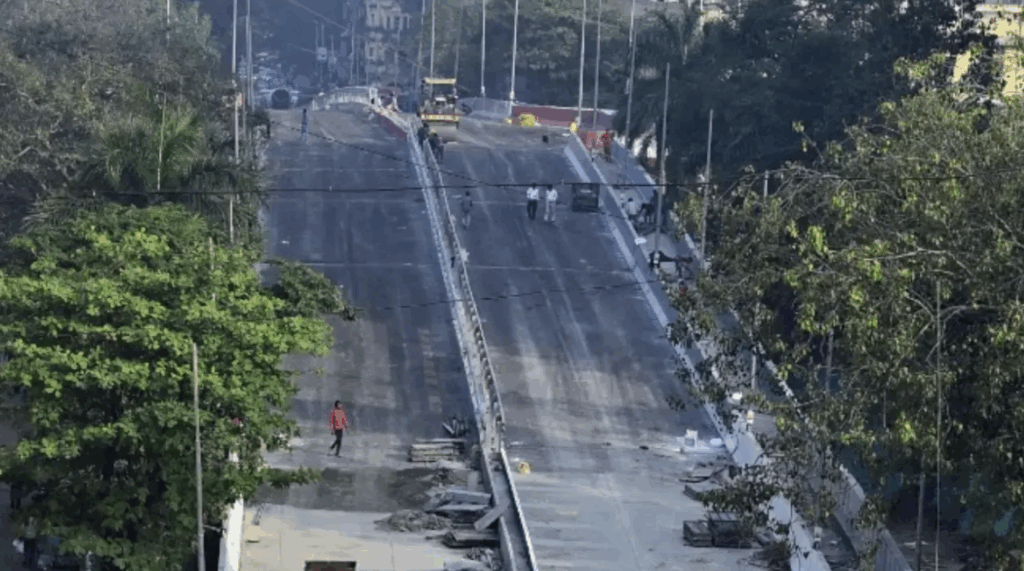
Mumbai’s inner-city road network is set to regain a critical east–west connection as the reconstructed Bellasis bridge near Mumbai Central approaches public opening, following completion well ahead of schedule. The new structure replaces a century-old crossing that had become structurally unsafe, restoring a key mobility link between dense residential, commercial and transport hubs in south Mumbai. For daily commuters, the reopening promises reduced congestion; for the city, it reflects a shift towards faster, more coordinated infrastructure delivery.
The bridge reconstruction was taken up after safety assessments flagged the original structure—built during the colonial era—as unfit for continued use. Given its location above active railway lines and its role in connecting neighbourhoods such as Tardeo, Nagpada and Mumbai Central, prolonged closure had placed sustained pressure on surrounding roads. Civic officials prioritised the project as part of a wider programme to modernise ageing bridges across the city. Construction was completed in just over 15 months, significantly faster than the contractual timeline. Senior civic officials attribute the early delivery to continuous work cycles, parallel execution of tasks, and coordination between municipal engineering teams, railway authorities and traffic management agencies. Railway-related components and approach roads were rebuilt simultaneously, reducing idle time between phases that typically delay urban infrastructure projects.
Urban planners note that rebuilding bridges within dense, lived-in neighbourhoods presents challenges beyond engineering. The Bellasis project required temporary relocation of public transport routes, removal of encroachments, rehabilitation of affected residents and resolution of legal disputes. Managing these social and administrative dimensions alongside construction is increasingly recognised as critical to delivering people-first infrastructure in Indian cities. The new bridge spans more than 300 metres and includes a wider carriageway and dedicated pedestrian paths, addressing long-standing safety and accessibility concerns. By improving walkability and traffic flow, the project aligns with broader urban goals of reducing stop-start congestion, lowering vehicular emissions and encouraging safer street use—particularly important in high-density districts.
Transport analysts say the reopening is likely to ease pressure on adjacent corridors and improve access to Mumbai Central station, one of the city’s major rail gateways. Over time, smoother connectivity can also influence land-use patterns, supporting small businesses and services that depend on reliable footfall and freight movement in south Mumbai. Final opening is contingent on statutory clearances and formal approvals from railway safety authorities, with load testing and inspections already completed. Once operational, the bridge will stand as a test case for how Mumbai can accelerate the renewal of legacy infrastructure without compromising safety or social equity.
As the city prepares for heavier monsoon cycles and rising climate risks, attention is now shifting to whether similar time-bound, coordinated approaches can be applied to other vulnerable bridges and corridors—ensuring Mumbai’s daily mobility keeps pace with the demands of a growing, climate-conscious metropolis.
Mumbai Completes Rapid Reconstruction Of Historic Bellasis Bridge In Record Time