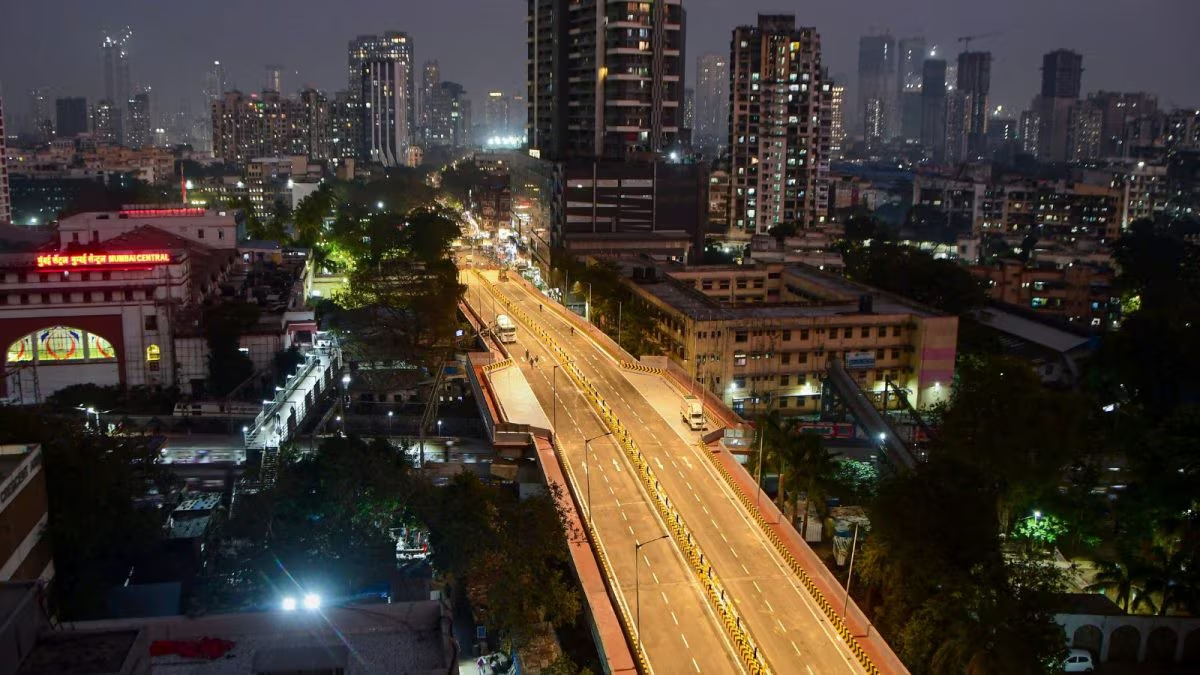
Mumbai Belasis Flyover Set To Reopen And Ease Congestion
Mumbai is on the verge of restoring a critical east‑west traffic artery with the completion of the Belasis flyover on Jehangir Boman Behram Marg, a move expected to significantly reduce congestion across several central city corridors after nearly two years of disruption. The Brihanmumbai Municipal Corporation (BMC) announced that the flyover’s reconstruction has been finished ahead of its original schedule, setting the stage for reopening and smoother cross‑city movement linking Tardeo, Nagpada and Mumbai Central.
The refurbished structure, spanning approximately 333 metres, replaces an ageing British‑era flyover that was deemed unsafe, prompting its demolition and a subsequent rebuild. Work began in October 2024 and, through coordinated efforts between the BMC, railway authorities and traffic police, was completed in just over 15 months — four months ahead of plan. Final load testing and safety clearances were concluded in early January 2026, with officials indicating that formal opening could occur imminently once remaining no‑objection certificates are cleared. Urban mobility experts suggest the reopening will offer measurable benefits for daily commuters and logistics movements in south‑central Mumbai. By restoring the east‑west link, travel across Jahangir Boman Behram Marg and connecting thoroughfares such as Dadasaheb Bhadkamkar Marg (Grant Road), Patthe Bapurao Marg and the Mahalaxmi Station bridge is expected to become less erratic, particularly during peak hours. This connectivity boost can reduce idling time on arterial roads, with knock‑on effects on local air quality and citywide traffic reliability.
The project’s accelerated timeline reflects a broader push by civic authorities to enhance urban transport infrastructure amid escalating population density and vehicular growth. In densely built environments like central Mumbai, even relatively short connectors can serve as pivotal relief valves for congestion, helping informal transit services, buses and private vehicles traverse the urban core more efficiently. Planners also highlight the importance of integrating such infrastructure with wider multimodal networks — from rail to bus and non‑motorised options — to ensure sustainable urban mobility outcomes. (Urban planners)Reconstruction included not just the superstructure but also integral approach roads on both sides and complex work over active railway lines, which required high precision around train schedules and utility clearances. BMC officials credited seamless coordination among departments, round‑the‑clock work during monsoon disruptions and meticulous logistic planning for the project’s early finish.
Nevertheless, stakeholders urge continued attention to pedestrian safety and last‑mile connectivity around the new flyover. Footpaths and safe crossing zones are increasingly recognised as essential complements to major road infrastructure, reinforcing inclusive access for all city users. (Traffic safety analysts)
As Mumbai finalises formal opening protocols, the return of the Belasis flyover is poised to deliver tangible relief for east‑west travellers, ease freight movements through the city centre and strengthen resilience in the face of evolving urban mobility demands. Continued optimisation of connected junctions and traffic signal systems will be key to maximising the benefits of this infrastructure upgrade.