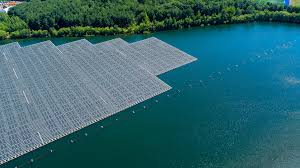
Maharashtra Builds Floating Solar Projects On Dam Reservoirs
Maharashtra has unveiled an ambitious strategy to harness its dam reservoirs for renewable energy by developing floating solar photovoltaic (PV) installations across the Krishna and Godavari river basins, a move that seeks to expand green power capacity while conserving land and water resources in one stroke. The initiative — driven by the state’s water resources department and backed by a public‑private partnership (PPP) strategy — aims to embed renewable energy generation within existing water infrastructure, aligning climate resilience with rural electrification needs.
At a renewable energy seminar in Pune this week, the state’s water resources minister highlighted the multiple benefits of floating solar plants, noting that installations on water bodies eliminate the need for land acquisition — a major hurdle in traditional solar farm development — and can simultaneously reduce evaporation from reservoirs, increasing irrigation availability. This dual impact is particularly consequential in regions where agriculture remains the backbone of rural livelihoods and water security is tightly linked to cropping cycles. The floating solar plan is part of a broader renewable push under Chief Minister leadership to bolster Maharashtra’s energy independence and support its transition to low‑carbon power systems. By integrating renewable generation with existing water storage infrastructure, the state aims to tap dormant potential in dams managed by the Krishna and Godavari River Development Corporations, potentially creating utility‑scale solar capacity without competing for scarce land in densely populated districts.
Renewable energy analysts note that floating PV systems have several climate‑adaptive advantages over ground‑mounted arrays. The presence of water cools solar modules, often enhancing efficiency and output, while surface shading can significantly reduce evaporation losses — an important water conservation benefit in Maharashtra’s semi‑arid regions. These benefits can strengthen the resilience of coupled water‑energy systems, particularly in drought‑prone seasons. To attract investment and technical expertise, Maharashtra plans to structure these projects under transparent PPP frameworks, opening opportunities for global solar developers and clean energy funds. Such models could accelerate deployment timelines and help integrate floating solar capacity with grid and off‑grid rural power needs, including irrigation pumping and community electrification.
However, integrating solar infrastructure with dam reservoirs also raises planning and environmental trade‑offs. Experts advise careful assessment of aquatic ecosystems, inclusive stakeholder consultations — especially with fishing and riverine communities — and robust design standards to ensure floating systems do not disrupt local biodiversity or undermine water quality. In other Indian states, large floating arrays have prompted debates on ecological impacts and long‑term reservoir health, underscoring the need for balanced policy frameworks. (Comparative context) Maharashtra’s reservoir solar programme complements other state renewable efforts, including large‑scale rooftop solar and floating PV tenders already issued for grid‑connected projects at major dams. These initiatives dovetail with national renewable energy ambitions and reinforce the state’s role in India’s broader clean energy transition.
As Maharashtra moves from concept to implementation, the floating solar push could emerge as a replicable model for climate‑aligned infrastructure development that balances energy generation, water resource management and rural economic support — a vital combination for resilient and equitable regional growth.