Pune Region Purandar Airport Project Reshapes Growth
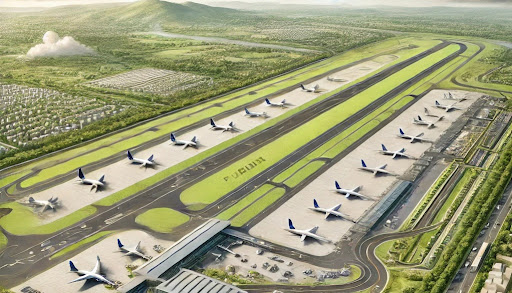
Plans for a new international aviation hub in Purandar taluka have moved further into public view, positioning the Pune region for a major shift in its infrastructure and real estate landscape. Senior state leadership indicated this week that the Purandar airport project is being planned at a scale that would place it among the country’s largest airports by land area, underscoring the state’s ambition to rebalance growth away from saturated urban cores.
The proposed airport site spans roughly 3,200 acres and is designed to accommodate dual runways, cargo handling infrastructure, and operations for wide-body aircraft. According to officials overseeing the project, this capacity is intended to future-proof air connectivity for western Maharashtra, supporting both passenger traffic and export-oriented logistics over several decades. For the Pune metropolitan region, the project has implications far beyond aviation. Urban planners note that a large greenfield airport typically acts as a development magnet, influencing land use, housing demand, and transport corridors within a 30–40 km radius. In Purandar and adjoining tehsils, this could translate into new employment clusters, warehousing zones, and satellite townships if managed through coherent regional planning rather than speculative sprawl.
Land acquisition remains the most sensitive dimension of the Purandar airport project. Authorities report that consent has been secured from a substantial majority of landholders, reflecting negotiated compensation and rehabilitation frameworks. However, urban policy experts caution that the long-term success of such projects depends on transparent valuation, timely payments, and post-acquisition livelihood planning, particularly in agrarian belts transitioning toward urban economies. The project also intersects with recent public investment in road infrastructure across Pune district. Hundreds of kilometres of arterial and rural roads have been upgraded in the past year, improving inter-tehsil connectivity and reducing travel friction. While these upgrades were executed for a global sporting event, transport economists argue that their more lasting value lies in supporting freight movement and dispersing commuter traffic as new growth nodes emerge.
From a sustainability perspective, the airport’s eventual footprint raises questions around water use, energy demand, and carbon intensity. Built-environment specialists stress that large aviation projects must integrate renewable energy systems, climate-resilient drainage, and low-emission surface transport links from the outset. Without these safeguards, peripheral regions risk inheriting environmental stress alongside economic opportunity. As approvals progress and timelines firm up, the next phase for the Purandar airport project will be governance-led: aligning airport development with regional plans, affordable housing strategies, and ecological safeguards. For residents and investors alike, the real test will be whether the project catalyses balanced urbanisation or merely shifts existing pressures to a new geography.