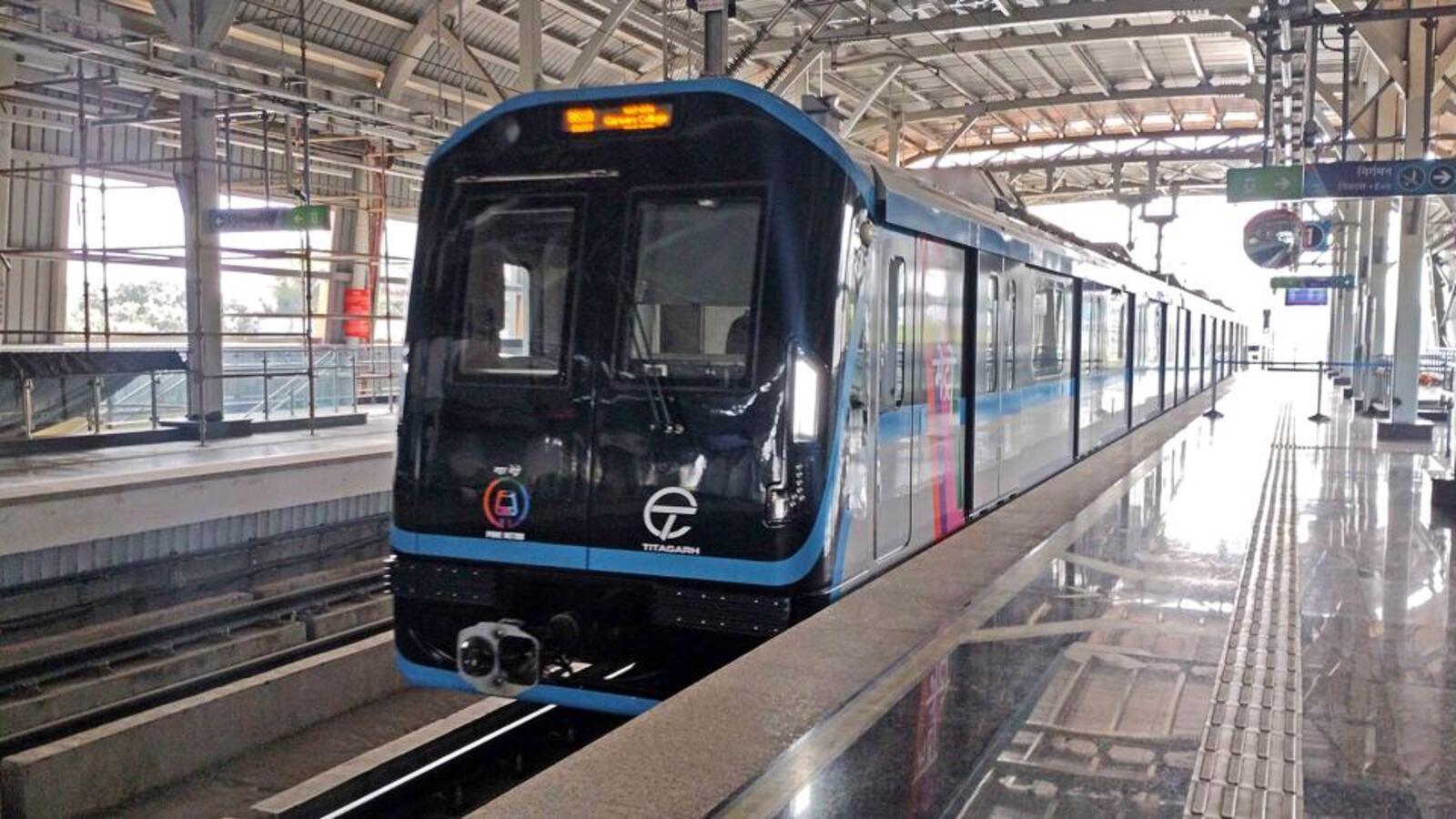
Pune Metro Improves Last Mile Connectivity Downtown
Pune’s public transport network is set to take a significant step toward seamless, people-first mobility as new pedestrian underpasses at two of its busiest Metro stations near completion, promising safer and faster movement across key transit hubs.Authorities overseeing the city’s Metro system are preparing to open underground pedestrian links at central Pune stations, subject to final safety clearance. The facilities are designed to allow commuters to move between Metro platforms, bus terminals and surrounding commercial areas without crossing congested roads, a long-standing challenge in the city’s dense core.
The development is particularly consequential at Swargate and Shivajinagar, both of which function as high-volume interchange points connecting Metro services with state-run buses, city transport routes and informal mobility systems. Urban transport planners say such grade-separated pedestrian access is essential for reducing surface-level congestion while improving commuter safety, especially for women, elderly users and people with disabilities. Daily ridership at these stations already exceeds several thousand passengers, and footfall is expected to rise sharply as additional Metro corridors become operational this year. By eliminating road-level conflict between pedestrians and vehicles, the underpasses are expected to cut transfer times, reduce accident risk and encourage greater use of public transport a key objective for cities facing air pollution and rising private vehicle ownership. Beyond convenience, the initiative signals a broader shift in Pune’s transport planning philosophy.
Instead of treating Metro stations as isolated structures, authorities are increasingly integrating them into multi-modal hubs that combine rail, bus, walking and intermediate public transport within compact, walkable precincts. Industry experts note that such integration is critical to making Metro systems financially and environmentally sustainable over the long term. Plans are also underway to strengthen interchange connectivity near Shivajinagar, where multiple Metro corridors are expected to converge. Dedicated structures and underground passages are being aligned to enable smooth line-to-line transfers without forcing commuters back onto traffic-heavy streets. Similar pedestrian infrastructure is nearing readiness in other civic zones, including municipal office districts with high daily visitor volumes. From an urban development perspective, improved pedestrian circulation around major transit nodes has wider implications. Real estate analysts point out that well-connected stations often trigger more compact, mixed-use development patterns, reducing urban sprawl and dependence on private vehicles.
For local businesses, easier access typically translates into higher foot traffic and economic activity. Separately, the Metro authority is consolidating its administrative operations at a centrally located station complex, signalling the maturation of Pune’s urban rail ecosystem from a construction-driven phase to long-term operations and service optimisation. As Pune continues to expand its Metro footprint, the success of such underpasses will be closely watched. Their performance may well determine how effectively the city can balance rapid growth with inclusive, low-carbon mobility a challenge facing urban centres across India.