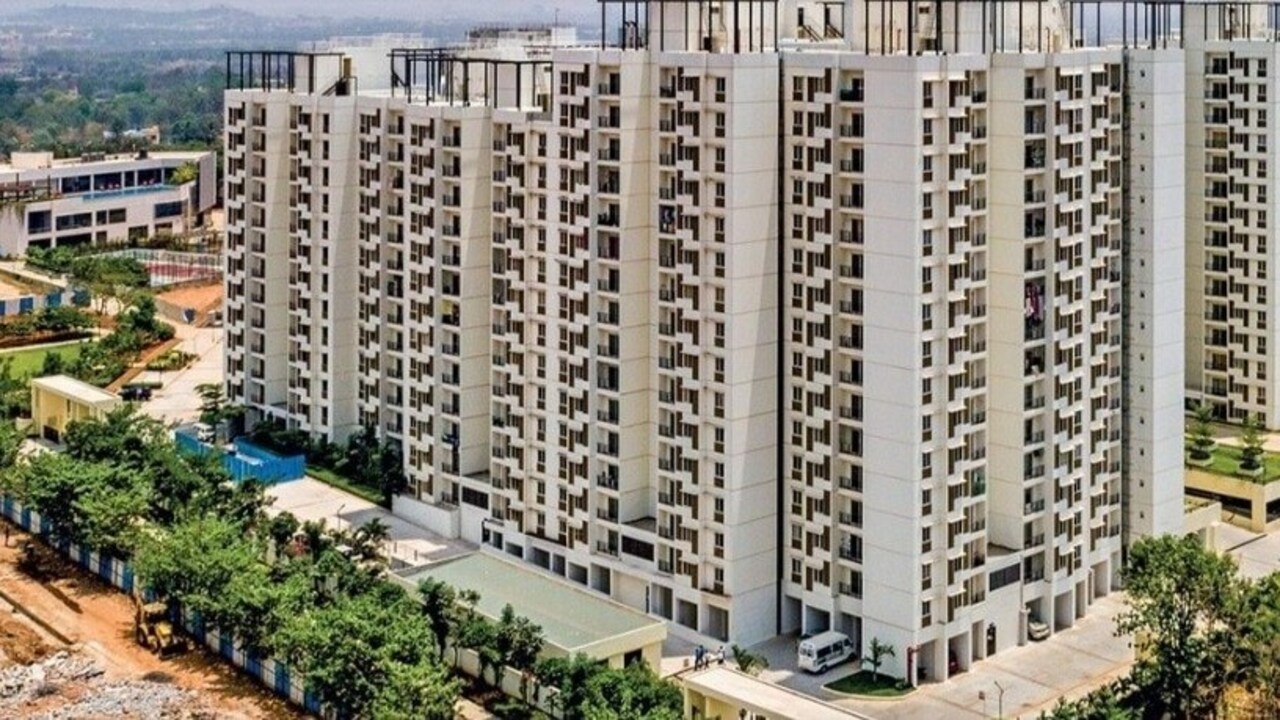
Bengaluru’s housing market is undergoing a quiet but decisive recalibration, with three-bedroom apartments steadily replacing smaller formats as the preferred choice for both buyers and tenants. Across emerging corridors and established neighbourhoods, developers are reworking project designs to accommodate larger homes, reflecting how residents now view housing as a long-term, multifunctional investment rather than a stepping stone on the property ladder.
Market data from multiple residential tracking agencies shows that the average size of new apartments launched in the city rose by about 7 per cent in 2025 compared to the previous year. The increase is being driven primarily by demand for 3BHK configurations, typically ranging from 1,700 to over 2,000 sq ft. These homes are increasingly embedded within gated developments offering shared amenities such as open green areas, fitness spaces, and community facilities, signalling a broader shift towards integrated urban living. Urban planners and real estate analysts say the trend reflects structural changes in Bengaluru’s economy and workforce. The city’s role as a hub for global technology operations and knowledge services has normalised hybrid and remote working, pushing households to prioritise additional rooms that can function as home offices, study areas, or wellness spaces. For many middle- and upper-middle-income families, upgrading later is no longer seen as practical amid rising land costs and dense urbanisation.
Infrastructure investment is amplifying this demand. Areas aligned with metro expansion, employment clusters, and social infrastructure particularly in the city’s northern, eastern, and southern zones are witnessing the strongest absorption of larger units. In contrast, central neighbourhoods continue to see interest from high-income buyers, though limited land availability has constrained the supply of spacious apartments there. Developers are responding by scaling up project footprints rather than increasing the number of launches. Large-format townships and campus-style developments are gaining preference over standalone buildings, enabling better land optimisation, shared services, and energy-efficient design. From an urban sustainability perspective, experts note that this model can reduce per-capita resource consumption when combined with public transport access and walkable layouts.
The shift towards Bengaluru 3BHK housing is also evident in the rental market. Rental indices indicate that three-bedroom homes, alongside larger two-bedroom units, account for a significant share of tenant enquiries, especially along IT corridors. While rent growth has moderated from earlier peaks, demand remains resilient for well-planned homes in the mid-range segment, underscoring the city’s continued draw for professionals and families. Looking ahead, the challenge for policymakers and developers will be balancing the appetite for larger homes with affordability, land efficiency, and climate resilience. As Bengaluru expands outward, ensuring that spacious housing aligns with sustainable mobility, water security, and inclusive access to urban services will determine whether this evolution strengthens the city’s long-term liveability.