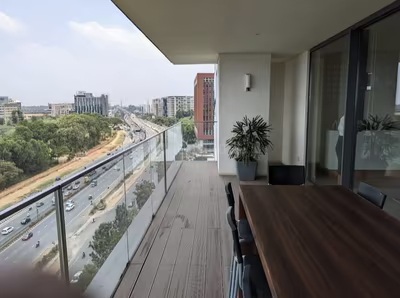
Across India’s largest housing markets, the humble balcony is fast disappearing from everyday apartment living. In cities such as Bangalore and the National Capital Region, new residential launches increasingly feature fewer, smaller, or no balconies at all marking a structural shift in how urban homes are designed, priced, and regulated. The change reflects deeper pressures reshaping metropolitan housing: soaring land values, tighter planning controls, and heightened scrutiny by buyers over what constitutes usable living space. As towers rise higher and plots shrink, developers are recalibrating layouts to maximise saleable area, often at the cost of open-to-sky spaces once considered standard.
Urban planners note that balconies are among the first design elements to be trimmed when efficiency becomes paramount. In mid-segment projects, particularly in Bangalore’s core and eastern corridors, new apartments now typically offer a single compact balcony linked to the master bedroom—or none at all. What remains is increasingly positioned as a premium lifestyle feature rather than a functional extension of the home. This shift is closely tied to buyer awareness around carpet area versus marketed apartment size. Industry experts say households are becoming more conscious of the financial impact of paying for non-usable areas, including walls, shared amenities, and outdoor projections. In a high-cost market, even modest balcony space can significantly raise the effective per-square-foot price, altering purchase decisions.
Environmental conditions are also influencing design choices. Poor air quality across northern India and persistent urban heat in southern cities have reduced the everyday usability of balconies. Architects point out that in dense neighbourhoods, where buildings face each other at close range, balconies often deliver limited ventilation, privacy, or comfort weakening their practical value despite their visual appeal. Yet the story differs by region. In NCR cities such as Noida and Gurugram, planning norms allow limited balcony depth without counting it toward permissible floor area, enabling developers to retain them in mid-income housing. In contrast, cities operating under stricter land and density constraints must absorb balconies within buildable limits, making them costlier to provide. In Bangalore, brokers estimate that apartments with multiple balconies now command a noticeable premium, placing them firmly in the upper end of the market.
As a result, open private spaces are becoming markers of housing inequality accessible to fewer buyers even as demand for breathable, climate-responsive homes grows. Urban policy specialists argue that the decline of balconies raises larger questions about liveability in India’s vertical cities. As climate risks intensify and remote work increases time spent indoors, the absence of small outdoor buffers may affect mental health, energy use, and long-term housing resilience. Looking ahead, experts suggest that smarter regulations, not larger homes could restore balance. Incentivising compact, well-designed open spaces without penalising efficiency may prove critical as cities like Bangalore attempt to align affordability, density, and quality of life in the next phase of urban growth.