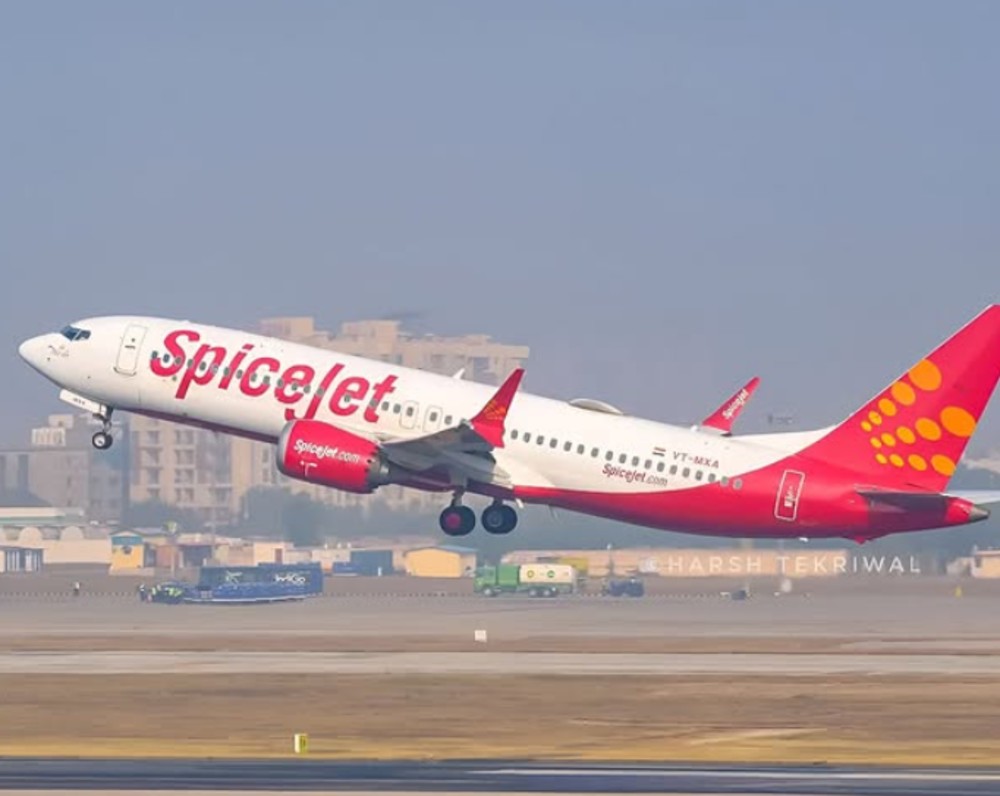
Ahmedabad is set to gain a new direct international air link as SpiceJet prepares to launch non-stop services to Sharjah in early February 2026, strengthening aviation connectivity between western India and the UAE. The route is expected to play a strategic role in supporting cross-border commerce, labour mobility, and tourism flows between Gujarat and the Gulf, while easing pressure on more congested hubs such as Mumbai and Delhi.The five-times-a-week service will connect one of India’s fastest-growing urban economies with Sharjah, an emirate that has emerged as a key alternative gateway within the UAE due to its proximity to Dubai and comparatively lower operating costs. For Ahmedabad, the addition marks another step in its transition from a primarily domestic aviation market to a regional international node.
Industry observers note that demand between Gujarat and the UAE has remained resilient, driven by a large expatriate workforce, family travel, and expanding trade ties in sectors such as textiles, diamonds, pharmaceuticals, and engineering goods. Direct flights reduce journey times and eliminate the need for transfers, a factor that significantly improves travel efficiency for small business owners and time-sensitive cargo. From an urban development perspective, improved international air connectivity is increasingly linked to city competitiveness. Ahmedabad’s airport has seen steady passenger growth over the past decade, coinciding with investments in metro rail, road upgrades, and commercial districts near transit corridors. Urban planners argue that such routes, when aligned with public transport and compact land-use planning, can help distribute economic activity more evenly rather than concentrating growth in a few megacity airports.
The Ahmedabad Sharjah flights also reflect a broader recalibration in Indian aviation, with carriers targeting underserved city-pairs instead of relying solely on metro-centric networks. Aviation analysts suggest this approach supports more balanced regional development while reducing congestion-related emissions at saturated airports. Environmental considerations remain central to future route sustainability. While aviation is carbon-intensive, experts point out that non-stop flights can lower per-passenger emissions compared to multi-leg journeys. Coupled with fleet modernisation and improved air traffic management, direct services may offer incremental efficiency gains in the near term.
Sharjah’s positioning as a cultural, education, and logistics hub further enhances the route’s relevance. The emirate hosts industrial zones and ports that complement Gujarat’s manufacturing base, potentially supporting trade beyond passenger traffic. As air travel demand between India and the Gulf continues to evolve, the success of the Ahmedabad Sharjah flights will likely depend on coordinated planning aligning airport capacity, urban transport access, and sustainable growth strategies. For cities seeking inclusive economic expansion, such connectivity must ultimately translate into jobs, mobility, and resilient urban infrastructure rather than isolated aviation gains.