Ahmedabad Faces Pushback On Street Redesign Project
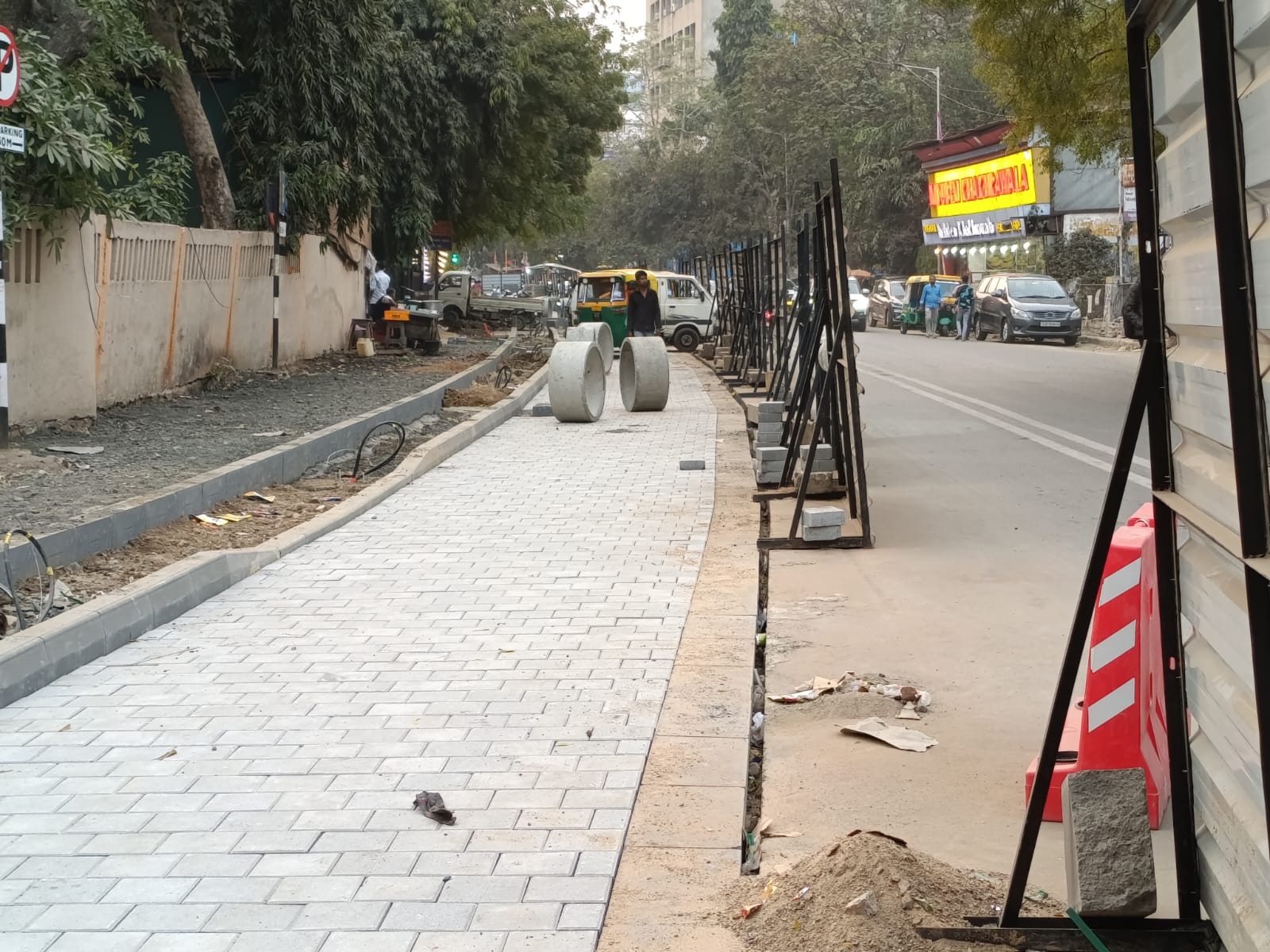
Ahmedabad’s attempt to reimagine one of its central urban corridors as a pedestrian-oriented street has been abruptly paused, exposing the fragile balance Indian cities face between traffic efficiency and inclusive public space design. The decision, taken midway through construction, has left a prominent Navrangpura road partially transformed and the city divided over what kind of streets its future demands. The halted project involved a 500-metre stretch linking CG Road to Mithakhali Circle, part of a broader precinct-level redevelopment initiative aimed at creating walkable, mixed-use streets.
Conceived as an urban upgrade rather than a traffic project, the plan proposed wider footpaths, shaded seating, regulated vending zones, plantations, and organised parking all within an 18-metre road width. The vehicular carriageway was reduced to prioritise safety and street activity. However, as construction progressed, residents and commuters raised concerns that the redesigned section was intensifying congestion in an already busy commercial area. Traffic queues during peak hours became the focal point of public criticism, prompting the municipal administration to halt further work. Authorities have since confirmed that while the completed portion will remain, the remaining section will be restored to a conventional road layout. For urban planners, the episode underscores a recurring challenge in Indian cities: implementing people-first infrastructure in environments historically shaped around private vehicles. Experts associated with the project note that the design followed established global principles of “complete streets,” where roads serve pedestrians, cyclists, vendors, and motorists rather than functioning solely as traffic conduits.
Similar transformations, they argue, often face resistance during transition phases before behavioural patterns stabilise. The economic implications are also significant. The paused stretch was funded under a multi-crore precinct development programme intended to improve public realm quality, enhance local retail vitality, and raise surrounding property values through better urban design. Half-executed infrastructure now represents sunk costs and lost momentum at a time when cities are under pressure to demonstrate efficient capital deployment. From a sustainability perspective, the rollback highlights the gap between policy intent and on-ground acceptance. Pedestrian-friendly streets are widely recognised as tools to reduce emissions, improve safety, and encourage local economic activity. Yet without robust traffic management plans, public engagement, and phased implementation, such projects risk being perceived as disruptions rather than upgrades.
Urban governance specialists suggest the lesson lies not in abandoning pedestrian-focused design, but in refining how it is introduced through pilot zones, data-backed traffic modelling, and clearer communication of long-term benefits. As Ahmedabad continues to expand and densify, the question is no longer whether streets should serve people, but how cities can transition without leaving citizens stranded between competing priorities. What remains on this road is more than unfinished concrete. It is a visible marker of an unresolved debate about urban futures one that Ahmedabad, like many fast-growing Indian cities, will have to confront again.