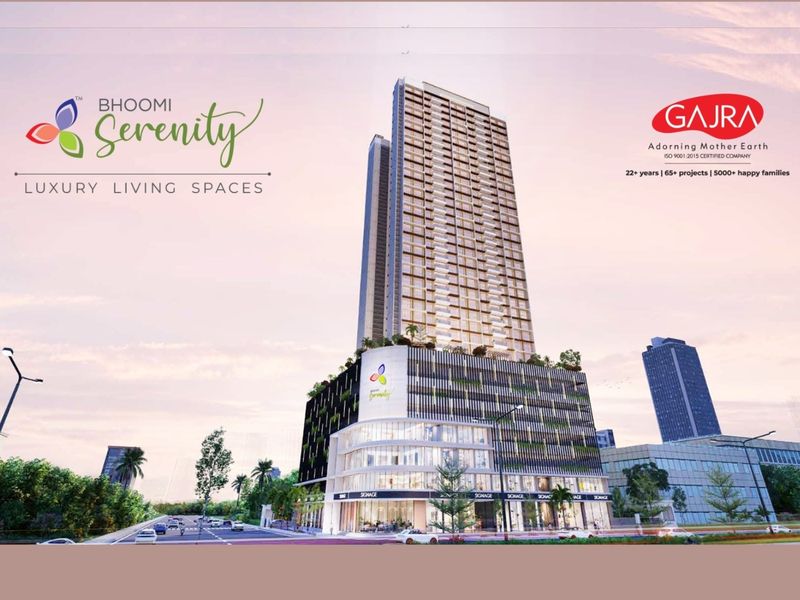
Kharghar’s evolution from a peripheral residential node into what developers increasingly call BKC Two is no longer just a branding exercise—it is beginning to reflect in capital allocation decisions. Gajra Group’s announcement of a ₹300-crore investment in a technology-led residential project marks a calculated move into a micro-market that is quietly repositioning itself within Navi Mumbai’s urban hierarchy.
The decision comes at a moment when Navi Mumbai is transitioning from a dormitory extension of Mumbai into a multi-nodal economic region. Infrastructure delivery—not announcements—is now shaping demand. The international airport nearing operational readiness, metro rail extensions, arterial road upgrades, and a visible clustering of office developments have together altered how developers are underwriting residential risk in the region. Kharghar, once perceived as oversupplied and speculative, is benefiting from this structural shift. Its proximity to emerging business districts and transport nodes is drawing a different buyer profile—end-users with professional incomes and long holding horizons, as well as investors aligned with office-led residential demand rather than purely price-led appreciation.
What distinguishes Gajra Group’s entry is the product thesis. The project is positioned around technology integration, operational efficiency, and long-term adaptability—attributes that are increasingly becoming decision drivers rather than marketing add-ons. In a market where buyers are more informed and maintenance costs are under scrutiny, developers are being forced to think beyond location premiums. “Navi Mumbai’s growth is no longer linear; it is nodal,” said Tirth Gajra, Director, Gajra Group. “Our investment reflects a belief that residential demand will increasingly follow commercial density and infrastructure certainty. Housing that is future-ready in terms of systems and efficiency will hold relevance longer.”
From an execution perspective, the emphasis appears to be on lifecycle value rather than quick monetisation. According to Bhavik Gajra, Director, the focus is on build quality, energy efficiency, and digital systems that improve everyday functionality—an acknowledgement that buyers are now evaluating homes as long-term assets, not just address upgrades. Market data supports this shift. While price growth in Navi Mumbai has remained measured, transaction volumes have shown resilience, particularly in nodes with improving connectivity and employment visibility. Analysts point out that capital is selectively flowing into locations where residential supply is aligned with office growth, reducing speculative inventory risk.
Gajra Group’s ₹300-crore commitment should be viewed in this context—not as an isolated project announcement, but as a signal that developers are recalibrating their strategies for Navi Mumbai’s next cycle. As infrastructure moves from promise to performance, the success of residential developments will increasingly depend on product intelligence, operational foresight, and alignment with economic nodes.
For Kharghar, the message is clear: the market is no longer waiting for potential—it is beginning to price in certainty.
Why Gajra Group’s ₹300-Crore Bet on Kharghar Signals the Next Phase of Navi Mumbai Housing