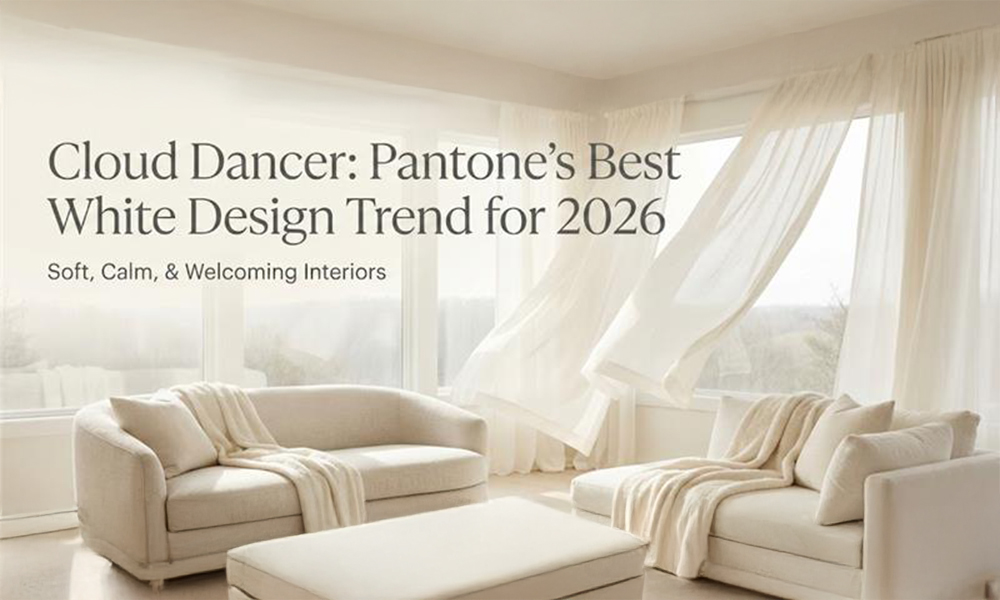
India Interiors Embrace Pantone Cloud Dancer Trend
Pantone’s selection of Cloud Dancer as the 2026 Colour of the Year is reverberating across global design circles — and Indian interior markets are beginning to take note. Defined by the Pantone Colour Institute as a soft, balanced white that conveys calm, clarity and emotional space, this shade is poised to influence interior paint choices, material finishes, and staging approaches in urban homes and commercial properties throughout the coming year. This matters because colour trends increasingly shape real estate appeal, psychological wellbeing in built environments, and material design narratives that bridge aesthetics with lived experience.
The choice of a white tone — the first in Pantone’s 26‑year programme — reflects a broader cultural shift away from saturated, high‑stimulus palettes toward hues that support mental balance, spatial openness, and visual calm. Pantone describes Cloud Dancer as a “billowy white imbued with serenity,” a nuanced shade that sits between pure white and gentle off‑white, with both warm and cool undertones designed to harmonise with a wide range of materials.In practical terms, the trend is already filtering into Indian interior design briefs and product offerings. Urban planners and residential designers report a growing preference for neutral backdrops that enhance natural lighting and work with wood, stone, and textile textures — an aesthetic that simultaneously supports minimalist aesthetics and functional, people‑centred spaces. A senior interior consultant notes that these quieter neutral tones help reduce visual noise in apartments and mixed‑use developments, which is particularly significant in high‑density cities where visual complexity can contribute to cognitive overload.
From a market perspective, the shift has implications for both property staging and material specification. Real estate professionals say that lighter neutral tones tend to enlarge perceived space and appeal to a broader buyer demographic, enhancing resale value in premium and mid‑segment properties alike. This dovetails with developers’ efforts to create homes that feel luminous and flexible in function — from virtual‑work zones to shared living spaces — without resorting to stark or clinical finishes.However, the embrace of Cloud Dancer is not without debate. Some designers caution that overreliance on white‑leaning palettes can risk visual monotony unless paired thoughtfully with accents, textures, and biophilic elements that add warmth and identity. Interiors that simply lean on colourless schemes without material depth may underperform in markets where cultural preference for vibrant hues remains strong.
For builders and developers, the trend invites a nuanced strategy: leverage Cloud Dancer as a foundational tone that supports human‑centred design while layering in local materiality and cultural colour cues. As Indian cities continue to densify and homes become sites of work, rest and connection, intentional colour choices like Cloud Dancer offer a visual foundation that aligns comfort, clarity and long‑term value.