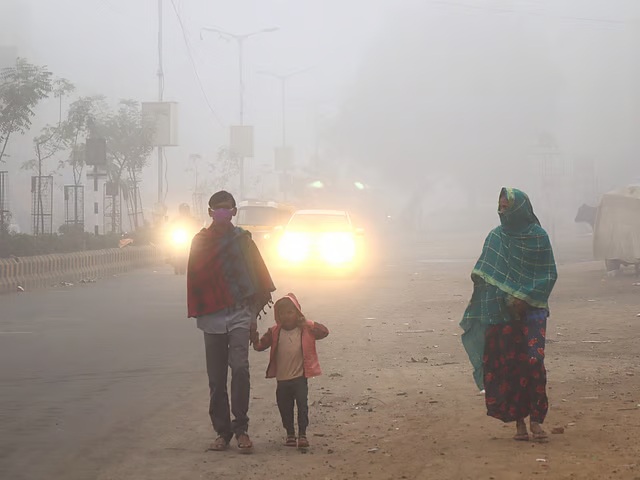
Winter nights across Gujarat are growing noticeably warmer, with several of the state’s major urban centres recording minimum temperatures well above seasonal norms, raising fresh questions about changing climate patterns and their implications for cities, infrastructure, and energy demand. According to the latest morning observations released on Friday, cities including Ahmedabad, Vadodara, Rajkot and Surat experienced overnight temperatures that were 4–5 degrees Celsius higher than long-term averages. The trend points to milder winter conditions across both inland and coastal regions, altering how residents, planners and civic agencies experience and prepare for the season.
Ahmedabad and Vadodara both reported minimum temperatures of 17.8°C, significantly above what is typical for late January. Rajkot followed closely at 17.9°C, while Surat remained among the warmest nights in the state at 18.4°C. Coastal towns such as Daman and Veraval also stayed unusually warm after sunset, reflecting the moderating influence of the Arabian Sea. Even traditionally cooler pockets of Saurashtra, Kutch and North Gujarat showed elevated night readings. Bhuj and Deesa remained above average despite dipping into the mid-teens, while Naliya in Kutch, the coldest location in the state, recorded 12°C still warmer than expected for this time of year. Urban climate specialists note that persistently higher minimum temperatures often have a greater impact on public health and energy systems than daytime heat. “When nights don’t cool sufficiently, it affects sleep quality, indoor comfort and electricity consumption, especially in dense urban areas,” said a senior climate researcher tracking western India’s warming trends.
For cities like Ahmedabad and Surat, which have expanded rapidly over the past two decades, warmer nights are also linked to urban heat island effects where concrete surfaces, reduced tree cover and high traffic density trap heat after sunset. This has implications for housing design, ventilation standards, and long-term cooling strategies in residential and commercial developments. Meteorological data indicates that the warmer nights were not accompanied by rainfall, with dry conditions prevailing across the state. Morning humidity levels remained relatively high, particularly in coastal districts, adding to discomfort during overnight hours.
From a planning perspective, the pattern underscores the growing need for climate-responsive urban design including shaded streets, green buffers, reflective building materials and energy-efficient housing especially as Gujarat’s cities continue to grow as industrial and residential hubs. As winter progresses, officials will closely monitor whether these elevated minimum temperatures persist. For policymakers and developers alike, the current conditions offer an early reminder that climate resilience is no longer a seasonal concern, but a year-round urban priority requiring coordinated responses across housing, infrastructure and public health systems.