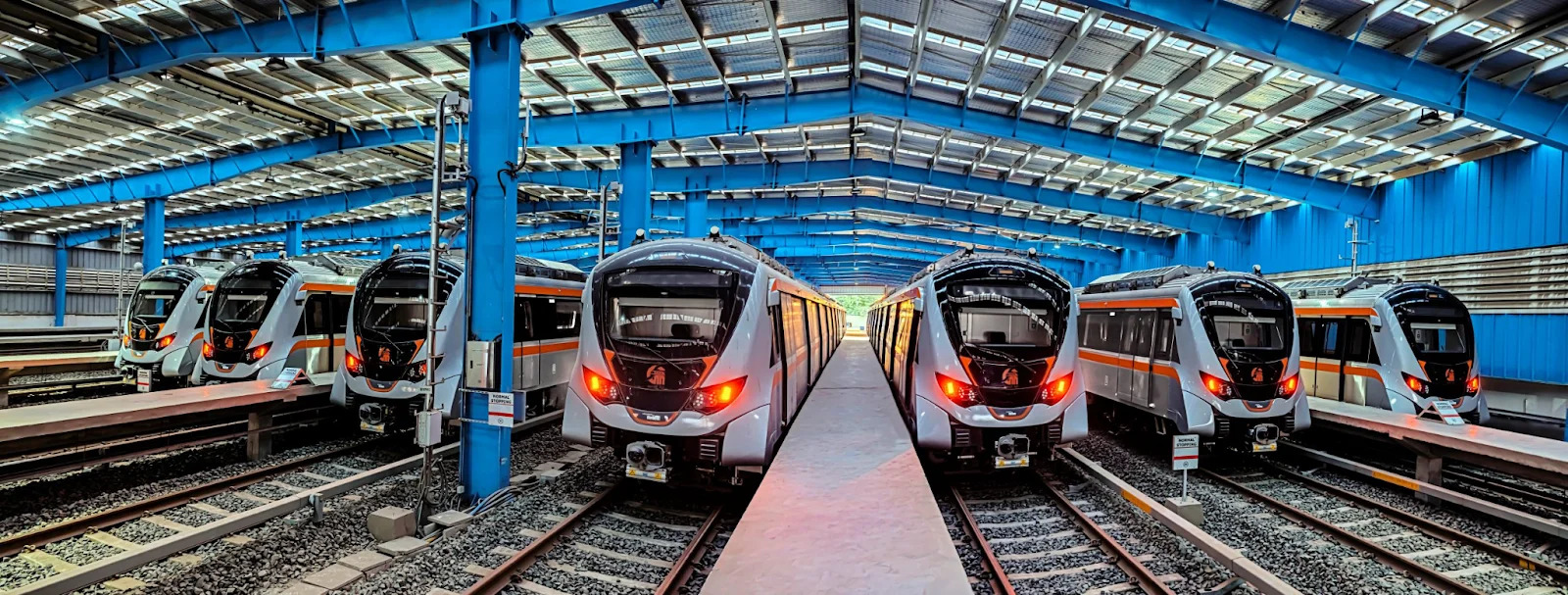
Ahmedabad Metro Highlights Coordinated Urban Delivery
Ahmedabad’s fully operational Metro Phase I has emerged as a case study in how tighter project oversight can reshape urban transport delivery, as India’s flagship digital governance review mechanism completes its 50th sitting. Spanning more than 40 kilometres, the metro network now connects key residential, employment and institutional zones, strengthening the city’s push towards low-emission mobility while easing long-standing pressure on road infrastructure. The review platform, introduced a decade ago to track delayed public projects and citizen grievances, has gradually evolved into a high-level coordination mechanism between Union ministries and state administrations. Urban planners say its significance lies less in visibility and more in its ability to break through bureaucratic silos that often stall complex infrastructure in fast-growing cities.
The Ahmedabad Metro Phase I illustrates this shift clearly. When the project first came under central review in 2018, construction progress stood at roughly a quarter of the approved scope. Land acquisition disputes, delayed relocation of utilities and unresolved funding arrangements were slowing momentum challenges familiar to large transit systems across Indian cities. Following repeated reviews, officials from housing, finance and state urban development departments were required to align timelines and resolve bottlenecks collectively. By late 2020, physical progress had crossed the halfway mark, signalling a turnaround driven by accelerated land handover, streamlined rehabilitation processes and improved coordination with local agencies.
Most of the network, including the main east–west and north–south corridors, opened to commuters in late 2022. The remaining sections were completed subsequently, bringing the entire Ahmedabad Metro Phase I online. Transport economists note that the operational network is already influencing commuting behaviour, with early ridership data indicating a gradual shift away from private vehicles on high-density corridors. Beyond mobility, the project carries broader urban implications. Electric metro systems play a critical role in lowering per-capita transport emissions, particularly in cities where vehicle ownership is rising faster than road capacity. For Ahmedabad, the metro also supports more compact, transit-oriented development patterns, which can reduce infrastructure costs and improve access to jobs and services for peripheral neighbourhoods.
From a governance perspective, infrastructure analysts see the project as evidence that continuous digital monitoring can compress delivery timelines without altering statutory processes. “The difference is sustained follow-up,” said an urban infrastructure expert involved in metro planning. “When multiple agencies know that unresolved issues will return to the table, decision-making becomes faster.” As Indian cities prepare for the next wave of mass transit investments, the Ahmedabad experience underscores the value of integrated oversight in balancing speed, accountability and public interest. The focus now shifts to last-mile connectivity, service reliability and equitable access factors that will determine whether large capital projects translate into lasting urban benefits.