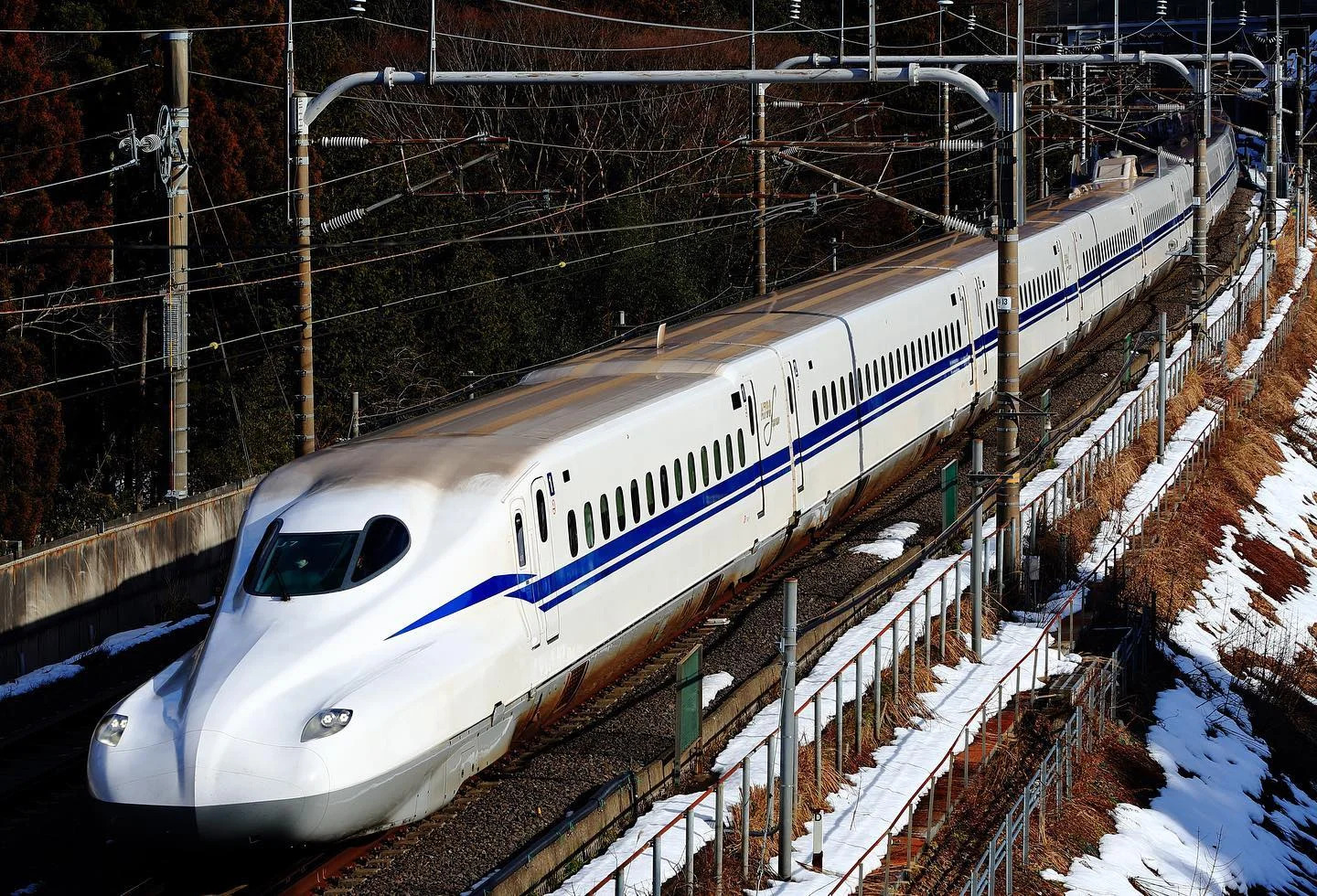
Indian Railways is preparing to evaluate a new operational model for long-distance passenger mobility with a high-speed technical trial of the Amrit Bharat push–pull train on the Ahmedabad–Mumbai rail corridor, one of the country’s busiest intercity routes. The trial signals a broader shift towards upgrading existing rail infrastructure for faster, more energy-efficient travel without the cost and land pressures of entirely new corridors.The confirmatory oscillograph car run, scheduled over two days on the Western Railway network, will assess whether the new train configuration can safely operate at speeds of up to 130 kmph under real-world conditions. Railway officials say the exercise is a mandatory step before permitting semi high-speed services on mixed-traffic routes that serve major urban and industrial centres.
The Amrit Bharat push–pull train uses locomotives at both ends of the rake, allowing faster acceleration and eliminating time-consuming reversals at terminal stations. Transport planners note that this design can significantly reduce dwell times in dense city stations, improving punctuality while easing platform congestion a growing concern in expanding metropolitan regions such as Ahmedabad, Surat, Vadodara and Mumbai. During the trial, specialised monitoring equipment has been installed across the 22-coach non-AC LHB rake to record braking performance, ride stability, oscillation levels and track interaction. Engineers will analyse how the train behaves across varying track geometry, signalling systems and speed zones, all of which are critical for corridors that handle both passenger and freight traffic. Urban mobility experts point out that improving average rail speeds on existing routes is increasingly seen as a climate-resilient alternative to highway expansion and short-haul aviation.
Each successful semi high-speed upgrade can shift passenger demand towards rail, reducing carbon emissions, fuel consumption and land acquisition pressures around cities.The Ahmedabad–Mumbai section is particularly significant due to its economic footprint. The corridor connects manufacturing clusters, financial centres, port-linked cities and emerging residential markets. Faster and more reliable rail services can influence commuting patterns, real estate demand near stations, and regional labour mobility, especially for lower- and middle-income travellers who rely on affordable non-AC services. Railway officials involved in the trial confirmed that operations will strictly adhere to all existing speed restrictions and safety protocols. Certified crew, track engineers, signalling teams and rolling stock inspectors have been deployed across the route to ensure uninterrupted data collection and operational safety.
If the Amrit Bharat push–pull trial meets performance benchmarks, industry observers expect similar configurations to be tested on other high-density corridors across India. The next phase will depend on how well infrastructure upgrades, station capacity, and maintenance regimes align with higher operating speeds. For cities along the Western Railway network, the outcome could shape a future where faster intercity rail supports inclusive growth while keeping transport emissions and urban sprawl in check.