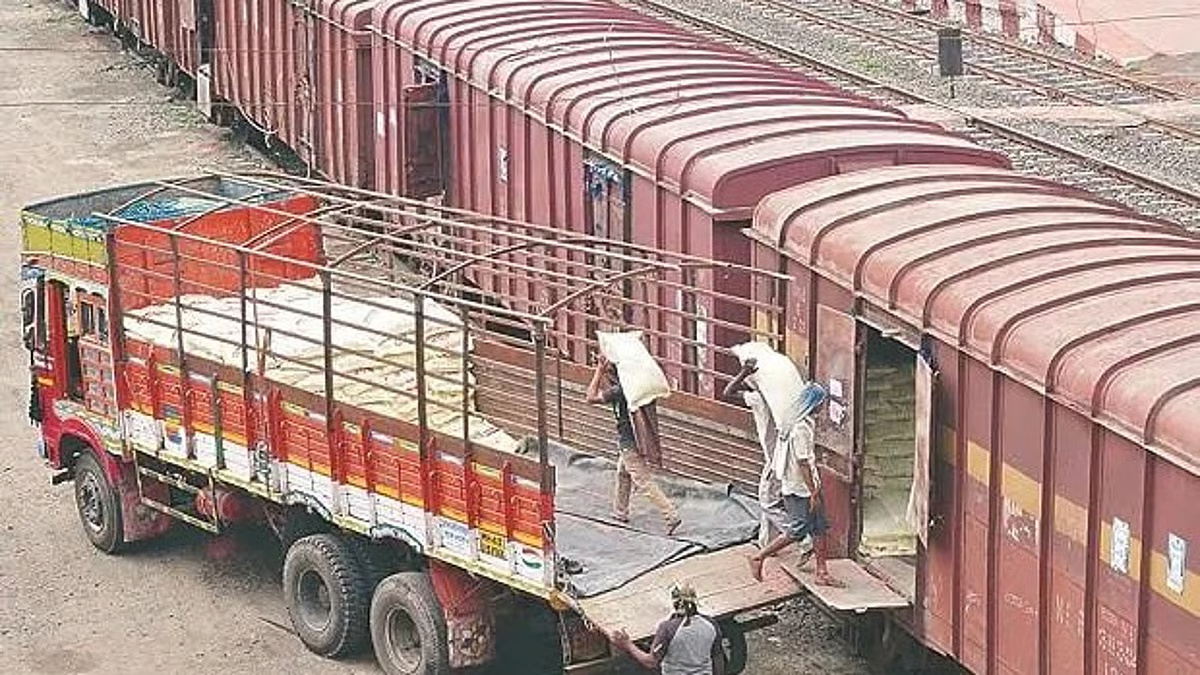
Central Railway’s Mumbai Division has begun diversifying its freight operations by introducing new bulk commodities into its cargo portfolio, a move aimed at strengthening rail-based logistics, improving asset utilisation, and supporting cleaner industrial supply chains. The expansion reflects a strategic shift to capture emerging demand from manufacturing, construction, and import-linked industries while reducing pressure on road freight corridors in the Mumbai Metropolitan Region.
Railway officials confirmed that bulk mineral and pulp-based cargo has now entered regular loading operations from Mumbai Division terminals. Freight contributes roughly one-third of the division’s overall revenue, making diversification critical as railways seek stable, long-term earnings amid fluctuating passenger volumes. Logistics analysts note that broadening the commodity mix also improves resilience against sector-specific slowdowns. One of the newly introduced cargo streams originates from a coastal goods terminal in the Mumbai region, where mineral consignments used in cement manufacturing have begun moving by rail to inland industrial centres. Officials involved in freight planning said the terminal, commissioned recently, was designed to handle such heavy bulk traffic and has already demonstrated operational viability through consistent rake handling. The terminal’s location allows efficient multimodal transfers, reducing truck congestion on city roads and port access routes.
Industry experts highlight that mineral-based additives used in modern cement blends play a role in lowering clinker dependency, which in turn helps reduce carbon emissions in construction materials. From an urban sustainability perspective, shifting this cargo to rail aligns with broader climate goals by cutting fuel consumption and emissions associated with long-haul trucking. In parallel, the Mumbai Division has also commenced movement of imported pulp used in the paper and packaging sector. The cargo, arriving via port-linked infrastructure, is being transported over long distances to inland processing hubs. Supply chain specialists say rail-based evacuation of such imports is critical for port efficiency, freeing up storage space and reducing turnaround times for vessels.
Performance data for the current financial year indicates a steady rise in overall freight volumes handled by the division, with a notable jump in the use of modern, higher-capacity goods rakes. Railway planners attribute this growth to targeted investments in terminals, siding connectivity, and operational coordination with logistics partners. The increased adoption of upgraded rolling stock also points to better network efficiency and reduced per-unit transport costs. Urban economists argue that strengthening rail freight in Mumbai has implications beyond railway balance sheets. Every additional tonne shifted to rail eases pressure on urban roads, improves air quality, and supports more predictable supply chains for industry. For a region grappling with congestion and climate risk, such incremental logistics reforms carry outsized civic benefits.
Going ahead, officials indicate that further commodity additions and terminal upgrades are under evaluation. The success of this freight expansion will depend on sustained coordination between ports, industries, and rail infrastructure—an increasingly critical equation for building resilient, low-carbon urban economies.
Central Railway Adds New Mineral And Pulp Cargo Streams