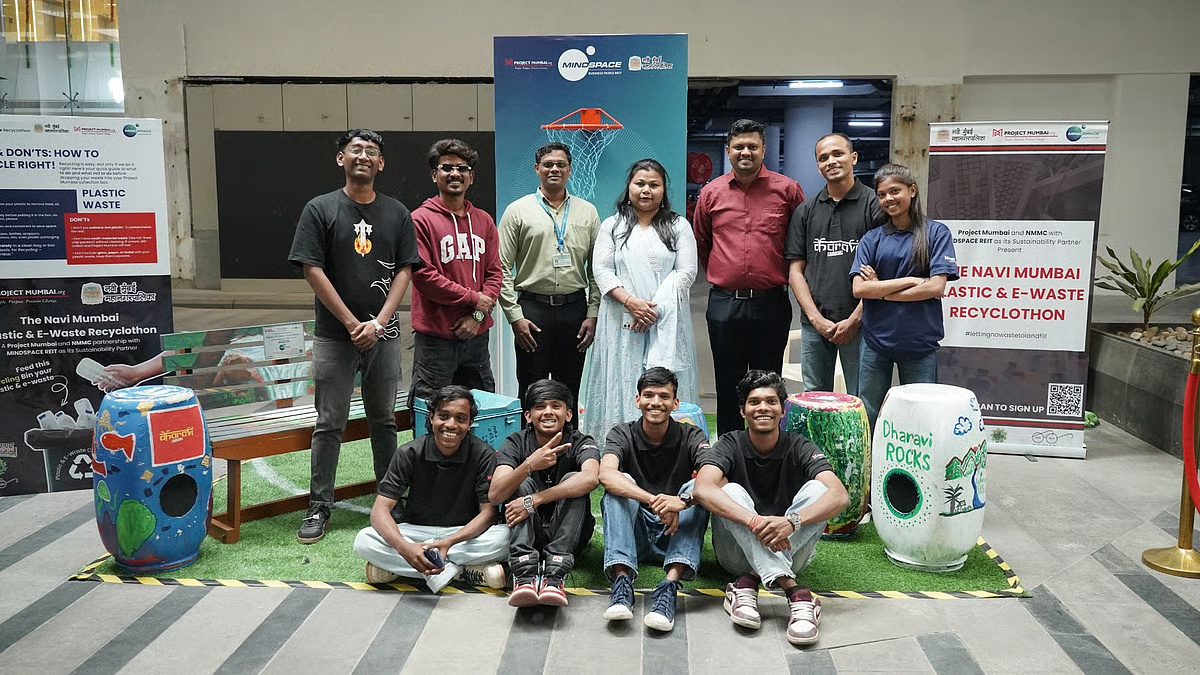
A city-scale plastic recovery initiative is taking shape across Navi Mumbai, signalling a shift in how municipal bodies and commercial real estate operators are collaborating on urban sustainability. The Navi Mumbai Municipal Corporation (NMMC) has partnered with a large office park developer and a civic non-profit to roll out a month-long plastic recovery programme targeting thousands of daily office commuters in Airoli, with collected waste being reintegrated into public infrastructure.
The initiative, framed around Navi Mumbai plastic recycling, aims to address one of the city’s most persistent urban challenges: low segregation compliance and limited public participation in waste reduction. By focusing on office districts rather than residential neighbourhoods, the programme taps into a concentrated workforce base, creating an opportunity to influence behaviour at scale while strengthening the city’s circular economy framework. Plastic collected from participating commercial campuses is being channelled to authorised recycling facilities, where it will be processed into durable outdoor furniture for use in municipal schools. Urban planners say this approach shortens the distance between waste generation and social benefit, turning what is typically a disposal cost into a community asset. For a city with growing education infrastructure needs, such material reuse also reduces dependence on virgin raw materials.
A distinctive feature of the programme is its reliance on behavioural design rather than enforcement. Interactive collection points have been installed in common areas of office campuses, encouraging employees to deposit plastic waste through playful, sports-inspired mechanisms. Sustainability experts note that such engagement-led models can significantly improve participation rates, particularly in high-density work environments where time constraints often limit involvement in civic initiatives. Municipal officials involved in the programme describe it as an extension of Navi Mumbai’s broader waste management strategy, which prioritises decentralised processing, material recovery, and reduced landfill dependency. Industry observers add that the participation of institutional real estate owners signals a growing recognition that environmental performance is becoming integral to asset valuation, tenant retention, and long-term urban resilience.
The programme is being implemented with support from a city-based non-profit specialising in citizen-led urban interventions. Officials associated with the effort highlight that the closed-loop design—where waste generated within the city is converted into public amenities within the same geography—demonstrates how Navi Mumbai plastic recycling can move beyond awareness campaigns into measurable urban outcomes. The launch event also underscored the role of culture in sustainability messaging, with youth-focused performances using repurposed materials to reinforce the link between consumption, waste, and creativity. Urban sociologists argue that such cultural anchors are critical to sustaining long-term engagement, particularly among younger working populations.
As Navi Mumbai continues to expand as a commercial and residential hub, the success of such initiatives will depend on whether they can be scaled across sectors and embedded into everyday urban systems. For now, the programme offers a practical template for how cities can align civic governance, real estate operations, and community participation to reduce environmental impact while delivering visible public value.
NMMC Launches Citywide Plastic Recycling Drive With Corporate Partners