


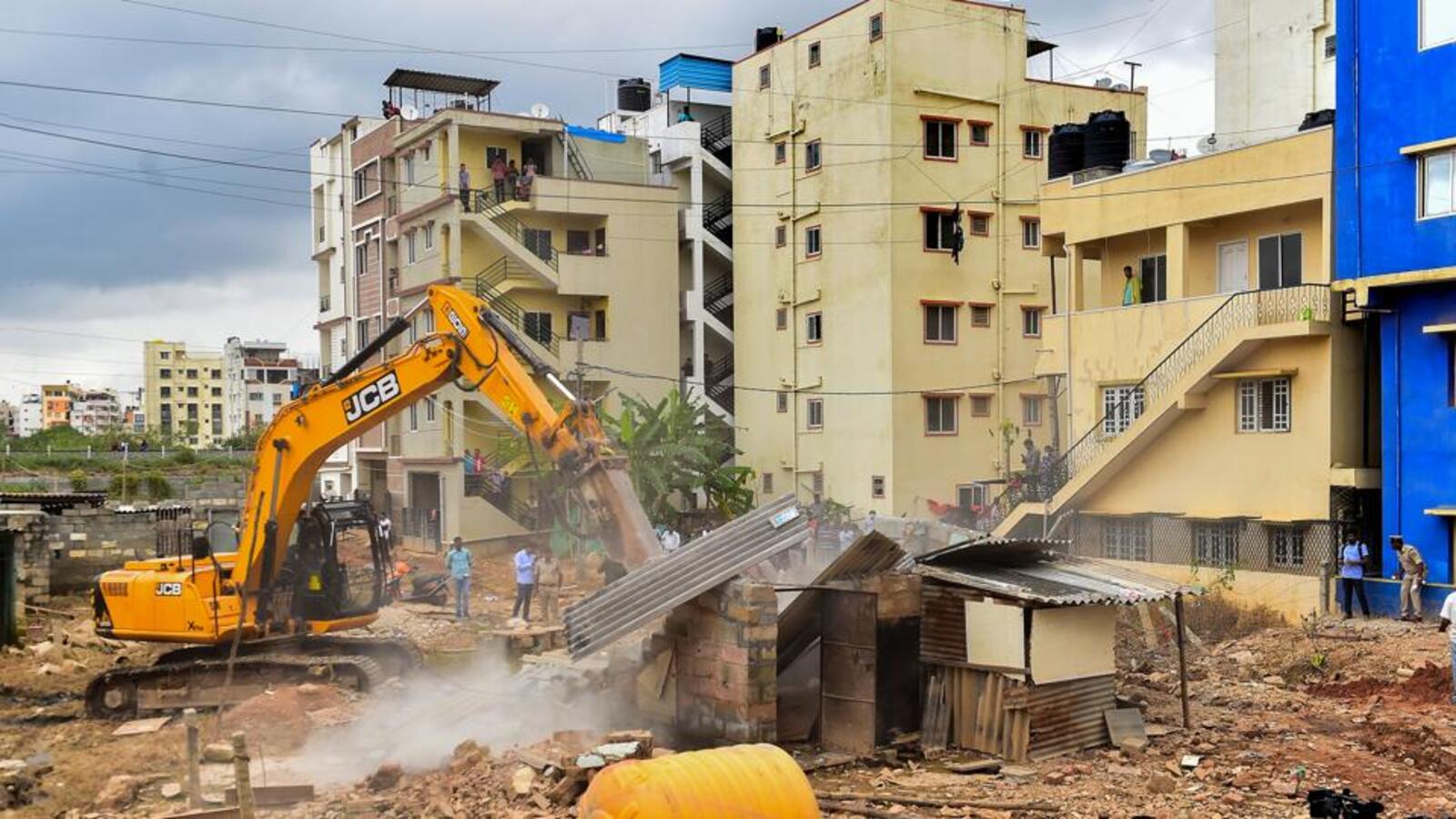
Bengaluru authorities intensified efforts to reclaim illegally occupied land in the city, recovering over 25 acres of encroached property valued at more than Rs 704 crore between July and December 2025. The Bangalore Development Authority (BDA) conducted 14 demolition drives targeting unauthorised structures, including residential and industrial buildings, compound walls, and makeshift sheds on plots earmarked for layouts, infrastructure, and road expansion projects.
The largest land recovery took place in JP Nagar’s 9th Phase, where three successive drives reclaimed 12.5 acres, estimated at Rs 370 crore. Other notable recoveries included Jnanabharathi Layout (1 acre 16 guntas, Rs 153 crore), Kengeri Satellite Town (37,000 sq ft, Rs 50 crore), and HRBR and HBR layouts, collectively reclaiming 26 guntas valued at nearly Rs 35 crore. Officials emphasised that all drives were preceded by mandatory notices, public announcements, and a minimum seven-day compliance period in line with legal requirements. “No compensation is payable as these occupations are unauthorised, but notices allowed individuals time to vacate on humanitarian grounds,” a senior BDA official explained. The reclaimed land will be deployed strategically to support urban development, either by incorporating it into existing layouts, using it for future infrastructure projects, or auctioning legally separable parcels to generate revenue. Unidentifiable parcels will be consolidated into new layouts. According to BDA chairman NA Haris, the operations are part of routine property management rather than a special campaign. Land involved in ongoing court cases is addressed only following judicial directives.
Urban analysts point out that encroachment has long impeded Bengaluru’s planned growth, particularly in south and east city corridors where rapid urbanisation has intensified land scarcity. “Regular enforcement ensures that public land can fulfil its intended purpose, whether it’s roads, parks, or affordable housing projects. Delays in reclamation often exacerbate congestion and constrain urban expansion,” said an urban planning expert familiar with the city. The BDA drives also highlight broader challenges in governance and urban planning. With Bengaluru’s land values rising sharply, unauthorised occupations not only distort the real estate market but can stall infrastructure projects critical for the city’s mobility and climate resilience objectives. Strengthening legal enforcement while balancing humanitarian considerations is increasingly seen as essential for equitable urban development.
Going forward, how reclaimed land is utilised will shape neighbourhood development patterns, affect housing supply, and influence municipal revenue generation. Observers note that integrating recovered plots into well-planned layouts could help mitigate both urban sprawl and affordability pressures while preserving the city’s growth trajectory.
Also Read: Bengaluru Housing Crunch Hits Young Professionals
Bengaluru Demolition Drives Recover Land Worth 700 Crore
