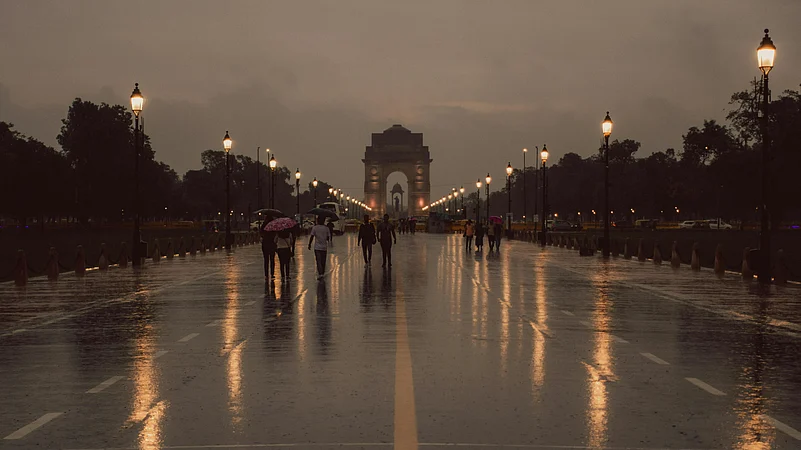
A shift in winter weather patterns is set to influence daily life across the Delhi National Capital Region, with light rainfall and isolated thunderstorms forecast later this week as a western disturbance moves into north India. The India Meteorological Department has signalled a change from dry, fog-heavy mornings to cloudier conditions, with precipitation expected around January 23 a development that could marginally improve air quality while adding fresh challenges for mobility and urban operations.
The region continues to experience typical January cold, with early morning temperatures hovering in the single digits and daytime highs in the low twenties. Shallow to moderate fog has remained a persistent feature across Delhi NCR, reducing visibility along arterial roads and expressways, particularly in satellite cities such as Noida and Ghaziabad. Transport authorities have advised commuters to plan for slower travel during peak hours as visibility fluctuates between clear patches and dense fog pockets. Meteorologists say the approaching western disturbance will increase cloud cover from midweek, bringing very light to light rain accompanied by gusty winds and occasional lightning. While rainfall volumes are expected to be modest, even brief showers could temporarily suppress particulate matter levels that have remained elevated due to stagnant atmospheric conditions.
“Light rain often acts as a short-term cleanser for urban air, though the relief is rarely sustained unless followed by stronger winds,” said an independent climate analyst. Delhi NCR’s Air Quality Index has hovered in the moderate to poor range, with fine particulate matter exceeding recommended limits in several monitoring stations. Health practitioners report a steady rise in respiratory complaints linked to the combined effects of cold air, fog and pollution. From an urban systems perspective, the Delhi NCR rain alert has implications beyond meteorology. Construction schedules, last-mile logistics, airport operations and outdoor commercial activity may face minor disruptions, particularly during early morning hours when fog reduces runway and road visibility. Real estate developers and infrastructure contractors operating in peripheral zones are reviewing timelines for site work as ground conditions soften post-rain.
Urban planners note that such winter disturbances underscore the need for climate-responsive design in transport and drainage systems. “Cities built for extreme summer rainfall often overlook the cumulative impact of winter drizzle and fog on traffic flow and safety,” said a senior urban mobility expert. “Better lighting, improved road markings and fog-adaptive traffic management can significantly reduce accident risks during these transitional weather events.” The anticipated rainfall may also offer limited ecological benefits, aiding soil moisture levels in peri-urban green belts and helping temper dust resuspension from open construction sites. However, environmental specialists caution that meaningful air quality improvements will depend on sustained atmospheric circulation rather than isolated showers.
Looking ahead, forecasts indicate cooler conditions immediately after the rain spell, followed by a gradual return to seasonal norms. Sunshine is expected to re-emerge over the weekend, with temperatures stabilising as cloud cover thins.
For residents, the coming days will demand a balance of preparedness and adaptability. As Delhi NCR’s climate variability becomes more pronounced, even minor weather shifts are increasingly shaping how people commute, work and manage urban services. The immediate focus now rests on how effectively the city can translate short-term weather changes into longer-term gains in air quality resilience and everyday urban reliability.
Delhi NCR Braces For Winter Rain Spell